|
A brand-new letter from the Gazan writer Haidar al-Ghazali; Omar Zahzah’s ‘A Poem Joins the Resistance’ as read by Poppy Liu; and more. ͏ ͏ ͏ ͏ ͏ ͏ ͏ ͏ ͏ ͏ ͏ ͏ ͏ ͏ ͏ ͏ ͏ ͏ ͏ ͏ ͏ ͏ ͏ ͏ ͏ ͏ ͏ ͏ ͏ ͏ ͏ ͏ ͏ ͏ ͏ ͏ ͏ ͏ ͏ ͏ ͏ ͏ ͏ ͏ ͏ ͏ ͏ ͏ ͏ ͏ ͏ ͏ ͏ ͏ ͏ ͏ ͏ ͏ ͏ ͏ ͏ ͏ ͏ ͏ ͏ ͏ ͏ ͏ ͏ ͏ ͏ ͏ ͏ ͏ ͏ ͏ ͏ ͏ ͏ ͏ ͏ ͏ ͏ ͏ ͏ ͏ ͏ ͏ ͏ ͏ ͏ ͏ ͏ ͏ ͏ ͏ ͏ ͏ ͏ ͏ ͏ ͏ ͏ ͏ ͏ ͏ ͏ ͏ ͏ ͏ ͏ ͏ ͏ ͏ ͏ ͏ ͏ ͏ ͏ ͏ ͏ ͏ ͏ ͏ ͏ ͏ ͏ ͏ ͏ ͏ ͏ ͏ ͏ ͏ ͏ ͏ ͏ ͏ ͏ ͏ ͏ ͏ ͏ ͏ ͏ ͏ ͏ ͏ ͏ ͏ ͏ ͏ ͏ ͏ ͏ ͏ ͏ ͏ ͏ ͏ ͏ ͏ ͏ ͏ ͏ ͏ ͏ ͏ ͏ ͏ ͏ ͏ ͏ ͏ ͏ ͏ ͏ ͏ ͏ ͏ ͏ ͏ ͏ ͏ ͏ ͏ ͏ ͏ ͏ ͏ ͏ ͏ ͏ ͏ ͏ ͏ ͏ ͏ ͏ ͏ ͏ ͏ ͏ ͏ ͏ ͏ ͏ ͏ ͏ ͏ ͏ ͏ ͏ ͏ ͏ ͏ ͏ ͏ ͏ ͏ ͏ ͏ ͏ ͏ ͏ ͏ ͏ ͏ ͏ ͏ ͏ ͏ ͏ ͏ ͏ ͏ ͏ ͏ ͏ ͏ ͏ ͏ ͏ ͏ ͏ ͏ ͏ ͏ ͏ ͏ ͏ ͏ ͏ ͏ ͏
A Letter from the Genocide, July 2025
|
|
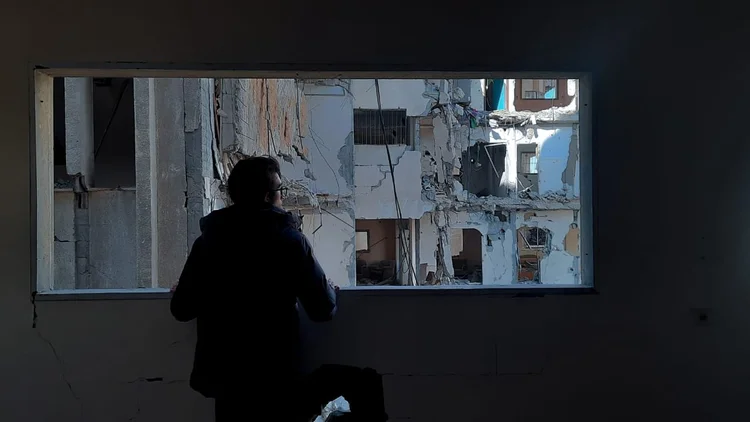
How is Your Heart Today? I don’t want to upset you with this note, but I’ve learned that writing can explode this weight off my chest, and that whoever reads my pain carries away a small part of it. I’m sorry the choice fell on you, but something tells me that you can act upon this world. I’m asking after your heart. I know it feels for birds who go hungry and children who sleep in back streets or under the window-fronts of cafés. How is it doing now - when a whole people is being killed? I ask that you always check on the state of your heart. A lot of the time you might not get an answer, but then you’ve tried, and gone through an experience. And this is life, my friend: an attempt, and an experience. I understand life too, perhaps in a way that only I know, here where the moment of life and its brightness fragment, and death has dominion over time. I try not to leave the house which, by some chance, has not been destroyed. I try to create an ordinary life in it, I try to forget, to close my eyes to the hurt that stares, my ears to the sorrow that clamours. On my way to life I found I had not lived, I, who till this moment, have not died. My attempts have all failed; life does not want me, it landed me in wars and hardship. I haven’t told you that the first war I lived was when I was four. It was in war’s power to kill me, and I would have been forgotten. But it preferred to leave me not alive, and not dead. I am that space between life and death. Don’t ask after my heart. And don’t believe me when I say I’m good. The only good here is that you, my friend, are reading this, and that you can go out and protest against governments, you can scream with the voices of the children in their shrouds, and you know that even that is not enough to bring a single drop of water into the siege - but still you try. The only good is your heart that still feels the wounds, your eyes that well up at every photo of a child amputated before she could walk. The good, my friend is that you want bring down these Liberal systems that rule the world with a dictatorship masquerading as democracy! I said I don’t leave the house but here I am writing after I’ve come back from the hospital. We heard news that sent us running: they said my father’s brother was hit. My uncle is not a military man, he doesn’t know who the founders of Zionism were, doesn’t memorise the dates of our dispossession. He loves the world without a reason even though he’s reached forty without ever traveling. He treats people as though they were made of glass. He buys clothes from the poor and sells them to other poor, from a tent at the gate of the hospital. What he makes often can’t buy one kilogram of flour to feed his kids. In this moment my friend I felt the meaning of death and disappointment and hope and yearning and memory and injustice and life and cruelty. Many stories, my friend, many possibilities came to me from every fear, every terror, especially since I saw the pools of blood in the tent from which my uncle sold the clothes. I know this blood, it has a smell that I know, like the love my uncle distributes. At this moment, my friend, I realised that I am not in my twenties as it seems; running exhausted me, it threw a terrible dizziness into my head, and knives into my knees. I am no longer that boy who used to run in his street, who played football and broke the shop windows. I’ve grown, grown old, old. A missile (rocket? shell?) from an Israeli drone fell at the hospital gate, by the market, and it left dead and wounded. A hospital, a market, a missile - a trinity that will only exist if the plane is Israeli. I reached the hospital, the Ahli Mamdani [Local Baptist] Hospital. I asked for the Emergency Room, they said it’s “there”. “Where?” “That tent.” Continue reading Haidar’s letter here.
|
Birzeit: Tijwal Exhibition Opening, 16 July
|
|
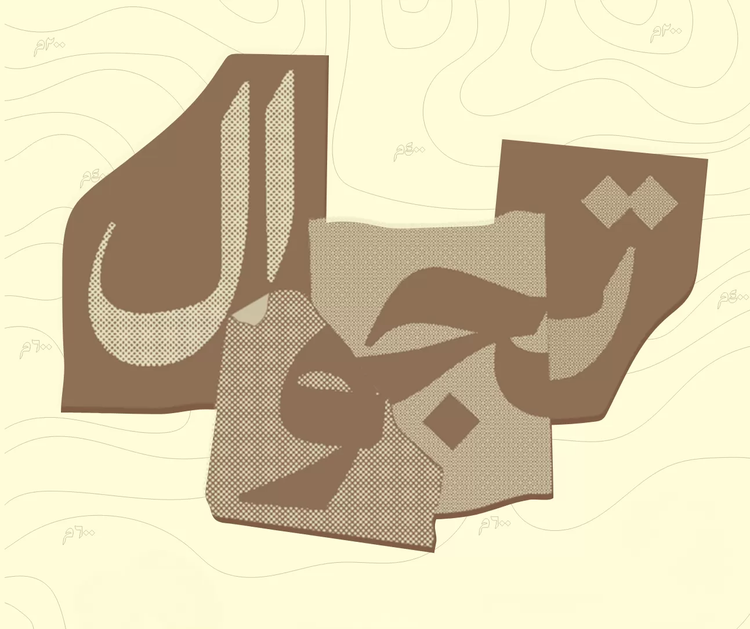
The Palestinian Museum and Baladna – Association for Arab Youth are pleased to invite you to the opening of “Tijwal,” an exhibition organized by Baladna and hosted at the museum. The exhibition offers an immersive journey through sensory, emotional, intellectual, cultural, and historical pathways across Palestine—its people, its landscapes and their transformations, and the fluctuations of time. It sheds light on the actions of its inhabitants, their histories, and the imprint they have left in resisting colonial forces and occupiers on their land. Tijwal represents the culmination of six years of research, exploration, fieldwork, learning, documentation, and archiving by the Baladna “Tijwal” team. They traversed numerous villages, towns, regions, and neighborhoods across Palestine—from north to south—observing the land and its stories, delving into oral histories of Nakba survivors, and documenting their narratives. They gathered stories and rich details in multiple languages and from diverse sources, painstakingly reconstructing a fragmented mosaic. Their journey connected them with the legacies of the 1936 Revolution, weaving today’s story through threads drawn from a long social history—before and after the Nakba, during the British Mandate, amid the rise of the Zionist movement, and under successive occupations. This exhibition aims to offer a profound understanding of Palestine by integrating sensory and aesthetic experiences with intellectual inquiry, bridging historical, political, social, cultural, and environmental dimensions. The curators believe that love for Palestine is incomplete without understanding it—learning its history and drawing lessons from its past. In our complex contemporary reality, life and place cannot be separated from their broader context: the enduring struggle for freedom, dignity, and independence. We cannot wander without a clear political, social, and environmental compass—one that remains firmly aligned with the values of justice, freedom, and liberation.
Find more details at the Palestinian Museum website.
|
London: My Name is Rachel Corrie Preview Performance, 19 July
|
“So much of this has happened before. We can look at that history and then choose which side we want to be on now.”
— Rachel Corrie, June 4, 2002
Palestine House presents a preview performance of the play My Name is Rachel Corrie, based on the activist’s journals. At 23 years old and over six thousand miles from home, Rachel Corrie stood between an armored bulldozer and a Palestinian family's home. From Olympia, Washington, to the Gaza Strip, My Name Is Rachel Corrie captures the fierce conviction, piercing eloquence, and dry humor of a courageous young writer. Edited by Alan Rickman and Katharine Viner from Rachel’s personal journals and emails, this powerful play honors a life of activism and idealism, cut tragically short. Twenty years after its original production, My Name Is Rachel Corrie resonates with even greater urgency. A post-show talkback with special guests will follow the performance. Find more details and reserve your tickets here.
|
From the PalFest Bookshelf: A Poem Joins the Resistance
|
|
The latest installment of the PalFest Bookshelf is Heaven Looks Like Us, a brand-new anthology of contemporary Palestinian poetry edited by Noor Hindi and George Abraham. Heaven Looks Like Us is a battle-cry against the annihilation of a people. As Palestinian history remains haunted by exile, violence, and grief, so, too, are the poems in this anthology. And yet, editors George Abraham and Noor Hindi present these realities alongside other themes that are also true: queer and feminist perspectives, eco-poetry, meditations on love and time, and lineages of protest.
|
|
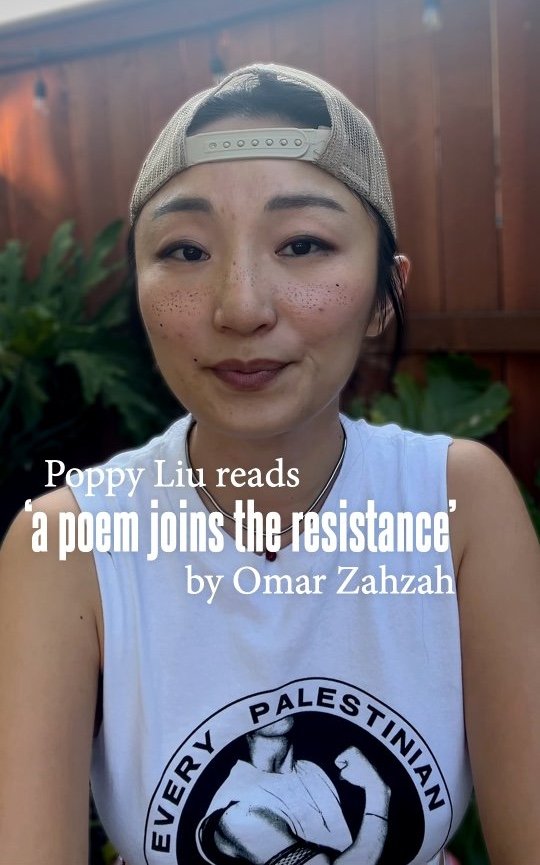
Today, we are happy to share the poem ‘A Poem Joins the Resistance’ by Omar Zahzah, as performed by the actress Poppy Liu. Like so many of the other poems in Heaven Looks Like Us, Zahzah’s poem rebukes an apolitical poetry and announces a poetics of conflict and confrontation: “a poem eats apartheid walls / and shits on genocide's finery / a poem is done with dialogue.” Click on the image to the right in order to hear Poppy’s performance of the poem. |
|
|
|
|
|
Visit the PalFest Bookshelf to find out more about Heaven Looks Like Us, and consider subscribing for a curated selection of the best new books on Palestine.
|
A roaring cyclone of memory and imagination and harrowing tribulation. Surrogacy as metaphor for exile. Exile not as a dream for a better life, but as concession, a begrudging necessity. Gaza, San Miguel, Beirut, New York, Damascus—traveling with Alyan’s prose is a thrill. I'll Tell You When I'm Home feels as rich and supersaturated as contemporary consciousness itself. —Kaveh Akbar
After a decade of yearning for parenthood, years marked by miscarriage after miscarriage, Hala Alyan makes the decision to use a surrogate. In this charged time, she turns to the archetype of the waiting woman—the Scheherazade who tells stories to ensure another dawn—to confront her own narratives of motherhood, love, and inheritance.
As her baby grows in the body of another woman, in another country, Hala finds her own life unraveling—a husband who wants to leave; the cost of past traumas and addictions threatening to resurface; the city of her youth, Beirut, on the brink of crisis. She turns to family stories and communal myths: of grandmothers mapping their lives through Palestine, Kuwait, Syria, Lebanon; of eradicated villages and invading armies; of places of refuge that proved only temporary; of men that left and women that stayed; of the contradictions of her own Midwestern childhood, and adolescence in various Arab cities.
Meanwhile, as the baby grows from the size of a poppyseed to a grain of rice, then a lime, and beyond, Hala gathers the stories that are her legacy, setting down the ones that confine, holding close those that liberate. It is emotionally charged, painstaking work, but now the stakes are higher: how to honor ancestors and future generations alike in the midst of displacement? How to impart love for those who are no longer here, for places one can no longer touch?
A stunningly lyrical and brutally honest quest for motherhood, selfhood, and peoplehood, I’ll Tell You When I’m Home is a powerful story of unraveling and becoming, of destruction and redemption, and of homelands lost and recreated. I’ll Tell You When I’m Home is out now in North America, and available for preorder in Europe and the UK. You can find the book in our Bookshop (US / UK).
|
Media RoundupA Box of Dates on the Kitchen Table – A new poem by Samer Abu Hawwash, translated by Huda Fakhreddine: “And in the stone, I see all things, / past, present, and future: / the houses, the fields, the clouds, the waves, / all that we call home. / I will strip the stone of all the names / it has falsely claimed along the endless paths of absence.” Nasser Rabah on Poetry and Gaza – Two poems from Nasser Rabah’s new book of poems Gaza: The Poem Said Its Piece, translated by Ammiel Alcalay, Emna Zgal and Khaled Al-Hilli: “Say something now before joy gives birth to its killers, before peppers bloom through your vacant gaze, say something, before your mute words end in heartbreak.” The Horror of Gaza’s Children’s Hospitals – Tanya Haj-Hassan shares a firsthand account of the systematic destruction of Gaza’s healthcare system, which has had especially bad consequences for children, leading many to die from treatable wounds and illnesses. “Do You Want to Throw Israelis Into the Sea?” – In this excerpt from his book Perfect Victims, Mohammed El-Kurd makes the case for responding to the absurdities of Zionist discourse with irreverence and derision. Every Time I Go to a U.S.-Run ‘Aid’ Center in Gaza, I Know I Might Not Come Back – Hassan Herzallah describes the dangerous and humiliating process he faces when he goes to collect aid from the US-backed GHF aid distribution points where hundreds of starving people have been shot and killed. Saving Palestine, Saving Britain – Condemning the proscription of Palestine Action, the Palestinian Youth Movement writes that "the government has decided that an Israeli arms manufacturer has more rights than a British citizen who cannot abide killing and maiming." If Palestine Action is A 'Terror' Organisation, What is the IDF? – Owen Jones compares the laws broken by Palestine Action and those broken by Israel to argue that Palestine Action is justified in breaking smaller laws to attempt to prevent genocide, war crimes, and crimes against humanity. Gaza Under Siege – Tareq Baconi appraises the uses and abuses of humanitarian aid in Gaza since October 7, arguing not for the need to let more aid into Gaza, but “to undo the system of control and killing that Israel has forced on Palestinians, and to hold those responsible for it accountable.” Accidents, Archives, and Acts of Sabotage – Davide Oberto interviews the Palestinian film director Kamal Aljafari about the relationship between film and politics in Palestine. The Real Crimes are Taking Place in Gaza, Not at Glastonbury or Brize Norton – Jonathan Cook argues that the proscription of Palestine Action and the moral panic over Palestine solidarity at Glastonbury are meant as distractions from the UK’s ongoing complicity in Israel’s genocidal campaign in Gaza. The Devil in the Details of Trump’s "Final Proposal" for Gaza Ceasefire – Jeremy Scahill parses the latest ceasefire proposal from the US and Israel, which is substantively identical to previous proposals, and suggests that Hamas is unlikely to agree to these terms. How a New Vocabulary is Emerging in the Genocide – Yousef Alnono describes how once-unfamiliar words – for military technologies and medical afflictions, for instance – have become a part of the everyday Ghazzawi lexicon. The Destruction of Palestine is Breaking the World – Moustafa Bayoumi describes how the bastions of the liberal order – particularly higher education and international law – have been distorted beyond recognition in order to justify the ongoing genocide in Gaza. When I Die – A new poem by Jehad Abu Dayya, translated by Alaa Alqaisi: “When I die, / and I become a burden on the one / assigned to count the dead— / just scatter me: / my remains, and a friend’s imagining / of how we might have lived a hundred years / with no drones whirring.”
|
|
Consider subscribing to the PalFest Bookshelf to receive a curated selection of the finest new and classic books by Palestinian writers. Was this email forwarded to you? Sign up to receive it in your inbox.
|
|
|
|