|
An excerpt from Ghassan Kanafani’s The Revolution of 1936-1939 in Palestine, and more ͏ ͏ ͏ ͏ ͏ ͏ ͏ ͏ ͏ ͏ ͏ ͏ ͏ ͏ ͏ ͏ ͏ ͏ ͏ ͏ ͏ ͏ ͏ ͏ ͏ ͏ ͏ ͏ ͏ ͏ ͏ ͏ ͏ ͏ ͏ ͏ ͏ ͏ ͏ ͏ ͏ ͏ ͏ ͏ ͏ ͏ ͏ ͏ ͏ ͏ ͏ ͏ ͏ ͏ ͏ ͏ ͏ ͏ ͏ ͏ ͏ ͏ ͏ ͏ ͏ ͏ ͏ ͏ ͏ ͏ ͏ ͏ ͏ ͏ ͏ ͏ ͏ ͏ ͏ ͏ ͏ ͏ ͏ ͏ ͏ ͏ ͏ ͏ ͏ ͏ ͏ ͏ ͏ ͏ ͏ ͏ ͏ ͏ ͏ ͏ ͏ ͏ ͏ ͏ ͏ ͏ ͏ ͏ ͏ ͏ ͏ ͏ ͏ ͏ ͏ ͏ ͏ ͏ ͏ ͏ ͏ ͏ ͏ ͏ ͏ ͏ ͏ ͏ ͏ ͏ ͏ ͏ ͏ ͏ ͏ ͏ ͏ ͏ ͏ ͏ ͏ ͏ ͏ ͏ ͏ ͏ ͏ ͏ ͏ ͏ ͏ ͏ ͏ ͏ ͏ ͏ ͏ ͏ ͏ ͏ ͏ ͏ ͏ ͏ ͏ ͏ ͏ ͏ ͏ ͏ ͏ ͏ ͏ ͏ ͏ ͏ ͏ ͏ ͏ ͏ ͏ ͏ ͏ ͏ ͏ ͏ ͏ ͏ ͏ ͏ ͏ ͏ ͏ ͏ ͏ ͏ ͏ ͏ ͏ ͏ ͏ ͏ ͏ ͏ ͏ ͏ ͏ ͏ ͏ ͏ ͏ ͏ ͏ ͏ ͏ ͏ ͏ ͏ ͏ ͏ ͏ ͏ ͏ ͏ ͏ ͏ ͏ ͏ ͏ ͏ ͏ ͏ ͏ ͏ ͏ ͏ ͏ ͏ ͏ ͏ ͏ ͏ ͏ ͏ ͏ ͏ ͏ ͏ ͏ ͏ ͏ ͏ ͏ ͏ ͏
London: Refugee Chronicles at Palestine House, 15 May
|
|
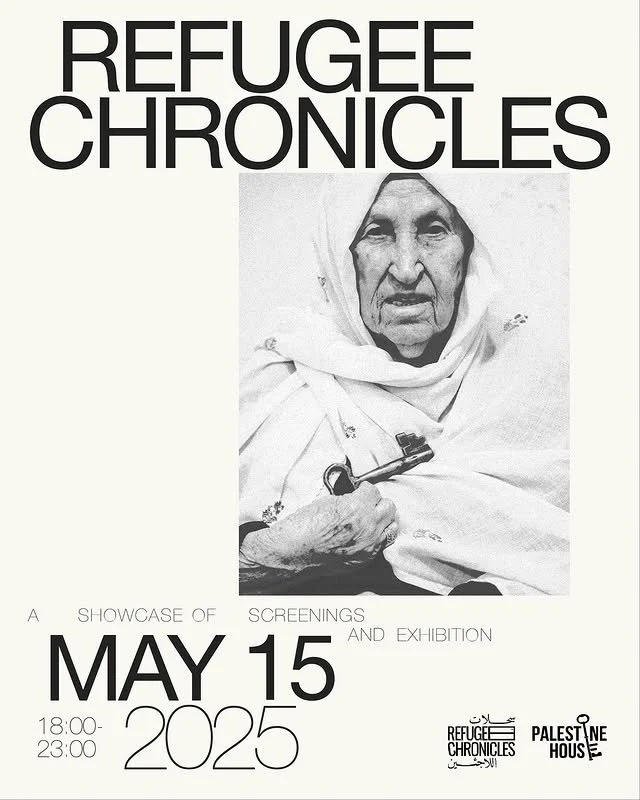
Refugee Chronicles, in collaboration with Palestine House, will host a commemoration of the Nakba in London on May 15th.
The event will feature powerful video testimonies from Nakba survivors who continue to live in refugee camps across the Arab world. All were displaced from Palestine in 1948 and have never been allowed to return.
Screening rooms located throughout Palestine House will each showcase a unique testimony, offering a deeply personal account from the elders who lived through the Nakba. The screenings will run from 7:00 PM to 11:00 PM. In addition to the screenings, the event will feature: 7:00 PM-8:30 PM: A Salon Talk exploring both the historical and ongoing impacts of the Nakba. 8:30 PM -10:30 PM: A Tatreez workshop marking Nakba Day, where we’ll learn traditional Palestinian embroidery and explore its role in memory, identity, and resistance. This year, we’ll center a depopulated village by stitching one of its motifs as an act of remembrance and cultural preservation. 9:00 PM - 10:00 PM: Testimonies from descendants of Nakba survivors, where family members share personal stories of displacement and survival.
This immersive experience weaves together personal stories, visual archives, and cultural heritage, honoring 77 years of Palestinian resilience, memory, and resistance. For more information, and to reserve your tickets, click here.
|
London: Book Launch for Sabrin Hasbun’s Crossing, 12 + 13 May
|
|
Join the writer Sabrin Hasbun for two events in London launching her new book Crossing: A Love Story between Italy and Palestine. Out this week, the book retraces the love story between Sabrin's Palestinian father and Italian mother, and the life of her half-Italian, half-Palestinian family from the 1960s to 2020. It's a moving and thoughtful memoir about overcoming grief and what it means to lose not only loved ones, as well as an exercise in trying to renegotiate one's mixed identity, finding your place in the world and a sense of belonging. Sabrin will be appearing at Palestine House on 12 May, where she will be in conversation with the writer, educator, and translator Hazem Jamjoum. Sabrin will also be appearing at Daunt Books on 13 May, where she will be joined by the writer, editor, and critic Lucy Popescu. For further dates in other cities, keep up with Sabrin on Instagram.
|
Birzeit: Artist Talk – A Photographic Journey into Palestine, 13 May
|
|
Join the Palestinian Museum for a talk with renowned Palestinian photographer Rula Halawani, as she shares her Photographic Journey into Palestine, tracing her decades-long artistic and personal path. From her early studies in mathematics in Canada, to her work in photojournalism, and her development into one of the Arab world’s leading photographers, Halawani reflects on the conceptual and aesthetic foundations of her work—rooted in experimentation and the urgent need to document life under occupation. Halawani will be introduced by the acclaimed visual artist Amer Shomali. This event is an open invitation to think about the image, memory, and the lens as a tool of resistance. Visit the Palestinian Museum’s website for more details on this and other upcoming events.
|
From the PalFest Bookshelf:
|
An Excerpt from Ghassan Kanafani’s The Revolution of 1936-1939 in Palestine
|
|
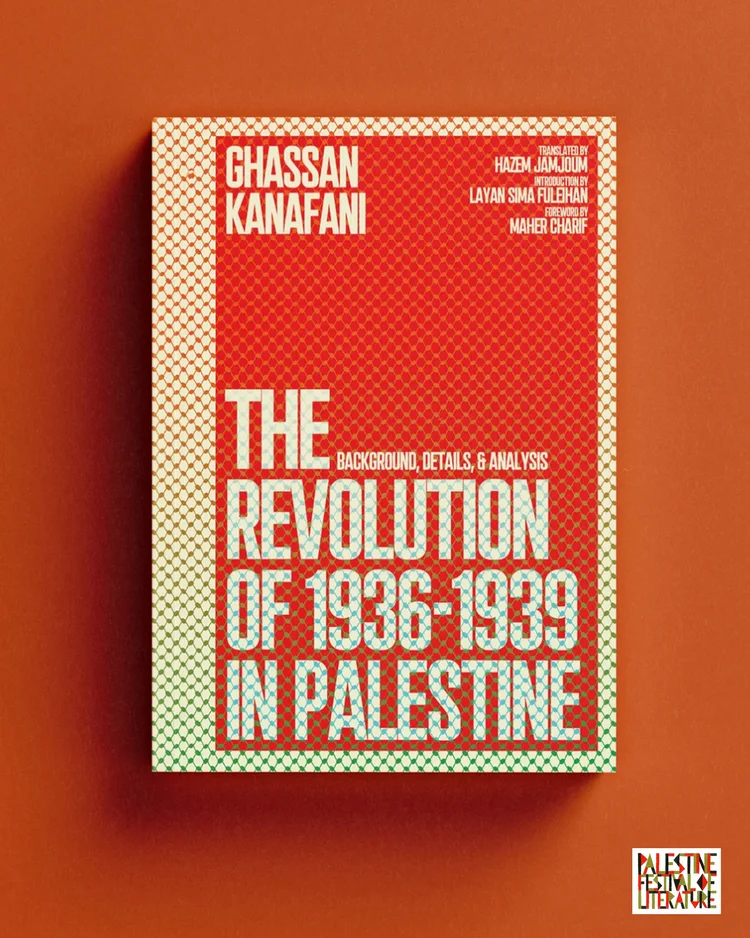
The second installment of the PalFest Bookshelf is Ghassan Kanafani’s The Revolution of 1936-1939 in Palestine, newly translated by Hazem Jamjoum. The Revolution of 1936-1939 in Palestine is Kanafani’s carefully researched and meticulous inquiry into this crucial moment of revolution in Palestinian history, which transpired as the British empire, drawn into World War II in Europe, opted to cede ground to the Zionist settler project in Mandate Palestine. Kanafani examines the material, intellectual, religious, and class dynamics at play in the incipient struggle for national liberation in order to analyze how and why this revolution failed. He concludes, ultimately, that the bloody defeat of the 1936-1939 revolution was mere prologue to what came less than a decade later: The Nakba. Below, you can read a brief excerpt of The Revolution of 1936-1939 in Palestine, in which Kanafani theorizes the role of poetry in the years leading up to 1936.
|
|
It was poetry, both classical and popular/vernacular, that kept pace with the popular mass movement from the beginning of the 1930s, expressing the movement’s eruption, its minutiae, and its richness. Abu Salma’s poem narrating the 1936 Revolution, for example, daringly reveals the bitter disappointment felt toward Arab regimes’ abandonment of the revolution: You who mourn the lands lost Rise up against oppression unashamed Liberate the land of its kings Liberate the land of its enslaved
He then goes on to remind us of the vernacular poet named Awad who, on the eve of his execution, wrote a powerful poem on the walls of his prison cell. The poem ends with the verses: I thought we had kings Behind whom men march in droves Shame on all kings If there are kings like these rogues By God, their crowns Are not fit to be on our shoes’ soles We are the ones who protect The homeland and kiss its wounds
The rage pouring out simultaneously against the trinity of enemies—Zionist colonization, the British Mandate, and Arab reactionary forces locally and regionally—grew in tandem with the deepening of the crisis. With the escalating acuteness of the contradictions and the eruption of armed intifadas, the countryside witnessed a development of a new consciousness through the interaction of its “intellectuals” with the cultural output of the cities. The vernacular poetry kept pace with verses such as: Oh people, what a blight A Zionist together with a Westerner
And: The rifle has shown up, but the lion has not Oh, barrel of the rifle, wet with his blood
And similarly: The rifle in the hands of the salesman, I saw it I wish my heart would stop, why didn’t I buy it? His rifle had rusted from sitting idle
Rusted, and missing its owners
[….] The incitement to rise up in revolt took on such power that, despite the heavy inheritance of quietist proverbs and sayings that had given submission the status of tradition, you could now hear a popular poem proclaiming: You Arab, son of an impoverished mother Sell your mother and buy a gun A rifle is better than your mother On revolution day it will relieve you of your woes
The accumulation and eruption of contradictions thus rendered the “rifle” the tool that could tear down that venerable wall of calls to quietism. All of a sudden, this “rifle” is able to get to the heart of the matter, and revolution becomes a future more promising than all the maternal and familial warmth of the past. Visit the PalFest Bookshelf to learn more about the book and to subscribe.
|
Written with humor, impossible optimism, faith, and—sometimes—despair, Plestia has given the world an intimate glimpse of life—family, friendship, mutual care, trauma, boredom, hunger, thirst, guilt, and more—in the midst of Israel's ongoing genocide against Palestinians. – Susan Abulhawa
On the morning of October 7, 2023, 21-year-old Plestia Alaqad wakes to a flurry of messages and headlines: Gaza under bombardment. Civilians flee waves of Israeli strikes. In a few short days, she and her family will be at the epicenter of a violence that is all too familiar for Palestinians. A series of diary extracts from the weeks following October 7, The Eyes of Gaza is a gutting, on-the-ground record of the turmoil and destruction endured by the men, women, and children of Gaza. As Alaqad flees from neighborhood to neighborhood, from hospital to hospital, she documents all she sees—the destruction of beloved homes, the waves of bombs, and most of all, the boundless bravery and generosity of her people—all the while trying to memorize the faces of those around her "so somebody will have known them before the end," wondering if, one day, her own journal will be discovered amidst the rubble. A document of the indomitable Palestinian spirit, told through the voice of one ordinary young woman, The Eyes of Gaza is a tribute to Alaqad's beloved Gaza, a paean to the courage and endurance of Palestine, and a manifesto of hope for its future. The Eyes of Gaza is out now in the UK, and is available for preorder in North America.
|
Media Roundup'Do Not Reconcile': From ArabLit Quarterly's GRIEF – Abdelrahman ElGendy introduces an online supplement to ArabLit Quarterly’s new issue on grief, where contributors have written apostrophic odes to loved ones missing, incarcerated, disappeared, and dead: “These letters are not merely an archive, but a call: to not normalize, to not reconcile. To steep in the loss, and let it sharpen us. Let them rest on your tongue and settle in your throat.” [...] and Border Wisdom – Yasmin El-Rifae reviews recent collections of poetry by Fady Joudah and Ahmad Almallah, each asking after the relationship between grief and unsayability, to suggest that these poems ultimately invite readers to do the political work of filling in the gaps they foreground in their work. Starvation, Resistance, Love – Maha Hussaini writes about the profound sacredness and mercy of sharing food with friends, family, and neighbors in Gaza amid Israel’s starvation campaign. “Deprivation by Design”: Israel Intensifies Mass Killing Campaign in Gaza With Starvation and Daily Strikes – Rasha Abou Jalal and Sharif Abdel Kouddous report on how Israel’s use of starvation as a weapon of war, compounded by its ongoing genocidal bombardment, have brought the levels of mass death to a previously unimaginable scale. How Many Were Killed from Our Windows? – Lubna Ahmad Abu Dahrouj writes about the shock of learning that her home in the north of Gaza had been used by Israeli snipers. The Curious Gaps in the Israeli Army’s Updates – Sammy Sussman reports on the Israeli army’s so-called “War Diary,” an official platform that details military operations in multiple languages but obscures some of them by only publishing them in Hebrew. Mahmoud Khalil, Biding Time in Jena – Shayoni Mitra visits Mahmoud Khalil inside the Louisiana detention center where he has been unlawfully imprisoned for two months, weighing his solidarity-building inside the detention center alongside his campus solidarity work at Columbia. “We're Just Putting Band-Aids on Gaping Wounds”: Palestinian American Nurse Lana Abugharbieh Reflects on First Mission in Gaza – The Institute for Palestine Studies interviews a nurse who spent ten days providing medical care in Gaza last year and estimates that more than 200,000 Palestinians have been killed in the genocide since October 2023. Violent Mobs from Brooklyn to the West Bank Are United in the Fascism of Zionism – James Ray argues that the violent tactics recently deployed by a Zionist mob in Brooklyn are identical to those used by Zionist settlers in Palestine. I Was Forced to Burn My Books to Survive in Gaza – Hend Salama Abo Helow writes about having to burn her international law textbooks in order to cook and stay warm in Gaza as a metaphor for the complete failure of international law to stop the genocidal onslaught.
|
|
Consider subscribing to the PalFest Bookshelf to receive a curated selection of the finest new and classic books by Palestinian writers. Was this email forwarded to you? Sign up to receive it in your inbox.
|
|
|
|