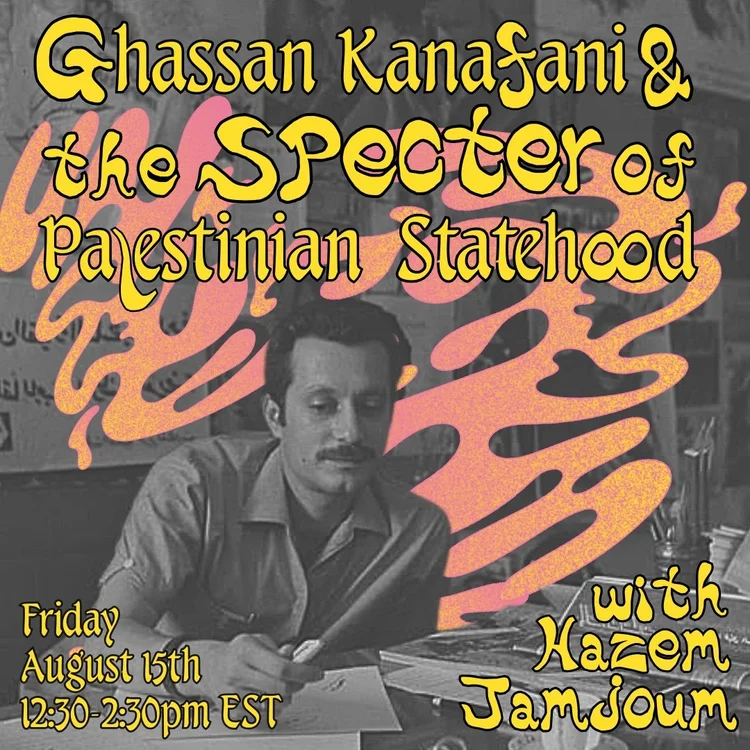
Media Roundup“Food Has Become a Memory”: My Hunger Diary in Gaza – Sara Awad chronicles how she and her family are navigating the scarcity of basic foodstuffs and the exorbitant costs associated with buying them. The Pen vs. The F-35: Gaza's Journalists Are Dying for the Truth – Writing from Gaza, Huda Skaik eulogizes the 228 journalists killed by Israel since October 2023, and honors the journalists who continue to report despite the hunger, the siege, and the risks of their reporting. Palestine in the Claws of Colonialism – Selections from the 1947 book Palestine in the Claws of Colonialism by Ahmed Saadeq Saad, translated into English by Omar El Adl. Saad, a leftist Egyptian thinker of Jewish origin, enumerates a theory of Zionism as imperialism and argues that the Zionist solution to Europe’s Jewish problem would not make the world safer for Jews. Engineering Reality: Towards a Deeper Understanding of Gaza – In this essay from last year, newly translated by Noha AbuShammala, Bahaa Shahira Raouf examines how Gaza has become reified as a symbol for Palestinians outside of Gaza as well as for the occupation, distorting the human truths of everyday life for Gazans. What is the Meaning of Support? – David Renton writes about how the proscription of Palestine Action relies upon anti-terror legislation through which any and all speech can effectively be framed as ‘support’ and therefore criminalized. Amal Doesn’t Even Know What a Banana Is: Child Malnutrition in Gaza – Asem Al Jerjawi profiles the families of children in Gaza who are in the most acute phase of starvation, arguing that hunger is not a byproduct of the war, but a weapon in it. Gaza Diary: Reading to Resist – “Books have become a kind of safe architecture I can live inside,” writes Malak Hijazi, describing how she has found solace in literature, from Simone de Beauvoir to Muin Bseiso, amid the ongoing genocide. The Bureaucracy of Genocide – Sari Bashi describes how selectively applied bureaucratic regulations and red tape have become weapons in the genocide of Gaza, meant to delay aid, limit humanitarian relief, and block medical supplies, all under the guise of liberal governance. Egypt’s Hidden Refugee Crisis – Reporting from Cairo, Emad Mekay examines how evacuees from Gaza, denied legal status as refugees, remain in Egypt on expired tourist visas, unable to work, and in utter precarity. Your Tweet Says It All – A new poem from Fady Joudah: “Either you / are the devil, and it becomes you, / or you make it the devil. / And kindness, the customer." Gaza and the End of History – “By underwriting Israel’s genocidal onslaught so flagrantly,” Joelle M. Abi-Rached argues, “Western governments have hastened the final discrediting of the legal order the West itself developed after World War II.” On Telling (and Not Telling) Nakba Stories in ‘Sand-Catcher’ – Novelist Omar Khalifah and his translator Barbara Romaine speak to Tugrul Mende about Khalifah's debut novel Sand-Catcher, a tragicomic story about memory and forgetting the Nakba. Israel's Genocide Is the Terminal Stage of a Settler-Colony in Crisis – Joseph Massad writes about what he calls the settler colonial “demographic death drive,” where threats of demographic replacement by Indigenous populations can only be resolved by genocide. Hazem Jamjoum on Writing for Communities of Struggle – Hazem Jamjoum, translator of Ghassan Kanafani and founder of the new Safarjal Press, speaks to Mariam Tell about publishing, translation, and political literature. “I Bequeath Life to You, for We Die without Life Knowing Us”: Nima Hasan Writing from the Ends of the Homeland – A series of poems, letters, and dispatches by Nima Hasan, compiled and edited by Rania Jawad and translated by Malaka Shwaikh, which document in intimate detail the everyday experience of life under Israeli siege in Gaza: “When the roads are blocked, draw a new map. Become Rome. Be Gaza.”
|