Gift subscriptions to the PalFest Bookshelf; the Toronto Palestine Film Festival; the last traditional Palestinian tile factory; and more. ͏ ͏ ͏ ͏ ͏ ͏ ͏ ͏ ͏ ͏ ͏ ͏ ͏ ͏ ͏ ͏ ͏ ͏ ͏ ͏ ͏ ͏ ͏ ͏ ͏ ͏ ͏ ͏ ͏ ͏ ͏ ͏ ͏ ͏ ͏ ͏ ͏ ͏ ͏ ͏ ͏ ͏ ͏ ͏ ͏ ͏ ͏ ͏ ͏ ͏ ͏ ͏ ͏ ͏ ͏ ͏ ͏ ͏ ͏ ͏ ͏ ͏ ͏ ͏ ͏ ͏ ͏ ͏ ͏ ͏ ͏ ͏ ͏ ͏ ͏ ͏ ͏ ͏ ͏ ͏ ͏ ͏ ͏ ͏ ͏ ͏ ͏ ͏ ͏ ͏ ͏ ͏ ͏ ͏ ͏ ͏ ͏ ͏ ͏ ͏ ͏ ͏ ͏ ͏ ͏ ͏ ͏ ͏ ͏ ͏ ͏ ͏ ͏ ͏ ͏ ͏ ͏ ͏ ͏ ͏ ͏ ͏ ͏ ͏ ͏ ͏ ͏ ͏ ͏ ͏ ͏ ͏ ͏ ͏ ͏ ͏ ͏ ͏ ͏ ͏ ͏ ͏ ͏ ͏ ͏ ͏ ͏ ͏ ͏ ͏ ͏ ͏ ͏ ͏ ͏ ͏ ͏ ͏ ͏ ͏ ͏ ͏ ͏ ͏ ͏ ͏ ͏ ͏ ͏ ͏ ͏ ͏ ͏ ͏ ͏ ͏ ͏ ͏ ͏ ͏ ͏ ͏ ͏ ͏ ͏ ͏ ͏ ͏ ͏ ͏ ͏ ͏ ͏ ͏ ͏ ͏ ͏ ͏ ͏ ͏ ͏ ͏ ͏ ͏ ͏ ͏ ͏ ͏ ͏ ͏ ͏ ͏ ͏ ͏ ͏ ͏ ͏ ͏ ͏ ͏ ͏ ͏ ͏ ͏ ͏ ͏ ͏ ͏ ͏ ͏ ͏ ͏ ͏ ͏ ͏ ͏ ͏ ͏ ͏ ͏ ͏ ͏ ͏ ͏ ͏ ͏ ͏ ͏ ͏ ͏ ͏ ͏ ͏ ͏ ͏

Weekly Dispatch, 8 September

Gift Subscriptions to the PalFest Bookshelf

Want to send your loved one a subscription to the PalFest Bookshelf? All you need is their email address and country of residence to gift them a subscription. Over the course of a year they’ll receive six books, along with bespoke extras, straight to their door.

Find more information about gifting subscriptions here.


New York: Voices for Gaza, 21 September

Join writers Viet Thanh Nguyen, Mosab Abu Toha, Hala Alyan, Hannah Lillith Assadi, and Seema Jilani for Voices for Gaza, an evening of readings and conversation in solidarity with Gaza, emceed by Aasif Mandvi, and featuring a film by Nan Goldin and a performance by the Resistance Revival Chorus.

Through poetry, prose, and dialogue, these voices join to bear witness and affirm the power of storytelling in times of crisis, while raising critical funds for the children of Gaza through INARA.

This event is cosponsored by INARA, McNally Jackson, and Town Hall NY, with support from AAWW and PalFest. Reserve your tickets here.


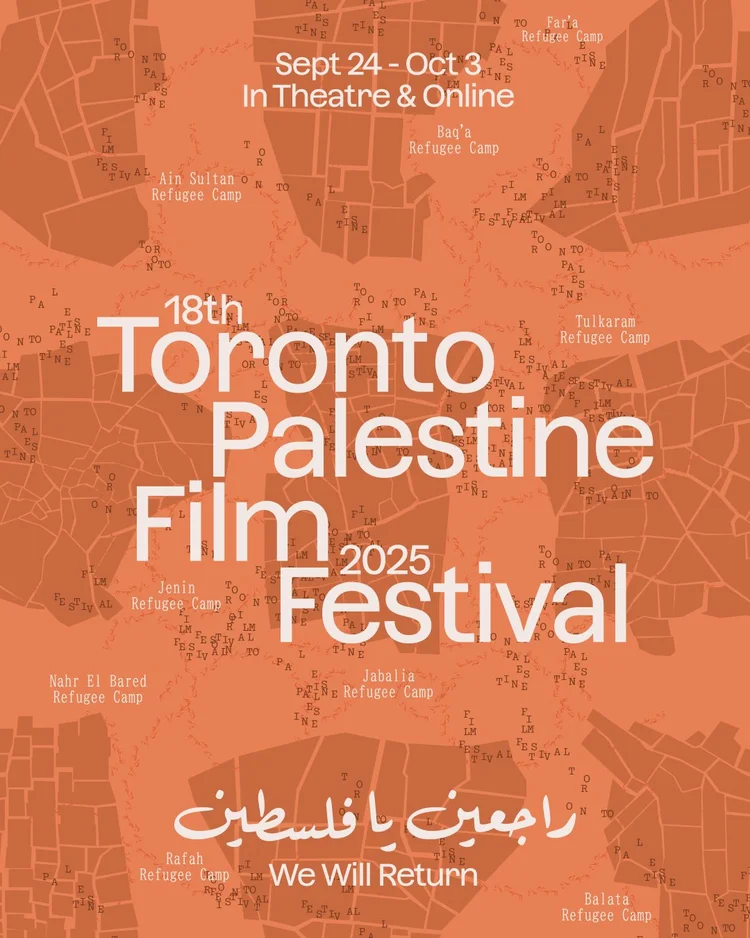
Toronto Palestine Film Festival, Sep. 26–Oct. 3

The Toronto Palestine Film Festival returns later this month for its eighteenth iteration, with a series of feature films, documentaries, and shorts for a program in theatres and online.

This year's theme is focused on the displacement and forced migration of the Palestinian people. Inspired by Palestinian refugee camps and their persistent fight against injustice and exile, these films are sites of resistance and resilience in the face of illegal occupation, apartheid, and genocide. The Palestinians who tend to the camps are the keepers of the right of return.

Over the course of ten days, TPFF will screen more than two dozen recent Palestinian films in-person and online. The festival also celebrates Palestinian music, art, and literature, with concerts and art exhibitions taking place over the course of the festival.

You can see details for the full program and reserve your tickets here.


Ramallah: Exploring the Last Traditional Palestinian Tile Factory, 26 September

Baklawa, Star, Chessboard, Mosque, Lily—these are not just words, but names of patterns and motifs that shaped the identity of traditional Palestinian colored tiles. Their beauty draws from the landscapes of Palestine, its natural diversity and colors, and the everyday lives of its people. From the earliest factories in Jerusalem, later spreading to cities like Yaffa and, with refugees, to Nablus, these designs have carried people’s stories and sustained their bond with the land.

The Palestinian Museum invites you to a visual journey exploring the patterns, tools, and materials of traditional Palestinian tiles, and to learn more about the Aslan Factory in Nablus, which continues to preserve and produce this craft to this day.

Join the Palestinian Museum for this event in order to:

  • Take a visual journey through the designs produced by the factory and learn about the tools and molds used in tile-making.

  • Join a tour in the Museum’s garden to see artist Amir Zuabi’s work, which incorporates tiles recovered from the sea, carrying stories of Yaffa’s houses.

  • Step into the Mantar space in the Museum’s garden to view an illuminated installation reflecting a traditional Palestinian tile motif.

  • Participate in a garden excavation, searching for fragments of tiles, imagining new compositions, and creating a unique tile with fresh patterns and colors.

  • On the Museum’s terrace, take part in diverse activities exploring the basics of painting on tiles, using motifs for stamping and creating new designs. Participants can also print on fabric bags or paper and make their own plaster tile.

The event is organized in partnership with Riwaq – Centre for Architectural Conservation, with the support of Bank of Palestine. Find more details here, and contact education@palmuseum.org in order to register.


Book of the Week

Terms of Servitude is a blistering, timely testament to the unyielding power of Palestinian resistance in the age of digital empire. With eloquence and rigor, Omar Zahzah exposes how Silicon Valley’s so-called “neutral” technologies collude in Israel’s settler-colonial violence, demonstrating that censorship, algorithmic bias, and surveillance are not glitches but blueprints for silencing Indigenous struggles. Written in the midst of ongoing genocide yet unwavering in its vision, the book slices through corporate euphemisms to reveal how Big Tech encodes the brutality of occupation into pixels and code. It insists on situating Palestine at the center of any decolonial project seeking to reclaim the digital commons.

– Laila Shereen Sakr

Terms of Servitude explores the paradox whereby prominent digital platforms like Meta, Google, and X that initially facilitated the expression of activism and advocacy for Palestinian liberation have come to fortify Zionist settler-colonialism. Through anti-Palestinian censorship and erasure often justified by so-called “terms of service” or “community standards” violations, these Big Tech companies provide the Israeli occupation forces with AI technology and metadata used to streamline genocidal colonial violence against Palestinians.

Through original analysis and careful documentation, Omar Zahzah, Assistant Professor of Arab, Muslim, Ethnicities and Diasporas (AMED) Studies at San Francisco State University, traces the timeline from the Sheikh Jarrah uprisings of 2021 to the beginning of October 2023 to the most current developments to explain social media’s role in advancing and suppressing Palestinian narratives.

This revealing and alarming book explores what makes anti-colonial counter-narratives across digital platforms so urgent, and what resistance can and must mean in light of the consolidation of Big Tech with Israeli colonialism and genocide.

Terms of Servitude publishes later this month. You can preorder your copy from our Bookshop (US / UK).


Media Roundup

Isn’t It Our Time to Take a Break from Death? – The Gazan poet Haidar Al Ghazali writes, in this essay translated by Batool Abu Akleen, about how grief makes a constitute pursuit of him in Gaza: “Memories are arrows that burst our illusions. They are tears that shape planets of sorrow in my chest, taking me to cemeteries, to friends who didn’t say goodbye. Over the marble, their cold names are sleeping, covered with dust and oblivion. Wait, there are still some spaces in my heart where grief and anguish have not yet tread. There are still poems that would be much more beautiful if they climbed the lips of those who are sleeping below ground.”

Rewriting Gaza: Narrative as Control – Jwan Zreiq examines how Western media institutions have strategically recalibrated their coverage of the genocide in Gaza, isolating Netanyahu as the problem to dodge the structural problem of the settler-colonial state and its foundational violence.

These Journalists Saw Israel Kill Their Colleagues. But They Refuse to Be Silenced. – Ali Skaik profiles three Gazan journalists – Ayman al-Hassi, Mohammed Qita, and Mohammed al-Sharif – who, caught “between grief and duty,” have committed themselves to ensuring that the coverage continues.

A Map to a Place That No Longer Exists – Abdullah Hany Daher writes of the disorientation he experienced upon returning to his home in June 2025, only to find it gone, “scraped from the earth as if it had never stood there.”

Disarm Israel – As nearly 900 people are arrested in the UK for demonstrating in solidarity with Palestine Action, Peter Hallward offers an extensive chronicle of the UK’s ongoing and deeply-rooted complicity in the current genocide in Gaza.

Trauma After Gaza – Joelle Abi-Rached wonders about the utility of psychoanalytic frameworks for meaningfully addressing the psychic scars that Israel’s genocide is leaving on survivors in Gaza.

The New Israeli Map Proposing to Annex 80% of the West Bank, Explained – Qassam Muaddi analyzes how the Israeli government has been planning for years to settle the West Bank, highlighting the support that they are receiving from the US government to do so. 

In the West, It Is a Crime to Deny One Holocaust and Dangerous to Name Another – Noting that Holocaust denial is a criminal offense in much of the West, Mouin Rabbani shows how Gaza genocide denialism is a matter of polichy for Western governments and media institutions, even as international legal bodies move to call Israel’s bombardment of Gaza a genocide.

Writers Unbound – Yara Rodrigues Fowler of Fossil Free Books examines how Baillie Gifford and other private equity firms invested in fossil fuels, weapons manufacturing, and the genocide in Gaza came to bankroll UK literary festivals,events, and prizes; and she shows how writers organizing as workers have succeeded in ending these partnerships as well as the sense that they are the only way to fund the arts.

The UN's Special Rapporteur on Food, Michael Fakhri, on Gaza – Lina Mounzer interviews Michael Fakhri about “whether international humanitarian law still has any meaning, if the UN has outlived its usefulness, [and] why the General Assembly has still not voted Israel out.” 

Gaza’s Last Functioning Children’s Hospital – Abdel Qader Sabbah reports from the only hospital in Gaza that still provides pediatric care, which is operating at 300% capacity with exhausted staff and extremely limited supplies and medications, even as the toll of starvation continues to mount among Gaza’s children.

Amid Death and Destruction, Palestine’s Baseball Dreams Survive – In the wake of Israel martyring Mustafa Ahmad Tafesh, one of the members of the Palestine national baseball team, Christin El-Kholy writes about the sport’s burgeoning popularity in Palestine and the failure of international sporting bodies to address Israel’s killing of Palestinian athletes. 

Is God Listening? with Munther Isaac – The Makdisi brothers speak to Reverend Munther Isaac from Bethlehem to discuss Palestinian Christianity in the context of the Gaza genocide, the politics of witnessing, and the theological underpinnings of American empire.


Consider subscribing to the PalFest Bookshelf to receive a curated selection of the finest new and classic books by Palestinian writers.

Was this email forwarded to you? Sign up to receive it in your inbox.

 
 SUPPORT PALFEST 

133a Rye Lane, London SE15 4BQ, UK

Powered by Squarespace

Unsubscribe