|
400+ musicians & labels boycott apartheid Israel; DC Palestinian Film + Arts Festival; and more. ͏ ͏ ͏ ͏ ͏ ͏ ͏ ͏ ͏ ͏ ͏ ͏ ͏ ͏ ͏ ͏ ͏ ͏ ͏ ͏ ͏ ͏ ͏ ͏ ͏ ͏ ͏ ͏ ͏ ͏ ͏ ͏ ͏ ͏ ͏ ͏ ͏ ͏ ͏ ͏ ͏ ͏ ͏ ͏ ͏ ͏ ͏ ͏ ͏ ͏ ͏ ͏ ͏ ͏ ͏ ͏ ͏ ͏ ͏ ͏ ͏ ͏ ͏ ͏ ͏ ͏ ͏ ͏ ͏ ͏ ͏ ͏ ͏ ͏ ͏ ͏ ͏ ͏ ͏ ͏ ͏ ͏ ͏ ͏ ͏ ͏ ͏ ͏ ͏ ͏ ͏ ͏ ͏ ͏ ͏ ͏ ͏ ͏ ͏ ͏ ͏ ͏ ͏ ͏ ͏ ͏ ͏ ͏ ͏ ͏ ͏ ͏ ͏ ͏ ͏ ͏ ͏ ͏ ͏ ͏ ͏ ͏ ͏ ͏ ͏ ͏ ͏ ͏ ͏ ͏ ͏ ͏ ͏ ͏ ͏ ͏ ͏ ͏ ͏ ͏ ͏ ͏ ͏ ͏ ͏ ͏ ͏ ͏ ͏ ͏ ͏ ͏ ͏ ͏ ͏ ͏ ͏ ͏ ͏ ͏ ͏ ͏ ͏ ͏ ͏ ͏ ͏ ͏ ͏ ͏ ͏ ͏ ͏ ͏ ͏ ͏ ͏ ͏ ͏ ͏ ͏ ͏ ͏ ͏ ͏ ͏ ͏ ͏ ͏ ͏ ͏ ͏ ͏ ͏ ͏ ͏ ͏ ͏ ͏ ͏ ͏ ͏ ͏ ͏ ͏ ͏ ͏ ͏ ͏ ͏ ͏ ͏ ͏ ͏ ͏ ͏ ͏ ͏ ͏ ͏ ͏ ͏ ͏ ͏ ͏ ͏ ͏ ͏ ͏ ͏ ͏ ͏ ͏ ͏ ͏ ͏ ͏ ͏ ͏ ͏ ͏ ͏ ͏ ͏ ͏ ͏ ͏ ͏ ͏ ͏ ͏ ͏ ͏ ͏ ͏
400+ Musicians & Labels Boycott Apartheid Israel
|
|
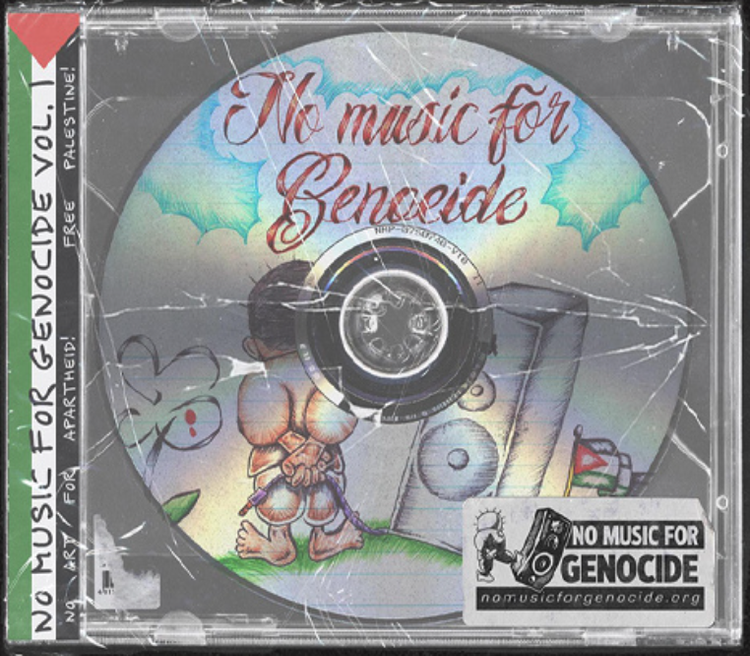
No Music For Genocide is a cultural boycott of Israel. Over 400 initial artists and labels have geo-blocked and removed their music from that territory in response to Israel's genocide in Gaza; ethnic cleansing of the Occupied West Bank; apartheid within Israel / '48; political repression of Pro-Palestine efforts wherever we live; and the music industry's own ties to weapons and crimes against humanity.
This tangible act is just one step toward honoring Palestinian demands to isolate and delegitimize Israel as it kills without consequence on the world stage. The successful cultural boycotts against apartheid South Africa prove that our creative work grants us agency and power. When we wield it together, we add unified pressure to a growing, global, interdependent movement, from Hollywood to the docks of Morocco.
Within a few months of Russia's invasion of Ukraine, every major label either unilaterally removed their entire catalogue from Russia or closed operations entirely, implicitly or explicitly condemning Putin's actions while donating to Ukraine. No such measures have been taken against Israel, or in support of Palestine, after decades of illegal occupation and 23 months into Israel's accelerated genocide.
This initiative is borderless and open to all artists and labels who want to boycott. We hope it leads to additional efforts against the music industry's complicity. If you or someone you know is a musician, manager, or other music worker, you can find instructions on how to participate in the boycott on the No Music for Genocide website.
|
New York: Gate of the Sun Reading + Fundraiser, 1 October
|
|
Riffing on the title of the novel by the late great Elias Khoury, Gate of the Sun is an evening of short readings to raise money for The Sameer Project’s South Gaza campaign, which provides tents, food, water, life saving medical care, and cash support to Palestinians in Gaza. As winter approaches, the need for further aid grows ever more dire. Next month marks 2 years of our tax dollars enabling carnage, genocide, and ethnic cleansing in Gaza, but the vast stain of American complicity extends across the entire 76 year history of land theft, apartheid, and ethnosupremacy in occupied Palestine.
From within the heart of empire, this vantage point of global capital and knowledge production, it bears remembering that we have a unique responsibility to divert our available attention, resources, and political leverage to ending the war on Gaza and ensuring prompt justice for its people.
No registration is required for this event, which is being held at The People’s Forum. Donations are on a sliding scale from $10-$30 and can be made at the door.
|
DC Palestine Film and Arts Festival, 9-12 October
|
|
The DC Palestinian Film + Arts Festival (DCPFAF) was founded in 2011 by three women - Huda Asfour, Nadia Daar, and Noura Erakat - with a shared love of film, the arts, and Palestine. They envisioned a festival that would serve as a platform for the artistic creativity of Palestinians through film, music, and the visual arts. As we approach two years of unrelenting genocide in Gaza, this year’s program uncovers the layers of disruption that shape the experiences and threaten the livelihoods of Palestinians in Occupied Palestine and those in the diaspora witnessing it. It invites us to be a force for disruption, channeling unapologetic rage to demand a just future. The festival opens with a live performance from Fargo Nissim Tbakhi, followed by three days of award-winning films, discussions with artists, an interactive culinary workshop, and an engaging children's program. You can find more details, including the full program, registration, and the ticket portal, at the DCPFAF website.
|
London: From Lament to Liberation: Christian Voices from Palestine, 17 October
|
|
Sabeel-Kairos UK, a charity that works for human rights, justice and equality for Palestinians in partnership/solidarity with the Christian community in Palestine, invites you to attend From Lament to Liberation: Christian Voices from Palestine. This in-person conference will feature guest speakers such as Sahar Francis, the Palestinian human rights lawyer; Reverend Ashraf Tannous, the Pastor of the Lutheran Church in Beit Sahour; and Owen Jones, the journalist and writer. Both Francis and Tannous will be visiting for a week of engagements. Starting the day with a time for refreshments and catching up, the conference will then include talks, a panel, and also the chance in the afternoon to take part in an act of public witness. Find more details, get your tickets, and support the work of Sabeel-Kairos UK here.
|
"Salem's poems are must-reads, proceeding with a cleverly calculated off-the-cuff quality and a relentless, dry, weird wit. They spin absurdist nightmares of art and history, of links and screenshots and mediated engagement with atrocity, of the genocide against Palestinians and the many attendant erasures. Salem writes, astutely and acutely, of belonging, unbelonging, and the possibilities and impossibilities of solidarity. These poems are, in short, essential." – Natalie Shapero
In Monk Fruit, Edward Salem prowls the edges of prophecy and punch line, like Rumi on acid. Edward Salem is a poet who knows the void but refuses its totalizing darkness, choosing instead to light matches in its depths. Salem reveals, then expands, worlds with each poem. From Detroit to Gaza, the Big Bang to whatever calamity comes next, he reports from far ahead of the curve, beyond the current cosmic crunch with “poise and peculiarity” (Ottessa Moshfegh). A thrilling debut collection and punk treatise, Monk Fruit bypasses ideology, finds a side door, and rearranges the furniture. Monk Fruit publishes tomorrow in the US, and in November in the UK. You can preorder the book in our Bookshop (US / UK).
|
Media RoundupHouse Arab – Commenting on the cognitive dissonance he experienced as a fact checker at a prestigious magazine in the wake of October 7, Ismail Ibrahim describes the impossible demand for “objective” coverage of settler colonialism in the West Bank and the genocide in Gaza. Exhibit G: Baby Moses & Khalas – An essay on the bifurcation of Palestine between Arabic and English and the force of premonition by the poet Fady Joudah: “The most terrible honesty in human civilisation is genocide. It doesn’t lie. No genocide has ever not declared its intentions. Those who carry it out may split from their reality, unable to recognize what they’ve declared in the material truth it has become. I am not visionary. I am not ahead of my time. I am Palestinian in a world blind to its time.” Ecocide, Imperialism and Palestine Liberation – Hamza Hamouchene elaborates the crucial intersections between climate justice and Palestinian freedom, examining how environmental destruction has always been part of the Zionist project of settling, controlling, and erasing the land. Uprooting Trees: An Attempt on Uprooting Palestinians – Jwan Zreiq documents how the recent destruction of more than 3000 olive trees outside of Ramallah manifests Israel’s ongoing “ecological colonialism,” but emphasizes the persistence of Palestinian replanting as a form of resistance. Indigenous Women: Letter of Solidarity with Humanitarian Flotilla – A proclamation from a coalition of Indigenous women from Turtle Island that highlights parallels in the genocides of Indigenous peoples and proclaims solidarity with and support for the Sumud Flotilla in its attempts to break the siege on Gaza. “In Gaza, we are born to die”: A Day in the Life of an Aid Seeker – In this dispatch from Gaza, Khaled al-Qershali writes of a harrowing twelve hours he spent unsuccessfully seeking food at a GHF-led aid distribution site as the Israeli military fired into the crowds. UK Recognition of Palestinian State Distracts From What Is Right – Ismail Patel argues that Britain’s symbolic recognition of a Palestinian state only serves to retrench Israel’s colonial power structures and does nothing to stop Israel’s bombardment of Gaza, which the UK continues to fund and supply. Genocide in Gaza and the New York Declaration: A Verdict Without Teeth? – Following the UN’s recent determination that Israel is committing genocide in Gaza, Azmat Ali laments the “law without enforcement and legitimacy without power” that leaves the international legal order incapable of meaningfully stopping the genocide. Together for Palestine: Truly Historic – Gabriel Polley reviews the recent Palestine solidarity concert in the UK as a watershed moment in the shift in public support for Palestinian freedom. As Israel Faces Increasing International Isolation, BDS Becomes More Crucial Than Ever – Mitchell Plitnick argues that Israel has made itself economically vulnerable to divestment and sanctions, and that even Netanyahu and his government recognize that “an isolated Israel is a failed Israel.” Britain’s Part in Gaza’s Suffering – Nick Cosburn reports on the Gaza Tribunal, held in the UK earlier this month to document the century-long involvement of the British state in the dispossession and destruction of Palestine. A Life That Doesn’t Know How to Live – A new poem from the Gazan poet Fatena Abu Mostafa: “I breathe— / but the air passes through me / like a guest who never sits, never apologizes.” Death Has Died in Gaza – Writing from the West Bank, Abdaljawad Omar considers how the Zionist fragmentation of Palestine metes out the ravages of colonial violence unequally, wishing this were not so: “This is not the same as nihilism, nor is it the clean poetics of martyrdom. It is something murkier: a refusal of the world’s cruel prolongation of suffering, an impatience with its slow-motion genocidal theater. A desire to collapse the unbearable waiting, to shorten the interval between loss and one’s own disappearance. A death wish, yes—but collective, almost utopian in its twisted way: that if we must vanish, we vanish together.” On Imagining in Gaza – ArabLit interviews Taqwa Ahmed Al-Wawi, a Gazan writer and poet, about her studies, her interest in poetry, her zine Gaza Calling, and her belief in speculative fiction: “I want to write stories where Palestinians are not only surviving but also exploring, inventing, and leading—stories where we shape the future instead of being erased from it.”
|
|
Consider subscribing to the PalFest Bookshelf to receive a curated selection of the finest new and classic books by Palestinian writers. Was this email forwarded to you? Sign up to receive it in your inbox.
|
|
|
|