Honoring the martyred journalist Hossam Shabat, whose final request was: “Do not stop speaking about Gaza. Do not let the world look away.” ͏ ͏ ͏ ͏ ͏ ͏ ͏ ͏ ͏ ͏ ͏ ͏ ͏ ͏ ͏ ͏ ͏ ͏ ͏ ͏ ͏ ͏ ͏ ͏ ͏ ͏ ͏ ͏ ͏ ͏ ͏ ͏ ͏ ͏ ͏ ͏ ͏ ͏ ͏ ͏ ͏ ͏ ͏ ͏ ͏ ͏ ͏ ͏ ͏ ͏ ͏ ͏ ͏ ͏ ͏ ͏ ͏ ͏ ͏ ͏ ͏ ͏ ͏ ͏ ͏ ͏ ͏ ͏ ͏ ͏ ͏ ͏ ͏ ͏ ͏ ͏ ͏ ͏ ͏ ͏ ͏ ͏ ͏ ͏ ͏ ͏ ͏ ͏ ͏ ͏ ͏ ͏ ͏ ͏ ͏ ͏ ͏ ͏ ͏ ͏ ͏ ͏ ͏ ͏ ͏ ͏ ͏ ͏ ͏ ͏ ͏ ͏ ͏ ͏ ͏ ͏ ͏ ͏ ͏ ͏ ͏ ͏ ͏ ͏ ͏ ͏ ͏ ͏ ͏ ͏ ͏ ͏ ͏ ͏ ͏ ͏ ͏ ͏ ͏ ͏ ͏ ͏ ͏ ͏ ͏ ͏ ͏ ͏ ͏ ͏ ͏ ͏ ͏ ͏ ͏ ͏ ͏ ͏ ͏ ͏ ͏ ͏ ͏ ͏ ͏ ͏ ͏ ͏ ͏ ͏ ͏ ͏ ͏ ͏ ͏ ͏ ͏ ͏ ͏ ͏ ͏ ͏ ͏ ͏ ͏ ͏ ͏ ͏ ͏ ͏ ͏ ͏ ͏ ͏ ͏ ͏ ͏ ͏ ͏ ͏ ͏ ͏ ͏ ͏ ͏ ͏ ͏ ͏ ͏ ͏ ͏ ͏ ͏ ͏ ͏ ͏ ͏ ͏ ͏ ͏ ͏ ͏ ͏ ͏ ͏ ͏ ͏ ͏ ͏ ͏ ͏ ͏ ͏ ͏ ͏ ͏ ͏ ͏ ͏ ͏ ͏ ͏ ͏ ͏ ͏ ͏ ͏ ͏ ͏ ͏ ͏ ͏ ͏ ͏ ͏

Weekly Dispatch, 31 March

The Martyrdom of Hossam Shabat

Last Monday, on March 24, 2025, Israel assassinated the journalist Hossam Shabat in a targeted airstrike. He was twenty-three years old.

As one of a small handful of journalists who remained in the north of Gaza amid Israel’s genocidal war, Hossam bore witness to mass death and destruction at a scale that is almost unimaginable. At the time of his murder, two weeks after Israel officially broke the ceasefire, he was on his way to report on Israel’s assassination of another Gazan journalist, Mohammed Mansour.

This final article by Hossam, a report from Beit Hanoun filed just hours before he was killed, concludes: “Massacre after massacre, leaving only the screams of mothers in its wake and the dreams of children that have turned to ash. There is no justification for this. Everything is being crushed: the lives of innocent people, their dignity, and their hopes for a better future.”

Hossam’s journalism was honest, courageous, and unflinching in its commitment to the dignity of his people, and he reported under conditions of unthinkable duress. As PalFest co-organizer Abdel Sharif Kouddous writes in an introduction to the final story that Hossam filed for Drop Site News, “He was displaced over twenty times. He was often hungry. He buried many of his journalist colleagues. In November, he was wounded in an Israeli airstrike. I still can’t believe I am referring to him in the past tense. Israel obliterates the present.”

Hossam wrote his own eulogy, which his team shared after he died: “If you’re reading this, it means I have been killed—most likely targeted—by the Israeli occupation forces. When this all began, I was only 21 years old—a college student with dreams like anyone else. For past 18 months, I have dedicated every moment of my life to my people. I documented the horrors in northern Gaza minute by minute, determined to show the world the truth they tried to bury. I slept on pavements, in schools, in tents—anywhere I could. Each day was a battle for survival. I endured hunger for months, yet I never left my people’s side.

“By God, I fulfilled my duty as a journalist. I risked everything to report the truth, and now, I am finally at rest—something I haven’t known in the past 18 months. I did all this because I believe in the Palestinian cause. I believe this land is ours, and it has been the highest honor of my life to die defending it and serving its people.

“I ask you now: do not stop speaking about Gaza. Do not let the world look away. Keep fighting, keep telling our stories—until Palestine is free.”


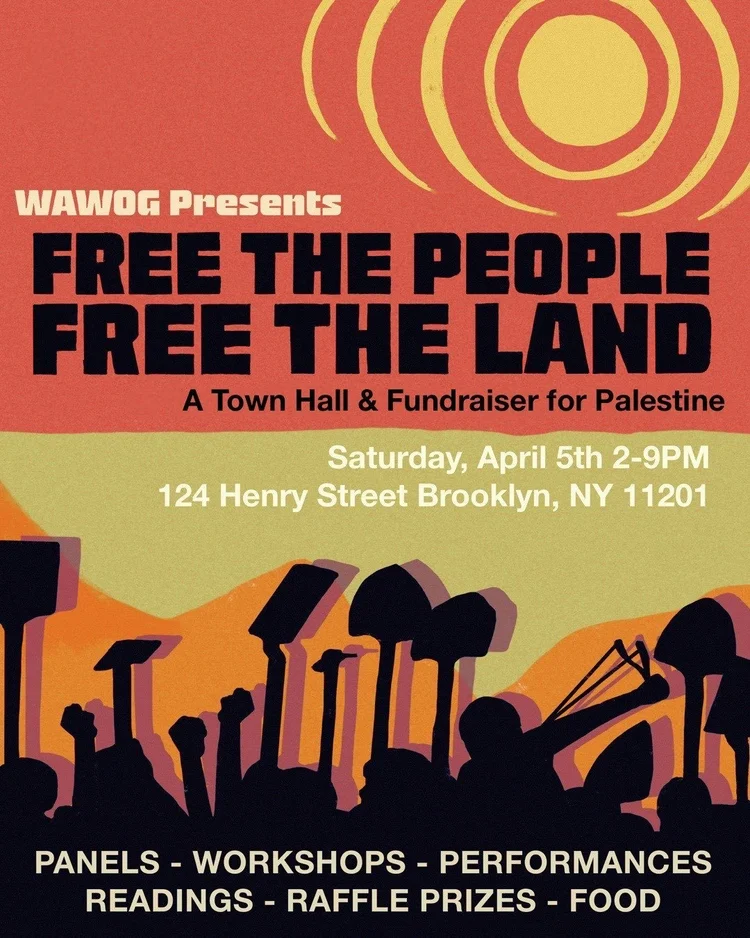
New York: Writers Against the War on Gaza Town Hall, April 5

Join Writers Against the War on Gaza on Saturday, April 5 from 2–9 PM for a community town hall centered on the right to return to stolen lands, the right to remain in the face of ongoing displacement, and the right to resist the systems of oppression that perpetuate dispossession worldwide.

As the Zionist regime intensifies its genocidal assault on Gaza and escalates the violent displacement of Palestinians in the West Bank, the fascist oligarchy of the United States has declared war on Palestinian and pro-Palestine activists on our campuses and in our communities. In these moments of heightened repression, we must remind ourselves that the struggle for liberation is not a choice but an imperative.

Ticket and raffle proceeds will go to Thamra, a Palestinian-run organization in the northern Gaza fostering food resilience and sovereignty by restoring and cultivating farm land; and PALSHIELD, which supports farming communities in the West Bank through the provision of life-saving medical supplies, protective gear, and training programs to defend against settler attacks.

You can find more information about the town hall and register here.


New York: Dina Abdulhadi & Farah Barqawi, April 7

The Poetry Project will be hosting Dina Abdulhadi and Farah Barqawi for a reading on Monday, April 7.

Dina Abdulhadi & Farah Barqawi are two poets writing through the breath and abundance of contemporary Palestinian poetry; their poems explore loss, family relations, and the shifting geographic and affective distances that give grief its many shades.

Visit the Poetry Project website to reserve your tickets. The event will also be livestreamed for free on the Poetry Project’s Youtube channel.


Book of the Week

Rich in memory, thought and materiality … Objects from April and May shows a serious conviction; a yearning for an alternative version of what is, and an imagining of what’s also possible.

—Anthony Anaxagorou

Objects from April and May is a rumination on the sanctity and significance of cherished possessions. Informed by the loss of precious gold in an armed robbery, these poems trace each taken item across years and borders, from a supermarket in Brooklyn to a checkpoint in Occupied Palestine to an American compound in Iraq. Yet they return, irrevocably, to a violent interaction on a quiet street in Oakland, California, gathering its shattered fragments.

Formally inventive and politically astute, Zena Agha’s poems bristle with a controlled melancholy. As she unspools one traumatic encounter and its reverberations, she shows how much material loss can teach us about love, attachment and sorrow.

You can buy Objects from April and May from Hajar Press. Copies of her book will also be available at our event in London with Ta-Nehisi Coates and Zena Agha this coming Thursday.


Media Roundup

Truth Is Never Finished – A new poem from Fady Joudah: “Then time did them in, and they did their time and were so alone for so long until we whom they had abolished returned from our aloneness with our cities rebuilt.” 

Palestinians Have the Right to Reject Surveillance – An episode of the podcast Makdisi Street featuring the anthropologist Hadeel Assali, in which they discuss the kidnapping of Mahmoud Khalil, the history of tunnels, and the ecology of Gaza.

The World’s Top Medical Journal Is Giving Cover to Genocide – Mary Turfah and Eric Reinhart examine how the New England Journal of Medicine, which just published its first article on Gaza, uses a depoliticized passive voice to frame the genocide, exonerates Israel, and obfuscates the fact that one of the article’s co-authors is a former Israeli soldier.

Dear Muslims, Consider Your Complicity in Gaza Genocide This Eid – Abubaker Abed calls out the hypocrisy of Muslim leaders breaking their fasts while engaged in normalization with Israel, and encourages Muslims around the world to move beyond hollow platitudes in their celebrations of Eid.

Shrouds Instead of Eid Clothes – Ghada Abu Muaileq describes the terror of Israel’s renewed war on Gaza in the midst of Ramadan, and the grief of experiencing another Eid during the genocide.

Gaza: Restoring Life Beyond the Physical Structures – In this roundtable, Dena Qaddumi and Jehad Abusalim grapple with the challenge of rebuilding Gaza when Israel could bomb it again at any moment, and advocate for a locally-led, rather than internationally-led, approach to the reconstruction process.

“The Target is Unmistakable”: The Shooting of Gaza’s Children – Amel Guettatfi examines the infrastructure that sustains the targeted and mass murder of children in Gaza, and the complete impunity with which Israel gets away with killing children.

The Land of Rebellious Oranges – Aziz Yafi offers a history of Jaffa oranges, once the pride of Palestinian agriculture and a symbol of Palestine before the watermelon, the settler-colonial seizure and destruction of orange groves, the sabotage of orange exports, and Israel’s eventual abandonment of Jaffa oranges as “too Palestinian to peel.”

Cooking Up Steadfastness in Gaza – Nada Hamdouna writes about how Gazans are finding new ways to prepare meals amid the blockade, attesting to the steadfastness of the people and their resilience in the month of Ramadan.

Enter 'Butterfly's Burden' – Writing after Mahmoud Darwish’s book The Butterfly’s Burden, Dalia Taha shares a new poem, in Sara Elkamel’s translation: “Poetry possesses this power. / You can read the same poem / a thousand times, / and always find dew on the words.”


PalFest is now on BlueSky! Give us a follow @palfest.bsky.social.

Was this email forwarded to you? Sign up to receive it in your inbox.

 
 SUPPORT PALFEST 

133a Rye Lane, London SE15 4BQ, UK

Powered by Squarespace

Unsubscribe