|
An elegy for Fatima Hassouna, Nasser Rabah’s English-language debut, and more. ͏ ͏ ͏ ͏ ͏ ͏ ͏ ͏ ͏ ͏ ͏ ͏ ͏ ͏ ͏ ͏ ͏ ͏ ͏ ͏ ͏ ͏ ͏ ͏ ͏ ͏ ͏ ͏ ͏ ͏ ͏ ͏ ͏ ͏ ͏ ͏ ͏ ͏ ͏ ͏ ͏ ͏ ͏ ͏ ͏ ͏ ͏ ͏ ͏ ͏ ͏ ͏ ͏ ͏ ͏ ͏ ͏ ͏ ͏ ͏ ͏ ͏ ͏ ͏ ͏ ͏ ͏ ͏ ͏ ͏ ͏ ͏ ͏ ͏ ͏ ͏ ͏ ͏ ͏ ͏ ͏ ͏ ͏ ͏ ͏ ͏ ͏ ͏ ͏ ͏ ͏ ͏ ͏ ͏ ͏ ͏ ͏ ͏ ͏ ͏ ͏ ͏ ͏ ͏ ͏ ͏ ͏ ͏ ͏ ͏ ͏ ͏ ͏ ͏ ͏ ͏ ͏ ͏ ͏ ͏ ͏ ͏ ͏ ͏ ͏ ͏ ͏ ͏ ͏ ͏ ͏ ͏ ͏ ͏ ͏ ͏ ͏ ͏ ͏ ͏ ͏ ͏ ͏ ͏ ͏ ͏ ͏ ͏ ͏ ͏ ͏ ͏ ͏ ͏ ͏ ͏ ͏ ͏ ͏ ͏ ͏ ͏ ͏ ͏ ͏ ͏ ͏ ͏ ͏ ͏ ͏ ͏ ͏ ͏ ͏ ͏ ͏ ͏ ͏ ͏ ͏ ͏ ͏ ͏ ͏ ͏ ͏ ͏ ͏ ͏ ͏ ͏ ͏ ͏ ͏ ͏ ͏ ͏ ͏ ͏ ͏ ͏ ͏ ͏ ͏ ͏ ͏ ͏ ͏ ͏ ͏ ͏ ͏ ͏ ͏ ͏ ͏ ͏ ͏ ͏ ͏ ͏ ͏ ͏ ͏ ͏ ͏ ͏ ͏ ͏ ͏ ͏ ͏ ͏ ͏ ͏ ͏ ͏ ͏ ͏ ͏ ͏ ͏ ͏ ͏ ͏ ͏ ͏ ͏ ͏ ͏ ͏ ͏ ͏ ͏
Elegy for Fatima Hassouna
|
|
Written by Haidar al-Ghazali & translated by Ahdaf Soueif
|
|
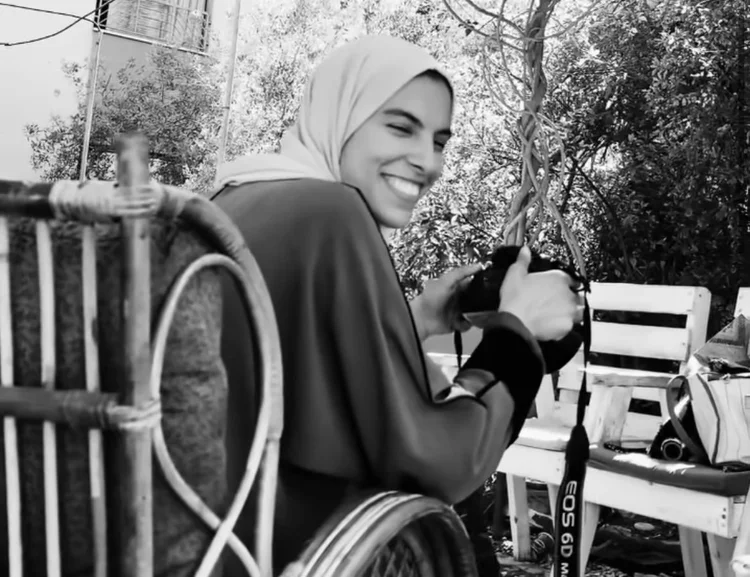
Fatima Hassouna, an artist and photojournalist in Gaza, was looking forward to her wedding when she was killed alongside five siblings in an attack on her family home in Gaza City on 16 April. The following is an elegy written by Haidar al-Ghazali, translated by Ahdaf Soueif. You can read it in Arabic here. Fatima asked me to write her epitaph. A heavy task no text can fulfill. I don’t believe that Fatima has gone or that this city will lose one of its clearest voices. I don’t believe it because Fatima suits life: the dreams she drew, step by step, image by image, poem by poem, song by song. I don’t believe it. I remember one day we met during the genocide. I remember our talk of Gaza whom we love for no reason, with no justification, without even understanding why we love a city in which we are killed every day. We walked in Sahaba market with a friend and she joked “you have an agent now, Haidar, we want a treat!” And we drank “barrad”. We were in a famine, a jet hovered above us, and we were drinking barrad and walking as though we owned the world. I remember when she visited our home during the genocide to film a story about me. She sat with my mother for a long time, and she promised it would not be the only visit. Fatima, I’m still waiting for you. I don’t believe that she has gone. I examine conversations that take on new meanings. I found a message where she says “pray God I see you high, high up there and I tell my kids about you and say be like Haidar.” I stared for a long time at the words “my kids” and I saw a mother teaching her child about life, taking photos of him - exceptional photos, his birthday, his first steps. She likes photographing hands, she would have taken a photo of his hand in hers - on the road. I stare at the words “my kids” and I imagine how the air would have been green with her smile as a mother, how happy she would have been with her fiancé and with the love the genocide cut off. I imagine the wrong we would do Fatima if we don’t think of her passing, in itself, with all its weight, all its wounds - with all her children who will not come, and her love that’s been broken - the wrong we would do her if we don’t think of her passing, just in itself, as a massacre. The Israeli Occupation killed Fatima and ten of her family because she dreamed, because she laughed, because she’s real. Fatima is part of a generation in Gaza bidding itself farewell. Life made us slowly, and we know very well what we want. We never heard the sound of a plane unless it was bombing us, we never traveled except by closing our eyes as we looked out to sea. Among us are poets and artists and photographers and singers. We have the energy to build an abundance of beauty for a world that only needed to look to see us. Some of us you know and some you don’t and I promise I will not wait till they pass before you get to know them. Earth is letting us down, killing the dream within us; we write wills that the elderly in other parts of the world don’t think of. We say, as Fatima said to me, “perhaps our salvation, Haidar, lies in not being saved.”
|
New York: “From Hawaiʻi to Palestine,” May 2
|
|
From Hawaii to Palestine brings together artist Sean Connelly, curator and writer Nadine Fattaleh, Professor Nour Joudah, and Professor Brandy Nālani McDougall to draw connections between Hawaiʻi and Palestine, with a focus on food sovereignty, land, and mapping Indigenous resistance. Connelly will share his artistic and mapping projects on Native Hawaiian ahupuaʻa (geologic subdivision) systems and aloha ʻāina (love of the land) projects. Fattaleh will speak about the work of Palestinian cooperative farms in the occupied West Bank, highlighting grassroots efforts to resist the political and ecological violence of the Israeli occupation. Professor Joudah will present her research on both Native Hawaiian and Palestinian struggles for liberation, highlighting how Indigenous countermapping is both a cartographic and decolonial praxis. Professor McDougall will read her award-winning poetry about the profound relationships Kanaka ʻŌiwi have with the ʻāina, and the ways that the realities of living under occupation echo between Hawaiʻi and Palestine. Professor Andrew Ross will moderate this event’s conversations about the connections between Indigenous resistance in both Hawaiʻi and Palestine. You can find more details and reserve your free tickets here.
|
Berlin: aʿmāl al-'arḍ - An Exhibition on Landworks, Collective Action and Sound
|
|
Following its debut at the Venice Biennale, 'aʿmāl al-'arḍ – Landworks, Collective Action and Sound opens in Berlin at Spore on April 25. Rooted in the southern West Bank and Dar Jacir’s artist residencies, the exhibition brings together works that explore land, agriculture, and heritage as spaces of memory, care, and resilience. Across three chapters—on survival, care, and visibility—artists trace how seeds, sounds, movements, and shared rituals sustain communities and challenge erasure. These are acts of persistence: of working the land, telling stories, and imagining futures against fragmentation. Presented by Dar Jacir, the exhibition opens at 7pm on April 25 at the Spore Initiative in Berlin. It runs through February 2026.
You can find more details, including for the exhibition opening, here.
|
London: We Are Not Numbers Book Launch, May 6
|
|
Join us at the Southbank Center on May 6 to hear Ahmed Alnaouq and Malak Mattar discuss We Are Not Numbers: The Voices of Gaza's Youth, in conversation with Aimee Shalan. We Are Not Numbers (WANN) is a youth-led Palestinian nonprofit project established in the Gaza Strip in 2014, with the aim of telling the everyday, human stories of thousands of Palestinians. Participants in WANN have published their work in Al-Jazeera, Mondoweiss, The Nation, The New Arab, ArabLit, and other outlets, providing some of the most honest and urgent stories from on the ground in Gaza over the past nineteen months. Tickets are running out, so be sure to book yours right away.
|
"Besieged by death and destruction, the poet performs his eternal task; saying the unsayable. Rabah digs deep, finds these rivulets of tears, and gives them wings. Rescued poems that rescue us from our own silence, reminding us that poetry is a refuge in this cruel world. Elegantly translated in a labor of love and solidarity." – Sinan Antoon
Like Mandelstam, Akhmatova, and Vallejo, Gazan poet Nasser Rabah embodies the magnificent possibilities of the human spirit and imagination under extreme conditions. Born in Gaza in 1963, Rabah spent some of his formative years in Egypt, before returning to Gaza in his early twenties, where he has lived ever since. There, among the generations who built its neighborhoods and populate its villages, in a place of great natural beauty and vibrant cities, living under constant surveillance, military occupation, blockade, siege and regular attack, in a culture steeped in literary and spiritual tradition, Rabah developed his distinctively singular vision and poetics. Gaza: The Poem Said Its Piece is Rabah’s first book in English translation. The poems include a selection from three of his published collections, along with new poems written after October 2023, during the full-scale Israeli assault on Gaza, collectively translated by Ammiel Alcalay, Emna Zghal, Khaled Al-Hilli, and Mosab Abu Toha. Throughout, we find a combination of irreverence and fidelity to tradition, a sense of surrealism infusing the depiction of everyday incomprehensibilities, and an unsettling, delicate tenderness always on edge in an atmosphere of sensory inundation and emotional saturation. Rabah’s poems can be raw and uninhibited by social or literary conventions, exploring and questioning one’s relationship to divinity in absurd circumstances while confronting the sacred cows of his own society, along with the sometimes voyeuristic interest from those on the outside of it. Gaza: The Poem Said Its Piece officially releases tomorrow. You can order your copy from our Bookshop (US / UK).
|
Media RoundupA Resonant Death – A curated selection of prose and poetry by Fatima Hassouna, assassinated by Israel last week, appearing here in Batool Abu Akleen’s translation: “If I must die, I want a resonant death. I want to be neither a newsflash, nor a number within a group. I want a death heard by the whole world, an impact imprinted forever, and everlasting photos that won’t be buried by time or place.” An Even Worse Collaboration than the One Before – An episode of the podcast Makdisi Street, in which they interview Abdeljawad Omar about the deepening complicity of the Palestinian Authority in the Israeli occupation to foreclose any kind of popular resistance in the name of pragmatism. After Nonviolence – In this long read, Ben Ehrenreich reports from the West Bank about the tightening fist of the occupation, concluding that “the constant grind of violence from Israeli soldiers and settlers alike was slowly killing nonviolent resistance.” Project Esther: Suppressing Palestinian Solidarity in the US – Tariq Kenney-Shawa analyzes Project Esther, the neoconservative blueprint for quashing the Palestine solidarity movement, offering recommendations to organizations and movement workers for countering this new modality of state-led repression. Salt Air – A short story from the collection Preliminaries for a Future Orchard by Karim Kattan, translated by Jeffrey Zuckerman, about two lovers who travel from Ramallah to Gaza. No Resurrection: The Life and Death of the Modern University – Steve Salaita argues that the systemic hostility toward Palestine solidarity in western universities serves to reveal a deeper crisis not just in higher education but in the liberal values that undergird it. Israel’s Genocide Has Resumed—and So Have the Media’s Failures – Analyzing media coverage of the resumption of the genocide in Gaza, Aseel Rad shows how western media continue to manufacture consent and launder Israeli propaganda. Palestinians Fear Gaza’s Largest Cemetery Has Been Destroyed. Not Even Our Dead Can Have Peace. – Nadera Mushtha ponders the fate of the graves in Al-Sharqiya Cemetery, made inaccessible since the beginning of the genocide by Israeli snipers. Believe Me, We Are A Beautiful People – Asem Alnabih calls for the recognition of the complex humanity and dignity of the people of Gaza. On Palestinian Prisoner Day We Must Recognise Past Victories – Wael El Gaube, recently released from an Israeli prison after thirty years of detention, writes about how Palestinian political prisoners organize within the prisons as part of the broader national liberation movement.
|
|
Consider subscribing to the PalFest Bookshelf to receive a curated selection of the finest new and classic books by Palestinian writers. Was this email forwarded to you? Sign up to receive it in your inbox.
|
|
|
|