|
An excerpt from the Introduction to HEAVEN LOOKS LIKE US, Fringe Palestine, BlackStar Film Festival, and more. ͏ ͏ ͏ ͏ ͏ ͏ ͏ ͏ ͏ ͏ ͏ ͏ ͏ ͏ ͏ ͏ ͏ ͏ ͏ ͏ ͏ ͏ ͏ ͏ ͏ ͏ ͏ ͏ ͏ ͏ ͏ ͏ ͏ ͏ ͏ ͏ ͏ ͏ ͏ ͏ ͏ ͏ ͏ ͏ ͏ ͏ ͏ ͏ ͏ ͏ ͏ ͏ ͏ ͏ ͏ ͏ ͏ ͏ ͏ ͏ ͏ ͏ ͏ ͏ ͏ ͏ ͏ ͏ ͏ ͏ ͏ ͏ ͏ ͏ ͏ ͏ ͏ ͏ ͏ ͏ ͏ ͏ ͏ ͏ ͏ ͏ ͏ ͏ ͏ ͏ ͏ ͏ ͏ ͏ ͏ ͏ ͏ ͏ ͏ ͏ ͏ ͏ ͏ ͏ ͏ ͏ ͏ ͏ ͏ ͏ ͏ ͏ ͏ ͏ ͏ ͏ ͏ ͏ ͏ ͏ ͏ ͏ ͏ ͏ ͏ ͏ ͏ ͏ ͏ ͏ ͏ ͏ ͏ ͏ ͏ ͏ ͏ ͏ ͏ ͏ ͏ ͏ ͏ ͏ ͏ ͏ ͏ ͏ ͏ ͏ ͏ ͏ ͏ ͏ ͏ ͏ ͏ ͏ ͏ ͏ ͏ ͏ ͏ ͏ ͏ ͏ ͏ ͏ ͏ ͏ ͏ ͏ ͏ ͏ ͏ ͏ ͏ ͏ ͏ ͏ ͏ ͏ ͏ ͏ ͏ ͏ ͏ ͏ ͏ ͏ ͏ ͏ ͏ ͏ ͏ ͏ ͏ ͏ ͏ ͏ ͏ ͏ ͏ ͏ ͏ ͏ ͏ ͏ ͏ ͏ ͏ ͏ ͏ ͏ ͏ ͏ ͏ ͏ ͏ ͏ ͏ ͏ ͏ ͏ ͏ ͏ ͏ ͏ ͏ ͏ ͏ ͏ ͏ ͏ ͏ ͏ ͏ ͏ ͏ ͏ ͏ ͏ ͏ ͏ ͏ ͏ ͏ ͏ ͏ ͏ ͏ ͏ ͏ ͏ ͏
From the PalFest Bookshelf
|
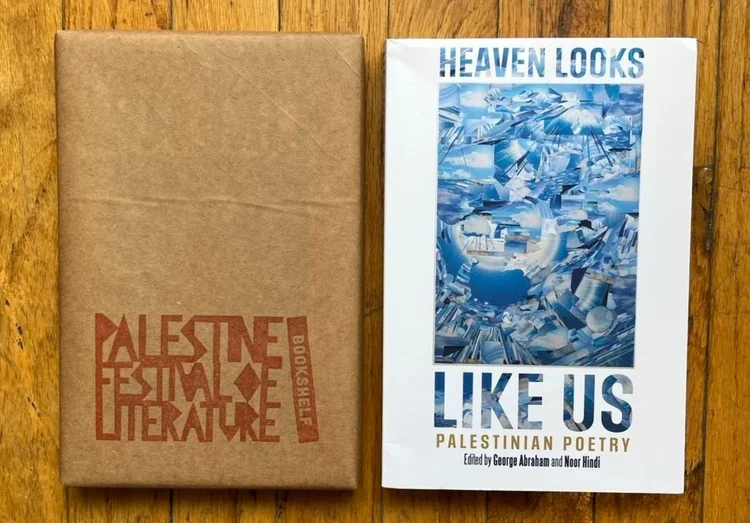
An Excerpt from the Introduction to Heaven Looks Like Us
|
|
Written by George Abraham and Noor Hindi We are writing from one of the darkest moments of Palestinian history, into a future whose shape, let alone existence, is unknowable to us. It is January 2024. We are over a hundred days into the latest iteration of Zionist genocide in Gaza, and with the necrotic weight of over 25,000 slaughtered kin—each a whole universe of dreams, hopes, wonders, beauties, stolen from us too soon—we sing. After the threshold of apartheid—after the slaughter of arms and white phosphorous became the genocide of bombed hospitals and starving streets—we sing. After realizing the sheer number of times we’ve been here before—after siege after impossible siege, after after—after nakba made a repetition of us—after repetition made a nakba of us—we sing. Poetry, for our people, has always been a kind of im/possible music. We remember Kanafani who wrote of the filaheen left behind in the Nakba of 1948— farmers and workers who, in their labor of love to the land, remembered details of our ethnically cleansed villages with field songs. It is here, in a tradition of resisting such annihilation, that our revolutionary verses stake their origin, and hail people to join our fight, as Mahmoud Darwish once wrote: “Dust of my country I rebel for you. Returning brother I rebel for you.”
Against a colonial regime that dis-remembered the basic facts of us via archival looting, theft, and plunder—with both the unwriting and paving over implicit to all acts of erasure—the shape of our memory left behind is not one of empire’s narrative telos, but of catastrophe’s timeless and fragmented lyric. From the singular wound of our becoming Palestinian, we emerge as mirror and agitator: we live our deaths in exile, trespassing border after failed border, presencing ourselves in every tongue that fails to hold the weight of us, translating wound into word into world. We are writing from the event horizon of another world. And thus, the times are filled, impossibly, with terror. Let us be clear: we come not to present institutionally sanitized, stakes- less poetry, as is typical in hegemonic Anglophone spaces, especially in the U.S. We sing as the embodied aftermath of the cost of western imperial living. We come as swarm, as multitude and multiverse. We come to un-craft, dismantle, and re-imagine the imperial tools of language that made our unwriting possible to begin with. We come acknowledging the weight of the slaughtered writers that brought us to this moment: intellectuals like Ghassan Kanafani and Refaat Alareer who terrified the state with their brilliance, journalists like Shireen Abu Akleh and the over 100 martyred in 2023 alone for witnessing the ongoing genocide in Gaza—murdered poets like Heba Abu Nada who, looking death in the face, teach life with every breath. Against a failed literary imagination that can only digest us in death and suffering—against institution after illiterate institution censoring the basic truth of us—against every cowardly writer refusing to speak out, even as poets in our community are kidnapped, imprisoned, tortured, even martyred for their words—we come with the insistence that the Anglophone world bears witness to our living. We sing like the whole world is at stake. We sing because the whole world is at stake. Visit the PalFest Bookshelf to find out more about Heaven Looks Like Us, and consider subscribing for a curated selection of the best new books on Palestine.
|
Edinburgh: Welcome to the Fringe Palestine, 12-15 August
|
|
As Palestinians are killed while queuing for food, as cemeteries overflow, as aid workers and journalists vanish beneath rubble... the genocide in Gaza shows no sign of easing. How can we partake in art without acknowledging this reality? This August, Welcome To The Fringe, Palestine offers an answer. A small act of solidarity. A refusal to look away. Organised by a collective of Scotland-based artists, producers and writers with deep connections to Palestine and the wider Middle East, this four-day mini-festival brings Palestinian artist voices to the heart of the Fringe, supported by Independent Arts Projects and Workers Theatre Co-operative. Many of the organisers, including Sara Shaarawi, Henry Bell, Catrin Evans, Leonor Estrada, Ben Harrison, David Greig and Farah Saleh, have spent years working closely with artists and communities in Palestine. Running over four days at Portobello Town Hall, the programme for Welcome To The Fringe, Palestine features a series of uncensored theatre, music, poetry, dance, comedy, storytelling and food. Highlights include My Death Is Not a Song, a poetry performance by Mohammed Moussa, founder of the Gaza Poets Society, and Harvest The Musical by Amira Al Shanti, celebrating the strength and spirit of the women of Gaza. Fadi Murad’s Flux In This Forgotten Farm is billed as a performance ‘between fire and water,’ while And Here I Am’s coming-of-age story will take audiences on a journey from Jenin Refugee Camp to an Israeli prison. There’s also a dance double-bill of Amir Sabra’s Within This Party and Che: (Not) A Ballet by Nur Garabli. In Performance Desperately In Need Of An Audience, Mahmoud Al-Hourani blends puppetry, silence and dark humour to explore survival. Welcome To Gaza, from the Hands Up Project, stitches together 19 short plays by children from Gaza and the West Bank. In Gaza Food And Stories, Diline Abushaban invites audiences into her kitchen, sharing traditional recipes and personal memories. Rapper Lafi, from Jabalia camp in Gaza, also takes the stage with a set that blends lyricism, melody and Palestinian storytelling. The festival closes with an electrifying Arab A Dub DJ Set by Bruno Cruz, a dive into Palestinian underground music, pulsing with fresh beats. Each work in the programme offers a kind of archival pulse, preserving language, culture and imagination against the slow violence of suppression. Check out the full schedule and get your tickets here.
|
Palestinian Cinema at BlackStar Film Festival, 31 July–3 August
|
|
The Philadelphia-based Blackstar Film Festival is presents its 14th annual celebration of indie film from the global majority. Featuring more than 90 films from 40 countries worldwide, this year’s theme is “cinema for liberation,” centering the struggles of Black, Brown, and Indigenous peoples around the world. The festival includes a number of Palestinian films that are screening in-person and virtually between 31 July and 3 August. Maqluba, directed by Mike Elsherif (in person + virtual, 31 July): Laila, a Palestinian American drummer, visits her grandmother in her new apartment during a powerful storm under the guise of helping her unpack. But her nefarious goals slowly unfold as they delve deeper into the mystical, fateful night. The Flowers Stand Silently, Witnessing, directed by Theo Panagopoulos (in person, 31 July): When a Palestinian filmmaker based in Scotland unearths a rarely seen Scottish film archive of Palestinian wildflowers, he decides to reclaim the footage. This tender essay film questions the role of image making as a tool of both testimony and violence when connected to entanglements between people and land. All That’s Left of You, directed by Cherien Dabis (in person, 1 August): After a Palestinian teen gets swept up into a West Bank protest, his mother recounts their family’s story of hope, courage and relentless struggle that led them to this fateful moment. Gazan Tales, directed by Mahmoud Nabil Ahmed (in person and virtual, 2 August): In the heart of the Gaza Strip, four men navigate through divergent paths in pursuit of their definitions of existence, intertwining their fates amidst the complexities of life, love and survival.
You can purchase tickets for these films, check out the full schedule of films, and learn more about the festival by visiting BlackStar.
|
|
The Palestine Festival of Literature is looking for a new designer to join our team. As an expanding organisation working across multiple fields, we are searching now for someone who can create and sustain a unified political aesthetic that holds together the multiple strands of our work. These include live events and their accompanying artworks, our weekly Newsletter, our Bookshelf book subscription service, regular publishing across social media, printed stationery, merchandise, annual reports and more. Applicants must be bilingual in Arabic and English and able to produce both separate and linguistically integrated designs. We welcome applications from anywhere in the world, though priority will be given to applicants in Palestine and the Arab world. Find out more and apply here.
|
|
Palestine - 1 is a daring response to the events of the last year, and the ongoing genocide taking place in Gaza, with an unexpected approach to the event that underpins the entire Middle East conflict: the Nakba of 1948. As a prequel to Comma’s award-winning Palestine + 100 science fiction project, this anthology asks 10 Palestinian writers, all of whose grandparents were forcibly displaced by the events of 1948, to re-imagine Palestine the year before this catastrophe, and to explore the events leading up to it, on a village-by-village basis. Every writer has been allocated a specific village to write about, and challenged to explore the atmosphere of this moment through fantastical, supernatural and speculative fiction devices. Palestine - 1 publishes this week. You can get your copy from Comma Press.
|
Media RoundupBeneath the Howl of Hunger – Alaa Alqaisi writes about the ways that hunger eats away at language, and yet, the people of Gaza do not - and will not - fall silent: “We spoke with mouths filled with dust. We sang, even with broken teeth. We prayed from fractured knees. And though the world may have looked away, let this much be remembered: we named the hunger. We bore it. We endured. Let that remain.” If I Must Starve – Nour Abdel Latif shares a new poem, after Refaat Alareer, on bearing the hunger: “If I must starve, / let it be with dignity in my children’s eyes, / not with my hands tied by silence.” Walking Corpses – Amjad Iraqi writes about the current conditions of mass starvation in Gaza as the culmination of Israel’s policy of “calibrated deprivation,” the long-term result of Israel’s control over every single good that comes into Gaza. Palestinians Are Collapsing in Gaza's Streets From Israeli-Imposed Starvation Campaign – Abdel Qader Sabbah and Sharif Abdel Kouddous report on the impossible choice facing Gazans under the Israeli blockade on aid: either starve to death or risk being murdered in pursuit of aid. Israel’s Food Points are Not Just Death Traps – They’re an Alibi for the Starvation of Gaza – Alex de Waal argues that the GHF, the so-called aid distribution organization in Gaza, is merely another way for Israel to humiliate, undermine, and destroy the very fabric of society in Gaza. The Price of Occupation – M. Z. Adnan reviews Dying to Exist, a recent book of photography by the Palestinian photographer Sakir Khader that documents Israeli violence and Palestinian resilience in Jenin refugee camp. A Flower Can Still Grow – Jim Aitken reviews the collection We Are Not Numbers, edited by Ahmed Alnaouq and Pam Bailey, which collects poetry and prose by young Gazan writers. "A Love That Endures": How Tamer and Sabreen Defied War and Death – Husam Maarouf tells the story of Tamer and Sabreen, two lovers in Gaza who grow even closer after Sabreen loses her leg in an airstrike. Graffiti of Control – Donya Abu Sitta writes about the graffiti that Israeli soldiers leave on the ruins of buildings as another front of psychic warfare against the people of Gaza. The Gazans Trapped in Sheba Hospital – Dikla Taylor-Sheinman reports on the tribulations of Gazan patients in a Tel Aviv hospital, pawns in Israel’s “narrative of [its own] benevolence” whose care is meant to obfuscate Israel’s wholesale destruction of Gaza’s healthcare system. Mohsen Mahdawi on His ICE Detention and Justice in Palestine – In this interview with Samuel Stein at Jacobin, Mohsen Mahdawi discusses how his experiences growing up in the West Bank prepared him to navigate the systems and discourses of the US carceral system. Badar Khan Suri, the Georgetown Researcher Abducted by ICE Speaks Out – In this interview with Hira Ahmed at Acacia Magazine, Badar Khan Suri describes how he was shuttled through detention centers across the United States and how ICE refused to provide him any religious accommodations. Zionism, or Racism with(out) Borders – Rawan Abdelbaki and Rana Sukarieh argue that Zionism is a project of bordering that is both materially embedded in, and helps proliferate, global racial capitalism. How Palestine’s National Flower Mirrors Its People’s Plight – Marta Vidal writes about the Faqqu’a iris, the native habitat of which has been dispossessed by the expansion of Israeli settlements in the West Bank; even still, the Faqqu’a iris “dies standing.”
|
|
Consider subscribing to the PalFest Bookshelf to receive a curated selection of the finest new and classic books by Palestinian writers. Was this email forwarded to you? Sign up to receive it in your inbox.
|
|
|
|