|
Selections from the newest installment of the PalFest Bookshelf and more. ͏ ͏ ͏ ͏ ͏ ͏ ͏ ͏ ͏ ͏ ͏ ͏ ͏ ͏ ͏ ͏ ͏ ͏ ͏ ͏ ͏ ͏ ͏ ͏ ͏ ͏ ͏ ͏ ͏ ͏ ͏ ͏ ͏ ͏ ͏ ͏ ͏ ͏ ͏ ͏ ͏ ͏ ͏ ͏ ͏ ͏ ͏ ͏ ͏ ͏ ͏ ͏ ͏ ͏ ͏ ͏ ͏ ͏ ͏ ͏ ͏ ͏ ͏ ͏ ͏ ͏ ͏ ͏ ͏ ͏ ͏ ͏ ͏ ͏ ͏ ͏ ͏ ͏ ͏ ͏ ͏ ͏ ͏ ͏ ͏ ͏ ͏ ͏ ͏ ͏ ͏ ͏ ͏ ͏ ͏ ͏ ͏ ͏ ͏ ͏ ͏ ͏ ͏ ͏ ͏ ͏ ͏ ͏ ͏ ͏ ͏ ͏ ͏ ͏ ͏ ͏ ͏ ͏ ͏ ͏ ͏ ͏ ͏ ͏ ͏ ͏ ͏ ͏ ͏ ͏ ͏ ͏ ͏ ͏ ͏ ͏ ͏ ͏ ͏ ͏ ͏ ͏ ͏ ͏ ͏ ͏ ͏ ͏ ͏ ͏ ͏ ͏ ͏ ͏ ͏ ͏ ͏ ͏ ͏ ͏ ͏ ͏ ͏ ͏ ͏ ͏ ͏ ͏ ͏ ͏ ͏ ͏ ͏ ͏ ͏ ͏ ͏ ͏ ͏ ͏ ͏ ͏ ͏ ͏ ͏ ͏ ͏ ͏ ͏ ͏ ͏ ͏ ͏ ͏ ͏ ͏ ͏ ͏ ͏ ͏ ͏ ͏ ͏ ͏ ͏ ͏ ͏ ͏ ͏ ͏ ͏ ͏ ͏ ͏ ͏ ͏ ͏ ͏ ͏ ͏ ͏ ͏ ͏ ͏ ͏ ͏ ͏ ͏ ͏ ͏ ͏ ͏ ͏ ͏ ͏ ͏ ͏ ͏ ͏ ͏ ͏ ͏ ͏ ͏ ͏ ͏ ͏ ͏ ͏ ͏ ͏ ͏ ͏ ͏ ͏
From the PalFest Bookshelf:
|
Selections from Heaven Looks Like Us: Palestinian Poetry
|
|
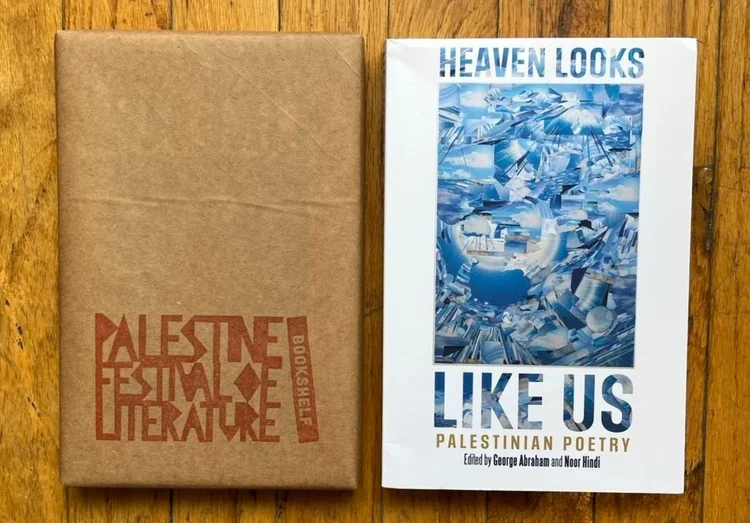
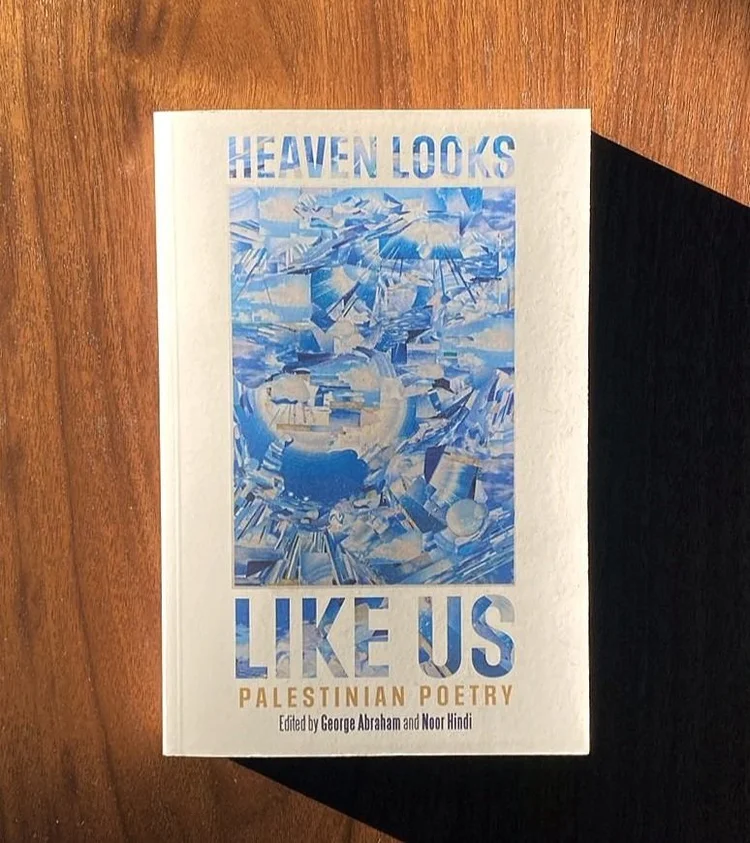
The latest installment of the PalFest Bookshelf is Heaven Looks Like Us, a brand-new anthology of contemporary Palestinian poetry edited by Noor Hindi and George Abraham. Heaven Looks Like Us is a battle-cry against the annihilation of a people. As Palestinian history remains haunted by exile, violence, and grief, so, too, are the poems in this anthology. And yet, editors George Abraham and Noor Hindi present these realities alongside other themes that are also true: queer and feminist perspectives, eco-poetry, meditations on love and time, and lineages of protest. “We hope,” Hindi and Abraham write in their epilogue, “in the words of Lina al-Sharif, ‘When / we are free, / this land will know peace / the poem will be complete.’ Until liberation, we hope this anthology provides the rage, love, and kinship we need to continue resisting in big and small ways. Below you can read five poems from the collection, poems that Hindi and Abraham call “poems of survival and abundant love.”
|
|
from And most of all I would miss the shadows of the tree’s own leaves cast upon its trunk by the orange streetlight in the sweet blue darks of spring by Mira Mattar bird lungs burn
tiny sleeps the
elevator brain
cords shaft & tremble
city razed again
dream incubated luxuries
blaze & gasp & char
of library kids of Beita
dazzle settlers
with fires flares & lasers
headlights phone torches
stripe their nights to
sleepless mirrors
hallucinating nation
*
inessential
dream to be
‘Palestinian’ is
a position no
an orientation no
it is the whole
compass no
it is the stars
themselves no
it is the way
I’m going no
it is the way
to go no
it is the way
to stay no
it is the way
*
blue wolf
watches
every dream
spoon melt
& twist
the sun
within its
hollow bowel
to madness
no rest
inside what
watches
no sleep no
sleep my
darlings
|
|
Ordinary Grief
by Maya Abu Al-Hayyat
(translated from the Arabic by Fady Joudah) I loved you, my love,
there’s no doubting or denying it,
no justification or synopsis,
there isn’t even a story behind it.
It was a collision.
The stairway was rising,
the heavens descending,
and the roads had softened.
I loved you, my love,
as words gather in a poem
and remain forever,
immortal, true, and quotable.
And just as death ceases to be
a logo of end or separation,
I loved you for life
to become elegant, dignified,
useful, for the seasons
to succeed one another,
rhythmic and precise,
for cruelty to rationalize
our capacity to resist, endure.
There’s no doubt or denial.
Look at them, my sighs
as they rise for twenty years.
And check my gaze that recognizes
you in an instant
whenever you pass in a breeze,
look at them as they break
over sidewalks and king-size beds,
and you’ll know, my love,
that I loved you
without evidence,
motive, or demand.
|
|
Punctum/Metaphor
by Carolina Ebeid Love remains a kind of present tense. This is how we describe the scenes in photographs—as though the actions in them were still happening. My father is throwing a rock in this picture. My father keeps lions in his chest & they rip apart a gazelle in this picture. A man throwing a rock; the image holds an old grammar. This rock has yet to leave the hand, to measure the horizontal span from A to B. Nor has it completed the vertical distance from first line to last line, riding a tangle of syntax. The photograph captures a skirmish in the West Bank town of Nablus; the man hurling the rock is my father insofar as Juliet is the sun.
|
|
The Best Way to Give Roses
by Yahya Ashour My father never gave a bouquet of roses to my mother, he gave her rose seedlings.
|
|
PORTRAIT OF ME AS BREAD BAKING IN JERUSALEM
by Summer Farah I WAS THERE! I WAS THERE! I WAS ALWAYS
THERE! A BALL OF DOUGH INFLATING
UPON THE SAJ UNTIL IT FALLS INTO WARMTH.
I WAS THERE! A BREAKFAST LAID OUT UNDER THE
OLIVE TREES AFTER AN EARLY MORNING HARVEST.
I WAS THERE! FILLED WITH SALTY CHEESE WHILE
FISH BOB FOR WATERMELONS IN THE ICY LAKE.
THERE, BY THE CHURCH IN ICRITH, TO SERVE
ALONGSIDE FIGS, TREES NEVER PREDICTING
THEY WERE SOON TO BE ORPHANED. I
WAS THERE! LEFT ON THE TABLE NEXT
TO STILL-WARM CUPS OF TEA, THE SHUFFLE
OF KEYS BEING STOWED. I WAS THERE,
SETTLERS SETTING FIRE TO LAND. I WAS THERE
TRUNKS FALLING TO SOOT. I WAS THERE,
EARTH MOURNING THE BODIED ASH.
I WAS THERE, A PEOPLE DISPOSSESSED.
I WAS ALWAYS THERE. I AM ALWAYS HERE.
THE FIRST MADE ALONG RIVER BANKS, GRAINS
OLDER THAN SETTLER THAN STATE THAN TANKS
THAN BORDERS THAN BOMBS THAN
BRITISH THAN EMPIRE & STILL
NEVER LEAVE THE HANDS THAT MAKE ME!
|
|
Visit the PalFest Bookshelf to find out more about Heaven Looks Like Us, and consider subscribing for a curated selection of the best new books on Palestine. |
|
|
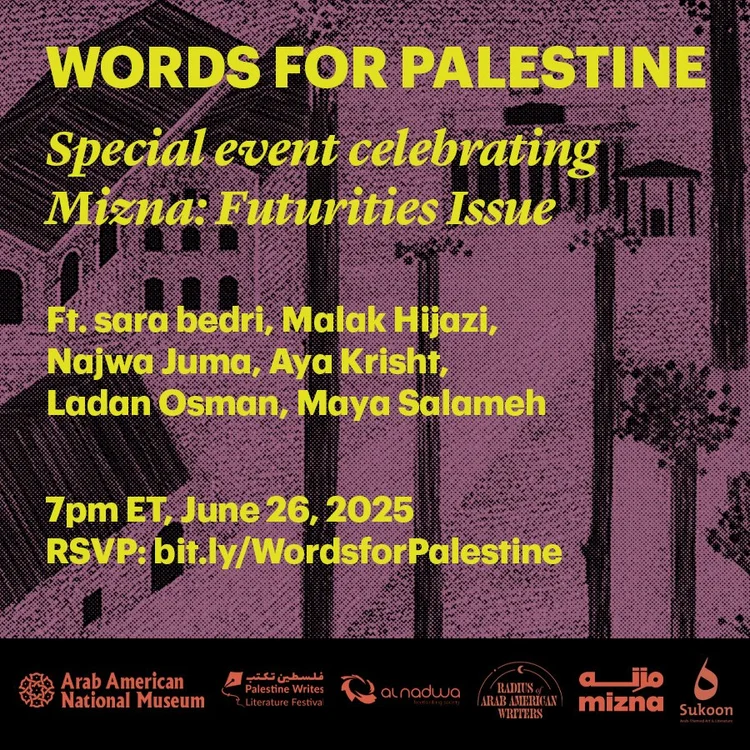
Virtual: Mizna’s Words for Palestine, June 26
|
|
Join Mizna’s monthly online series Words for Palestine which aims to center and highlight Palestinian voices during this devastating time. This special edition on June 26 celebrates writing in Mizna’s most recent issue, Futurities, and features readings from sara bedri, Malak Hijazi, Najwa Juma, Aya Krisht, Ladan Osman, and Maya Salameh. Visit Mizna more information, and to RSVP for this free event.
|
New York: Kan Yama Kan Fundraiser for Gaza, June 28
|
|
Hala Alyan and Sara Deniz Akant are hosting a special Pride edition of Kan Yama Kan. Featuring readings, artwork, flash tattoos, raffles,and more, the event is raising funds to support educational initiatives in Gaza. You can find more details and reserve your tickets here.
|
London: BDS at 20, July 12
|
|
20 years ago, Palestinian civil society organisations, representing an absolute majority of all Palestinians in their homeland and in exile, issued a historic call for people of conscience to engage in boycott and divestment campaigns, and demand targeted sanctions like arms and trade embargoes, in order to break the state, corporate and institutional complicity that upholds Israel’s system of oppression. The call has provided a strategy for people around the world to engage in meaningful action to help create the conditions for Palestinians to succeed in their struggle for freedom and justice. The 20th anniversary of the call comes as Palestinians continue to face one of the darkest hours in their enduring liberation struggle. Israel’s genocide in the Gaza Strip continues, with many tens, if not hundreds of thousands of Palestinians killed. Across the rest of Palestine, Israel is ramping up its land grabs, ethnic cleansing and military invasions. Ending British complicity in Israel’s genocide, settler-colonialism and apartheid couldn’t be more urgent. This major conference in London will look at how we escalate our targeted boycott campaigns against complicit corporations, continue to win divestment from councils and universities, and step up our call for sanctions on Israel. For more details, and to reserve your tickets, visit Palestine Solidarity Campaign.
|
In this debut collection electric with grief, rage, and love, Fargo Nissim Tbakhi enacts the liberatory possibilities of a language reclaimed. Through a variety of invented forms and stirring unravelings, these poems tunnel, excavate, eulogize, exclaim, and most elegantly imagine where we might go once we reject the dehumanizing gaze and obsessions of a crumbling empire and return to ourselves and to each other. TERROR COUNTER will crack your heart open. Let it, let the light come pouring in. —Lena Khalaf Tuffaha
TERROR COUNTER is a debut collection of poems which acts against the many languages—interpersonal, legal, literary, rhetorical—constricting the lives and meanings of Palestinians. Moving through sections of varying experimentalism, from an invented visual form (the Gazan Tunnel) to all-caps queer ecstatic, Fargo Nissim Tbakhi here attempts to carve out a space for the negotiation of an alternative subjecthood. The voices in this collection are driven by despair, futility, utopia, vulnerability and the spirit of a collective liberation; they move in search of a lyrical voice which can inhabit both the paranoid preservationist mode that facilitates Palestinian survival, and the imaginative possibilities that might make possible Palestinian life. TERROR COUNTER asks: where and how might a Palestinian subject escape the public consumption of American letters? And, ultimately, how can we continue to love each other amidst the endless terror of the colonial world? TERROR COUNTER publishes tomorrow. You can get a copy on our Bookshop (US / UK).
|
Media RoundupTo Set Sail Again and Again and Again Until Gaza is Free – Farah Fangary interviews Huwaida Arraf, who has been organizing voyages to challenge the blockade of Gaza since 2008, about the impact of the Madleen, the activists who remain in Israeli detention, and the ongoing work of the Freedom Flotilla Coalition. To Gaza: An Interview with Nasser Rabah – Alex Tan interviews the poet Nasser Rabah about his recently published collection The Poem Said Its Piece, his favorite Palestinian poetry, and his hopes for the future. Axes of Resistance – Séamus Malekafzali studies the historical emergence of the Axis of Resistance in the wake of the Naksa, showing how the actually-existing and plural Axes of Resistance is quite different from the one conjured by Western and Zionist media. The Annexation of the West Bank Is Complete – Jasper Nathaniel offers a grim assessment of how the settler movement has been enshrined in policy since October 7, and how the genocide in Gaza has been used to distract from the Zionist takeover of the West Bank. From Gaza to Iran, Israel is Fighting to Maintain Western Empire – In the wake of Israel’s bombing of Iran, Yoav Haifawi examines how Israel has long served as a lever for Euro-American material and political interests in the Middle East. Crimes of the Century – Suzy Hansen takes a detailed survey of how international legal institutions are navigating the well-documented brazenness of Israel’s war crimes, ultimately asking why they continue to fail to act. Why Must We Be Heroes? – T.S., a young mother in Gaza, resents the ways that the world has made Palestinians always have to be strong, steadfast, and resilient. Zionism Breaks – Alberto Toscano reads the works of Jewish leftists Franco Fortini and Furio Jesi, which grappled with the ethical imperative of renouncing Zionism as a colonial ideology. The Psychological Barrier Broken by Iran and Israel’s Missile Exchange – Kareem Shaheen and Rasha Elass reflect on the long-held Realpolitik approach to Iran by the West, “that any provocation of Iran would spark an all-encompassing regional war,” suggesting that we have entered uncharted territory. Automated Surveillance, Targeted Killings, and AI Warfare in Gaza – Walid el Houri interviews the legal scholar Khalil Dewan on how the Israeli government is bending international law to justify AI-powered targeting and biometric control in a new era of algorithmic warfare. Survivors Give Me Strength – Sara Awad profiles people undergoing rehabilitation and physical therapy in Gaza’s besieged healthcare system. Gaza and the Undoing of Zionism – Yakov M. Rabkin reviews several recent books on the political horizons of Zionism in light of Israel’s genocide in Gaza, ultimately foreseeing, with Avi Shlaim, “an imminent end to the genocidal Zionist regime.”
|
|
Consider subscribing to the PalFest Bookshelf to receive a curated selection of the finest new and classic books by Palestinian writers. Was this email forwarded to you? Sign up to receive it in your inbox.
|
|
|
|