|
Omar El Akkad and Munther Isaac in New York, Raja Shehadeh in Lancaster, and Sarah Aziza’s The Hollow Half ͏ ͏ ͏ ͏ ͏ ͏ ͏ ͏ ͏ ͏ ͏ ͏ ͏ ͏ ͏ ͏ ͏ ͏ ͏ ͏ ͏ ͏ ͏ ͏ ͏ ͏ ͏ ͏ ͏ ͏ ͏ ͏ ͏ ͏ ͏ ͏ ͏ ͏ ͏ ͏ ͏ ͏ ͏ ͏ ͏ ͏ ͏ ͏ ͏ ͏ ͏ ͏ ͏ ͏ ͏ ͏ ͏ ͏ ͏ ͏ ͏ ͏ ͏ ͏ ͏ ͏ ͏ ͏ ͏ ͏ ͏ ͏ ͏ ͏ ͏ ͏ ͏ ͏ ͏ ͏ ͏ ͏ ͏ ͏ ͏ ͏ ͏ ͏ ͏ ͏ ͏ ͏ ͏ ͏ ͏ ͏ ͏ ͏ ͏ ͏ ͏ ͏ ͏ ͏ ͏ ͏ ͏ ͏ ͏ ͏ ͏ ͏ ͏ ͏ ͏ ͏ ͏ ͏ ͏ ͏ ͏ ͏ ͏ ͏ ͏ ͏ ͏ ͏ ͏ ͏ ͏ ͏ ͏ ͏ ͏ ͏ ͏ ͏ ͏ ͏ ͏ ͏ ͏ ͏ ͏ ͏ ͏ ͏ ͏ ͏ ͏ ͏ ͏ ͏ ͏ ͏ ͏ ͏ ͏ ͏ ͏ ͏ ͏ ͏ ͏ ͏ ͏ ͏ ͏ ͏ ͏ ͏ ͏ ͏ ͏ ͏ ͏ ͏ ͏ ͏ ͏ ͏ ͏ ͏ ͏ ͏ ͏ ͏ ͏ ͏ ͏ ͏ ͏ ͏ ͏ ͏ ͏ ͏ ͏ ͏ ͏ ͏ ͏ ͏ ͏ ͏ ͏ ͏ ͏ ͏ ͏ ͏ ͏ ͏ ͏ ͏ ͏ ͏ ͏ ͏ ͏ ͏ ͏ ͏ ͏ ͏ ͏ ͏ ͏ ͏ ͏ ͏ ͏ ͏ ͏ ͏ ͏ ͏ ͏ ͏ ͏ ͏ ͏ ͏ ͏ ͏ ͏ ͏ ͏ ͏ ͏ ͏ ͏ ͏ ͏
New York: Omar El Akkad, 29 March
|
|
Join Revolution Books in Harlem for a conversation with Omar El Akkad, author of One Day, Everyone Will Have Always Been Against This. One Day is part memoir, part analysis and searing exposure. Of the book, the acclaimed writer and theorist Christina Sharpe wrote: “Omar El Akkad’s One Day, Everyone Will Have Always Been Against This lays bare and eviscerates the genocidal logics of fascism and liberalism. Here, language does what we need it to do: it clarifies, it condemns, it names, it grieves. Here, too, is a lexicon for what might survive this.” El Akkad will be in conversation with the award-winning poet Marwa Helal. The event is free with a suggested donation of $5-10 at the door. Find more information and register here.
|
New York: Reverend Munther Isaac, 30 March
|
|
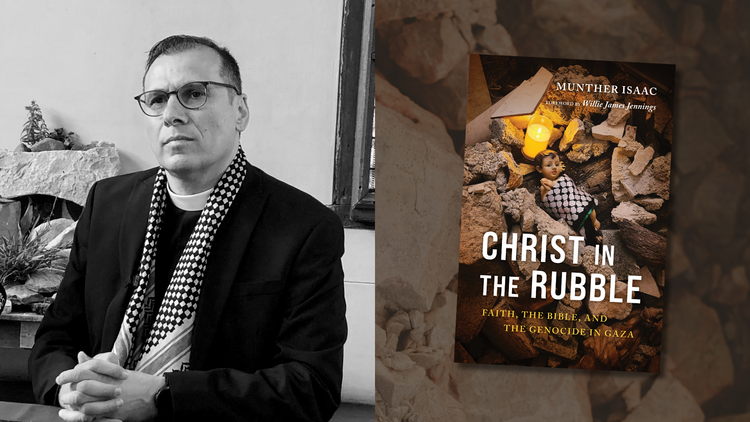
On March 30, the Riverside Church will be hosting Reverend Munther Isaac, author, theologian, and advocate for justice in the Holy Land, as he discusses his groundbreaking new book, Christ in the Rubble. Rev. Munther Isaac is one of the most senior leaders of the Palestinian Christian community, pastor at the Christmas Lutheran Church in Bethlehem, and an outspoken critic of Christian Zionism. He will be in conversation with Rev. Mira Sawlani-Joyner, Minister for Justice, Advocacy, and Change at The Riverside Church about faith, hope, and resilience amidst the devastation of the Israeli occupation and the genocide in Gaza. You can find more information and reserve tickets here.
|
Lancaster LitFest presents “Walking Palestine” with Raja Shehadeh, 2 April
|
|
When the Palestinian writer and lawyer Raja Shehadeh first started hill walking in Palestine, in the late 1970s, he was not aware that he was travelling through a vanishing landscape. At this event, hosted by Lancaster Litfest on 2 April, Shehadeh will talk about his life, his work as a human rights lawyer, his love of walking and his many acclaimed books, including Palestinian Walks. He will be joined by his wife and co-author Penny Johnson to discuss their new book Forgotten: Searching for Palestine's Hidden Places and Lost Memorials, a profound meditation on memory and what we choose to memorialise. This evening will be a celebration of Raja's life’s work and will include images, video and film footage of the Palestinian landscape through which he has walked all his life. Visit Lancaster Litfest for more information, and to reserve your tickets.
|
What is the vocabulary of loss? How much history can a body hold? Visceral, gutting, and stunning, The Hollow Half is one of those books that comes along only rarely. Sarah Aziza has found a way to make language an active witness to one woman's—and one nation's—insistence on life. —Maaza Mengiste
“You were dead, Sarah, you were dead.” In October 2019, Sarah Aziza, daughter and granddaughter of Gazan refugees, is narrowly saved after being hospitalized for an eating disorder. The doctors revive her body, but it is no simple thing to return to the land of the living. Aziza’s crisis is a rupture that brings both her ancestral and personal past into vivid presence. The hauntings begin in the hospital cafeteria, when a mysterious incident summons the familiar voice of her deceased Palestinian grandmother. In the months following, as she responds to a series of ghostly dreams, Aziza unearths family secrets that reveal the ways her own trauma and anorexia echo generations of violent Palestinian displacement and erasure—and how her fight to recover builds on a century of defiant survival and love. As she moves towards this legacy, Aziza learns to resist the forces of colonization, denial, and patriarchy both within and outside her. Weaving timelines, languages, geographies, and genres, The Hollow Half probes the contradictions and contingencies that create “nation” and “history.” Blazing with honesty, urgency, and poetry, this stunning debut memoir is a fearless call to imagine both the self and the world anew. The Hollow Half releases next month. You can preorder it from our Bookshop.
|
Reading RoundupReading Etel Adnan During a Genocide – Isabella Hammad revisits Etel Adnan’s novel Sitt Marie Rose, written against the backdrop of the Lebanese civil war, as a prism through which to reappraise the genocide in Gaza and the ethical demands it makes of us. Palestine Open Maps – In the first of a set of articles on mapping in Palestine and Lebanon, Ahmad Barclay and Majd Al-Shihabi discuss a database of maps of Palestine that they created (linked here) to reimagine and re-vision the spatial politics and human geography of Palestine. Counter-Mapping the Archive – In this second article on mapping, Zena Agha describes her process of developing counter-cartographies of Palestine, subverting and reclaiming the power that archival maps exert in the Zionist project. They've Started Again – Selma Dabbagh argues that the Israeli PR machine, which used to be “disingenuous, but slick,” has become much more bare-faced and direct in avowing its genocidal aims. “First, They Came for Mahmoud Khalil” – Meghnad Bose, in tandem with two anonymous Columbia students, reports on the place that Mahmoud Khalil occupied among his friends and colleagues at the university, and on the void he left behind since his abduction by ICE on March 8. The Victory Picture – Alessandro Camon argues that Israel’s attempts to capture a rhetorical or visual “victory” in Gaza has failed to do anything except reveal the “mind-boggling appetite” that it has for Palestinian suffering. Decolonization is a Pedagogical Struggle: Rethinking Liberal Academia’s Role in Palestine – Mjriam Abu Samra writes about the structural contradiction in academic discourse around Palestine, which is to theorize decolonization without the colonized. As Gaza Genocide Resumes, Is Trump's Ethnic Cleansing Plan the Endgame? – Reporting from Gaza, Mohamed Solaimane suggests that the point of renewing the bombardment of Gaza is to force Palestinians to choose between death and permanent exile. Where Do You Bury a Little Boy's Leg? – A new poem from Nawel Abdallah: “The sky is occupied by drones / that hate birds and children. / Every gasp of air is dust and white phosphorus.” The Last Flower atop Memory's Stone – A poem by the acclaimed poet Fadwa Tuqan, translated for the first time by Adey Almohsen: “Some of a memory, / for which we readied a grave and shroud. / Burying it silently, / and heaping parable upon it.”
|
|
PalFest is now on BlueSky! Give us a follow @palfest.bsky.social. Was this email forwarded to you? Sign up to receive it in your inbox.
|
|
|
|