|
An excerpt from Resisting Erasure, the latest installment the PalFest Bookshelf; resistance in Jenin; leather and henna; and more. ͏ ͏ ͏ ͏ ͏ ͏ ͏ ͏ ͏ ͏ ͏ ͏ ͏ ͏ ͏ ͏ ͏ ͏ ͏ ͏ ͏ ͏ ͏ ͏ ͏ ͏ ͏ ͏ ͏ ͏ ͏ ͏ ͏ ͏ ͏ ͏ ͏ ͏ ͏ ͏ ͏ ͏ ͏ ͏ ͏ ͏ ͏ ͏ ͏ ͏ ͏ ͏ ͏ ͏ ͏ ͏ ͏ ͏ ͏ ͏ ͏ ͏ ͏ ͏ ͏ ͏ ͏ ͏ ͏ ͏ ͏ ͏ ͏ ͏ ͏ ͏ ͏ ͏ ͏ ͏ ͏ ͏ ͏ ͏ ͏ ͏ ͏ ͏ ͏ ͏ ͏ ͏ ͏ ͏ ͏ ͏ ͏ ͏ ͏ ͏ ͏ ͏ ͏ ͏ ͏ ͏ ͏ ͏ ͏ ͏ ͏ ͏ ͏ ͏ ͏ ͏ ͏ ͏ ͏ ͏ ͏ ͏ ͏ ͏ ͏ ͏ ͏ ͏ ͏ ͏ ͏ ͏ ͏ ͏ ͏ ͏ ͏ ͏ ͏ ͏ ͏ ͏ ͏ ͏ ͏ ͏ ͏ ͏ ͏ ͏ ͏ ͏ ͏ ͏ ͏ ͏ ͏ ͏ ͏ ͏ ͏ ͏ ͏ ͏ ͏ ͏ ͏ ͏ ͏ ͏ ͏ ͏ ͏ ͏ ͏ ͏ ͏ ͏ ͏ ͏ ͏ ͏ ͏ ͏ ͏ ͏ ͏ ͏ ͏ ͏ ͏ ͏ ͏ ͏ ͏ ͏ ͏ ͏ ͏ ͏ ͏ ͏ ͏ ͏ ͏ ͏ ͏ ͏ ͏ ͏ ͏ ͏ ͏ ͏ ͏ ͏ ͏ ͏ ͏ ͏ ͏ ͏ ͏ ͏ ͏ ͏ ͏ ͏ ͏ ͏ ͏ ͏ ͏ ͏ ͏ ͏ ͏ ͏ ͏ ͏ ͏ ͏ ͏ ͏ ͏ ͏ ͏ ͏ ͏ ͏ ͏ ͏ ͏ ͏ ͏
From the PalFest Bookshelf
|
Resisting Erasure: Capitalism, Imperialism, and Race in Palestine
|
|
The latest installment of the PalFest Bookshelf includes two books: 48Kg., a collection of poetry by Gazan poet Batool Abu Akleen, and Resisting Erasure by Adam Hanieh, Robert Knox, and Rafeef Ziadah. Challenging mainstream narratives that reduce Palestine to ancient hatreds, humanitarian tragedy, or legal abstractions, Resisting Erasure places Israeli settler-colonialism within the broader historical arc of imperialism, race, and fossil capitalism in the Middle East. In so doing, it offers a succinct and far-reaching critique of the socio-economic and political forces that sustain the Israeli settler-colonial project. Below, you can read an excerpt from Resisting Erasure. And you can find out more about the book, including the other perks of becoming a Bookshelf subscriber, here.
|
|
Settler colonialism is often reduced to the logic of extermination – the idea that native populations must be eradicated to secure land for settlers. But as history shows, the reality is far more complex. Like all forms of colonialism, the imperatives of capital accumulation and labour exploitation are essential to how settler colonialism unfolds. A historical survey of settler-colonial experiences worldwide reveals the diversity of these forms: outright attempts at extermination; the creation of ‘Bantustan’ enclaves where indigenous populations are confined under a veneer of self-rule; the direct exploitation of native labour in sectors like mining and agriculture; or various combinations of these methods. The form settlement takes is not simply a question of ideology but of how the control of land, labour, and capital is exercised in any given historical moment. Many contingencies are at play here – not least, the ability of indigenous populations to resist colonisation. As we have seen, the Palestinian experience under Israeli settler colonialism has also taken multiple forms, evolving over time and shaped by the specific territorial enclaves and the ways they have been absorbed into Israeli capitalism. The mechanisms of domination – whether through expulsion and violence, direct military occupation, or economic subjugation – have never been static. These mechanisms have also been bound up with the emergence of different social forces within Palestinian society, which has been a crucial lever in how Israeli settler colonialism has operated over the past eight decades. A common element to all these processes is the necessity of managing the Palestinian population, and here the racialisation of Palestinians is paramount. In the present day, this racialisation has crystallised around a language of terrorism and the need for security. Part and parcel of the Israeli state’s racist projection of itself as a bastion of European civilisation has always been that it is surrounded by hostile – and uncivilised – peoples. The Palestinian people, of course, lack the organised state capacity to resist Israeli occupation, oppression, and expulsion. Their resistance therefore has always been rooted in non-state action – including armed violence but also embracing strikes, protests, and demonstrations, and seeking international solidarity through initiatives like the boycott, divestment and sanctions movement, as well as diplomatic and legal avenues.
|
|

|
The crucial move of the Israeli state is to isolate the use of armed force and label it as ‘terrorism’. This threat of terrorism, nebulous but ever-present, is then used to characterise all Palestinian political activities and all Palestinians – especially Palestinian men – as potential terrorists. In doing so, the Israeli state relies upon the pervasive (and often unconscious) racialised belief that non-Europeans are inherently threatening, violent, irrational, and untrustworthy. |
|
|
|
|
Alongside serving as a powerful rhetorical justification, this racialised language of security has enabled the construction of a vast architecture of surveillance and control over Palestinians. In the West Bank, for instance, Palestinians may only travel along specific roads, are only able to enter the territory of the Israeli state (and thus move between the fragmented Palestinian territories) on a highly restrictive basis, and are governed by Israeli military law (whereas Israeli citizens living in the same area are subject to Israeli civil law). All of this is justified by a claim to ‘security’. The sum total of these actions has led lawyers, activists, human rights organisations and others to characterise Israel as practising apartheid, that is to say, governance by means of systematic racial domination. The Israeli state has, of course, insisted that its concerns are about security and nothing more. In this way, the language of security and terrorism has offered the Israeli state a flexible mechanism to enact the racialised management of Palestinians, while simultaneously denying its own structurally racist foundations.
|
|
Since Israel’s establishment in 1948, the language of security and terrorism has also been key to justifying military violence and the selective assassination of Palestinian leaders and political figures. In particular, the period of the Second Intifada (2000–04) saw Israel’s assassination policy concretised through the development of an expansive legal framework around the tactic of ‘targeted killing’. In essence, the Israeli state made the argument that the threat of ‘terrorist’ violence from Palestinians would activate Israel’s right to self-defence and thus authorise – under international law – the use of military force. Such military force could then be ‘targeted’ at various elements of the Palestinian political leadership. The idea of ‘targeted killing’ was embedded in a wider racial narrative about the continual threat posed by Palestinians. This supposed permanency of the Palestinian threat extends the justification for Israeli violence in both time and space. For instance, the Israeli state claims the right to strike at Palestinians and their supporters pre-emptively – before any attack has occurred – and anywhere. To take a recent example, in July 2024 the Israeli state killed Ismail Haniyeh in Tehran, Iran, acknowledging responsibility five months later. Similarly, Israel Katz, the Israeli defence minister, warned the Houthis in Yemen: ‘Anyone who raises a hand against Israel will have his hand cut off, and the long arm of the IDF will strike him and hold him accountable.’ In positing the Palestinian people in their entirety as a permanent threat to security, as terrorists one and all, the Israeli state thus justifies military action in ‘self-defence’ anytime and anywhere. The racialisation of Palestinians enables the unbounded deployment of Israeli military force.
|
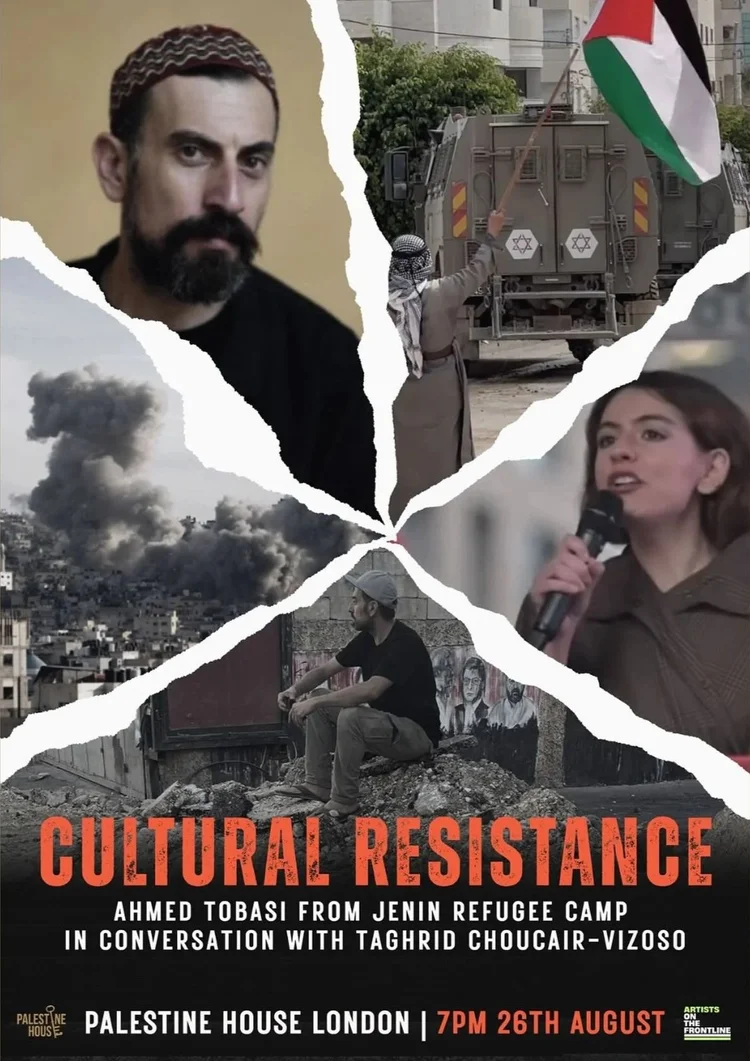
London: Cultural Resistance in Jenin, 26 August
|
|
Join Ahmed Tobasi in conversation with Taghrid Choucair-Vizoso on cultural resistance, artistic censorship, and the ongoing ethnic cleansing of Jenin Refugee Camp, Palestine. Born in Jenin Camp during the First Intifada, Tobasi joined the armed resistance to defend his community during the Second Intifada. For him, culture has always been inseparable from political struggle. While imprisoned for four years in a desert detention camp, he was inspired to become an actor. There, the arts became a means of survival, a way to forge identity, and an act of defiance. Today, as Tobasi and more than 23,000 fellow refugees face forced displacement from Jenin Camp, the stage has become an urgent site of resistance—fighting erasure while affirming life, creativity, and the right of return. The conversation will be chaired by Taghrid Choucair-Vizoso, a curator, activist, and artist from South Lebanon. Find out more and reserve tickets here.
|
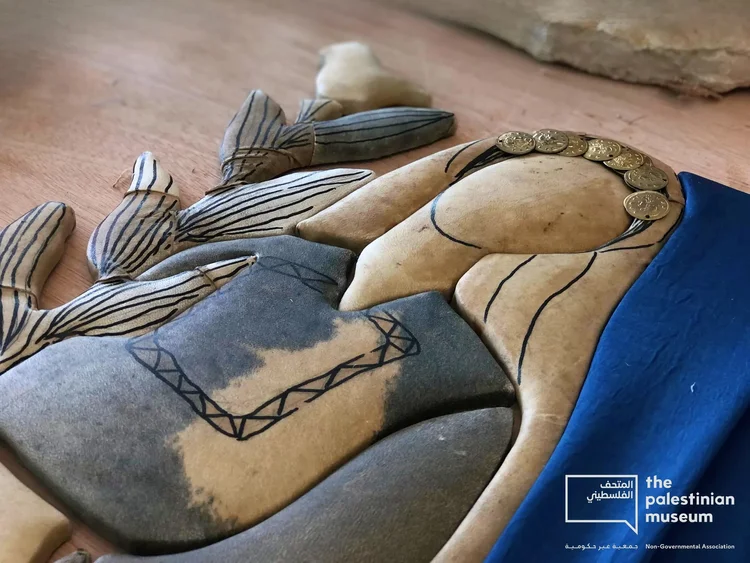
Ramallah: Leather and Henna Exhibition, opening August 26
|
|
The Palestinian Museum invites you to an exhibition showcasing the creative works of emerging artists who participated in the “Leather and Henna” workshop with artist Nabil Anani. Discover the outcomes of this three-day workshop and explore artworks created with leather and henna as primary materials, alongside other natural elements, in a journey that reflects the depth of craftsmanship and the joy of engaging with Palestine’s natural environment. This exhibition features 16 artists from across historic Palestine, coming from Jerusalem, Shuafat, Ramallah, Sinjil, Birzeit, ‘Aroura, Jericho, Bethlehem, Nablus, al-‘Eizariya, and Acre. The exhibition opens at the Palestinian Museum on Tuesday, August 26, 2025, at noon, and will run for one week. Find more details, including visiting hours, over at The Palestinian Museum website.
|
Virtual Event: Reframing the Global Approach to Palestinian Rights, August 26
|
|
Join the Institute for Postcolonial Studies (IPCS) and Dr Samah Sabawi for the first online teach-in for the Palestine Public Webinar Series, followed by a Q&A with Professor Tony Birch. Organised by Lina Koleilat, Tasnim Sammak and Natalie Ironfield, the Palestine Public Webinar Series responds to the state’s ongoing attempts to disappear Palestinians from public space - through the Special Envoy to Combat Antisemitism, the IHRA definition, and the criminalisation of political dissent and Palestinian liberation movements. This logic of disappearance is not new. Disappearance has long been a strategy of the Australian colonial project, “built upon Indigenous absence from Indigenous lands” (Mcquire, 2024, p.149). As Palestinian activist, mother, community organiser and scholar Tasnim Sammak has generously reminded us, we hold a collective responsibility to fight back against the attempted disappearance of Palestinians from public space. In taking up this task, the Palestine Public Webinar Series will bring together Palestinian scholars, artists, and community organisers. Affirming the essential role of theory to an anticolonial praxis, this series centres Palestinian resistance, refusal, and world-making, ultimately aiming to foster a space for critical dialogue, creativity, strategizing and collective imagining. Find more information and register here. And keep up with the Palestine Public Webinar Series at the IPCS Instagram.
|
Before you can forgive, you must remember. In these testimonies, Palestinians insist on memory. We are aware how the world is ready to move past our memory as soon as the world determines we are now ‘after Gaza,’ that the genocide has stopped. But after the genocide is still a genocide. Palestinians know that we must overcome this ‘after,’ too. And so we tell our stories to honor the love in our hearts. – Fady Joudah
A powerful collection of testimonies from Palestinians facing genocide and displacement in Gaza with hope and resistance.
Displaced in Gaza aims to raise global awareness of how violent displacement has impacted the lives of Palestinians—students, mothers, fathers, grandparents, children, educators, and those who already survived the Nakba of 1948. In Gaza, 2.3 million Palestinians have been subjected to starvation, mass destruction, and targeted killing. Yet they endure.
This book is a commitment to the longstanding Palestinian tradition of storytelling, documenting both the horror of the genocide and the resilience of the Palestinian people. The stories in this collection are not merely accounts of suffering, they are assertions of humanity, resistance, hope, and the unbreakable bond that ties Palestinians to their homeland.
Displaced in Gaza is a collaboration between the American Friends Service Committee and the Hashim Sani Center for Palestine Studies at Universiti Malaya. It publishes next week from Haymarket Books. You can find the book at our Bookshop.
|
Media RoundupThe Resurrection of Postponed Bread – A new poem written (and translated) by Layla Selmy: “Mothers divide absence / as if it were substance, / breaking nothing into halves, / quarters, crumbs / offering what does not exist / with hands too tired to pretend.” "Old Song," A Poem by Nima Hasan – A new poem by the Gazan poet Nima Hasan, translated by Huda Fakhreddine, who writes in her translators note that it is “a poem that time will have to accommodate, will have to make room for”: “I love you— / Force the city to hear it out loud. / Doesn’t the tribal code grant men a minaret? / Then raise your voice to the greater one, / before sin falls and the last leaf drops.” Statehood Without Liberation: Europe’s Response to Genocide – Inès Abdel Razek, Yara Hawari, and Diana Buttu consider how prospects of international recognition for Palestinian statehood index shifts in the Realpolitik of international legal obligations and risk the possibility of even more inveterate normalization with Israel. Urgent Ideas for Defending Press Freedom in Gaza – In this roundtable, journalists make the necessary case for new, escalatory approaches to protect journalists in Gaza that go beyond open letters and petitions. Israel Has Started the Invasion of Gaza City, and Is Now Annihilating One of Its Most Historic Neighborhoods – Tareq S. Hajjaj reports on the Israeli invasion of Gaza city, which is already beginning ahead of the announced timeframe of October, interviewing residents of the al-Zaytoun neighborhood who will not be deterred from returning to and remaining in their homes. In Gaza, We Are Witnessing the Genocidal Economy at Scale – Nadera Shalhoub-Kevorkian writes, in a text adapted from a presentation at the Gaza Tribunal in Sarajevo earlier this year, that the genocidal economy of Israel is “rooted in the colonial state's commitment to violence, and its exercise of power over the non-human, always killable Palestinian body.” From Stitch to Symbol: The Power of Palestinian Tatreez – Joanna Barakat writes about how her family history intersects with the social history of tatreez to think about how “the movement of a needle and thread through fabric alone could transport us to a Palestine before the extreme horrors and violence of Zionism.” Gaza’s Beloved Deserves to Live – Lujayn, a young Gazan writer, tells the story of a pregnant woman whose entire family was killed while she was pregnant, and of the hope she feels watching that woman’s baby, Habiba (meaning ‘beloved’) grow from a newborn to a toddler. Burial at Sea – A new short story by Karim Kattan about the loss of a lover at sea, and the way that a holiday turns into a time for grieving: “All I wanted was to be nowhere with you.” Palestinian Literature and the “Recurring Nightmare” of Occupation – An interview with Karim Kattan in the same publication, in which he reflects on the ethics of writing Palestinian stories that shift focus away from Gaza. Israel Is Forcing Parents in Gaza to Watch Their Children Die of Hunger – Reporting in the wake of the IPC’s official declaration of famine in Gaza, Abdel Qader Sabbah and Sharif Abdel Kouddous profile families in hospitals and clinics where they are helpless to treat the starvation and dehydration that their children are experiencing. Remembering Awdah Hathaleen – Maya Rosen and Erez Bleicher eulogize Awdah Hathaleen, who was killed last month by a settler in Masaffer Yatta, where he played a key role in organizing against settler incursions and Israeli military violence and where he was at the heart of a vibrant community. Wake, Butterfly: Beyond (So What) with Edward Salem – Edward Salem talks about writing, hope, and pessimism against the backdrop of Gaza, and reads his poem “The Palestinian Chair.” Demand Your Voice – Three young Palestinian poets living as citizens of Israel, writing under the pseudonyms Reem Al-Ghurba, Maryam Kanaan, and Habiba Majd, share new poems from the perspectives of ‘48 Palestinians: “But maybe I will tell you that you / cannot make cake and just live in /history / history makes itself with your hands / alongside your cake as you paint your / walls white with your husband who cannot / speak the language yet and / your child who certainly will.”
|
|
Consider subscribing to the PalFest Bookshelf to receive a curated selection of the finest new and classic books by Palestinian writers. Was this email forwarded to you? Sign up to receive it in your inbox.
|
|
|
|