|
$$PLAIN_TEXT_PREVIEW$$
Letters to the Sun: Music Fundraiser for Gaza’s Farmlands
|
|
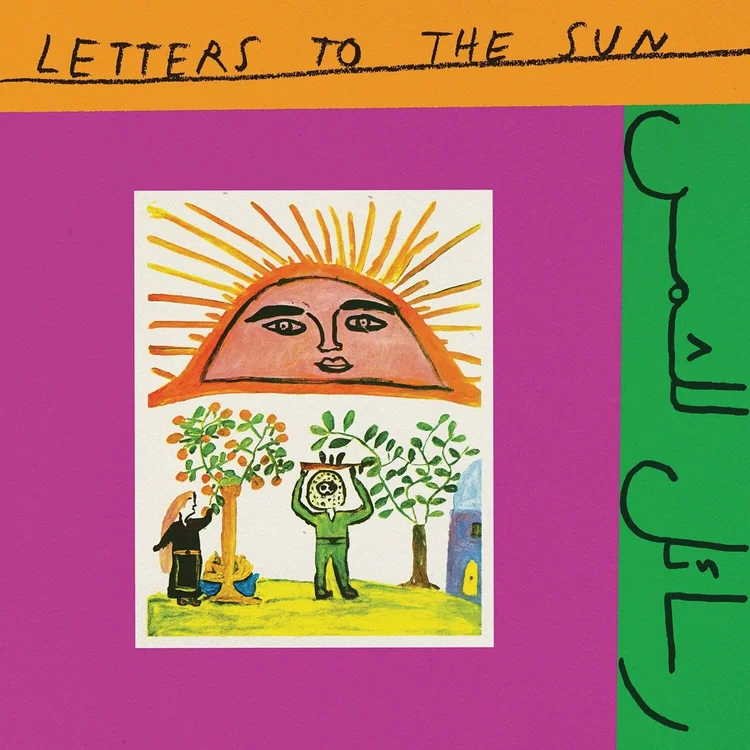
Record label, events platform and podcast Dreaming Live has collaborated with Portugal-based festival and landcare project Waking Life to release Letters to the Sun. The double LP compilation features music from artists Adelaida, Asifeh, Drew McDowall, fatalism, Faten Kanaan, Firas Shehadeh, Israa Shalaby, Jad Atoui and Kareem Lofty, as well as a collaboration between Dreaming Live founder Mayss and drumloop, an 18-minute piece by Nicolás Jaar, and poems by the Gaza-based writer Fatma Al Jabari. First aired as a sound piece on Radio Alhara, Letters to the Sun is now available in both digital format and as a 2LP vinyl. The album artwork, designed by Braulio Amado, features a drawing made in 1980 by Palestinian refugee Ilham Shahrour when she was 12. Proceeds will go towards helping Revive Gaza’s Farmland, a project by Golo Besmlah and The Arab Group for the Protection of Nature (APN) – an independent non-profit organisation working to rebuild Gaza’s local food systems and rehabilitate its agricultural land to combat famine and build food sovereignty. Purchase the digital version of Letters to the Sun on Bandcamp here and donate directly to The Arab Group for the Protection of Nature here.
|
New York: Farah Nabulsi’s The Present, 17 June
|
|
Join Taylor & Co. Books on Tuesday, June 17 for a fundraiser screening of Farah Nabulsi's powerful short film The Present, starring Saleh Bakri and focusing on the brutality of Israel’s checkpoint system. Following the screening, filmmaker Hana Elias will lead a discussion about the film, current events in Palestine, and what we each can do to actively resist genocide. All proceeds from the screening will be donated to Schools Without Borders, which provides necessary support for educators in Gaza. Find out more and get your tickets here.
|
Virtual Workshop: Martyrdom as Subjectivity, 22-24 June
|
|
Martyrdom in liberation struggles is not only a historical event or military tactic—it is a mode of being, a form of narration, and a refusal to surrender life to colonial definitions of death. It marks not the end, but the beginning of new episodes of struggle and steadfastness. In the struggle for the liberation of Palestine, throughout the saga of the Palestinian and the Lebanese resistance, Israel’s bid to control life and death is met by the Resistance’s reconfiguration of the meaning of life and death, at once defying and accepting death as a fact of life under occupation, and reinventing religious and profane notions of martyrdom, turning death into a new life. This three-day workshop explores martyrdom as subjectivity: a lived, shared, and generative force in the Palestinian struggle for liberation. Through four grounded, insurgent research projects, they explore how martyrdom creates biographies beyond the self, how dismemberment becomes a symbol of resilience, how legacy animates resistance, and how traditions breathe new life into partisan struggle. Over three days, Ameed Faleh, Ahmed Dardir, Majd Darwish, and Bashar al-Lakis will share their research on martyrdom and/as subjectivity. Together, they ask: What remains after death? What forms of life emerge from sacrifice? And how does martyrdom trouble the sovereign power to define life and death? You can find more details and reserve tickets here.
|
Bristol: Dana Awartani’s Standing by the ruins, opening 28 June
|
|
This summer Arnolfini presents multidisciplinary artist Dana Awartani’s first institutional European solo exhibition. Standing by the ruins brings together existing works with a major new commission in a moving exploration of love and loss, destruction and the passage of time. Awartani – a Palestinian-Saudi artist – addresses the physical loss of cultural heritage through the lens of abandoned, destroyed and vanishing places. Working across painting, installation, textiles, performance and film, she draws attention to both the human act of making and human loss, reflecting upon the ravages of conflict within the Middle East and architectural modernisation ingrained with colonial legacy. Named after an ongoing series of floor installations and paintings, the exhibition presents three key moments: remembrance, healing and forgetting. Each work suggests a shifting relationship with the present and simultaneously with what is absent, rooted within a practice which Awartani describes as being as much about the story of how it is made as the finished work. Throughout, she honours traditional craft techniques – from darning to adobe building methods – working with skilled artisans and using locally sourced materials in work steeped in historical and visual references from Islamic and Arab art-making traditions. The exhibition features key works including Come, let me heal your wounds. Let me mend your broken bones (2024), commissioned for the 2024 Venice Biennale, alongside the new commission Standing by the Ruins III (2025). This latest work, created with a collective of craftsmen from Riyadh who specialise in adobe earth restoration, rebuilds the intricate Ottoman-influenced floor design of Gaza’s Hamam al-Sammara – once among the region’s oldest bathhouses, now believed to have been destroyed by the ongoing bombardment of Gaza by the Israeli military. Standing by the ruins opens on June 28 with a tour of the exhibition led by the artist. It will be on view through the end of September.
|
These are poems of fire and agony, bombing and starvation, but they are also poems of grace, cleverness, tenderness and yearning. A great international poet arrives with this collection, but it is also a landmark work of resistance. No human should have to write their poetry from inside death's dominion, but Batool Abu Akleen has done it and the result is truly astonishing. —Max Porter
48kg. is a debut collection from the Palestinian poet Batool Abu Akleen—Modern Poetry in Translation’s ‘Poet in Residence,’ 2024—a bilingual assembly of forty-eight poems in which each work accounts for a single kilogram; a body’s mass; a testament to a sieged city; a vivid and visceral voicing of the personal and the public in the midsts of unspeakable violence. Observing the daily endurance and human failings of those around her, imagining liberation by utopian transformation or divine intervention, openly voicing her anger and loss, not asking why but fighting absurdity by its own weapons (‘I was wandering the streets in search of a second-hand ceasefire’), Akleen reaches out for a space of shared humanity where life and poetry are welcomed and nurtured. Batool Abu Akleen is a Palestinian poet and translator from Gaza City. At the age of fifteen, 2020, she won the Barjeel Poetry Prize for her poem ‘I didn’t steal the cloud,’ which was published in the Beirut-based magazine Rusted Radishes thereafter. Abu Akleen’s poetry has been translated into several languages and featured in numerous international publications, including ArabLit and The Massachusetts Review, amongst others. Her poem ‘Gunpowder’ was awarded third place in the 2025 London Magazine poetry prize, and her work was included in the July 2024 issue of Modern Poetry in Translation, ‘Salam to Gaza.’ Abu Akleen was Modern Poetry in Translation’s 2024 ‘Poet / Translator in Residence.’ Her poetry has appeared in editors Mohammed Al-Zaqzooq and Mahmoud Alshaer’s anthology, Letters from Gaza (Penguin, 2025) and—alongside Nahil Mohan, Sondos Sabra and Ala’a Obaid— she is one of the four Gazan authors included in Voices of Resistance: Diaries of Genocide (Comma Press, 2025). 48kg. is out today from Tenement Press. Buy a copy here and consider supporting Akleen on her GoFundMe.
|
Media Roundup“I Once Wrote with Ink, Today I Write with Ashes” – Gazan writer Omar Hamad writes about how the genocide in Gaza has altered his relationship to writing and literature: “I once plucked roses from language, today I gather only thorns sprouting over wounds that never heal.” The Freedom Flotilla Achieved Its Mission – Yara Hawari argues that the Israeli seizure of the Madleen ship and its crew proves not just Israel’s ongoing violations of international law but also the global public support for ending the siege and breaking the blockade on Gaza. The Two-State Solution Is a Delusion – Rabea Eghbariah argues that the concept of the two-state solution is “a mantra repeated to mask an entrenched one-state reality.” I Went to a US-Backed “Aid” Site In Gaza. It Was Hell on Earth. – Hassan Abo Qamar reports on how the current US aid scheme differs from UNRWA’s longstanding aid distribution infrastructure, and how it serves to punish a starving and besieged population. From A World Not Ours to a Land Unknown – Jim Quilty reviews Mahdi Fleifel’s fiction film debut To A Land Unknown, which follows Palestinian refugees who attempt to travel to Germany from Lebanon. ‘They’re Here to Detain Me’ – Rozina Ali appraises the state of the legal defenses for Mahmoud Khalil and other students in the US detained and threatened with deportation for their involvement in Palestine solidarity on university campuses. Outsourcing Occupation: US Private Contractors in Gaza – Safa Joudeh describes how the presence of private contractors demonstrates how privatization operates as a colonial strategy in Palestine. By Striking Iran, Israel Hits Nuke Button for Mutual Destruction – Tanya Goudsouzian highlights the impunity underlying Israel’s military calculus and argues that the conflict Israel started with Iran will have significant consequences across the region. The Grassroots Movements to Break the Siege on Gaza – In the wake of Israel’s seizure of the Madleen ship, Sharif Abdel Kouddous and Murtaza Hussain speak to Seif Abukeshek and Melanie Schweizer about the upcoming international convoy that aims to force an opening for humanitarian aid at the Rafah crossing. The Israeli Drones Guarding Fortress Europe – Sarah Souli describes how Israeli drones that are battle-tested on Palestinians have become a crucial technology for European countries to surveil the Mediterranean and keep migrants out. ‘Birthday in a Cellar’ – A short story from Amer Al-Masry’s third short-story collection, The Man Who Turned Back (الرجل الذي التفت إلى الوراء), translated by Alaa Alqaisi. The Man Who Turned Back is the first book out from the new press Gaza Publications. You can support Al-Masry and the publishing house by ordering a copy of the book. From Gaza to LA, the Right to Remain Is Under Attack – “We are witnessing a global war on the sanctity of home,” Aditi Mayer writes, linking the Israeli settler colonial project to the deportation machine in the United States.
|
|
Consider subscribing to the PalFest Bookshelf to receive a curated selection of the finest new and classic books by Palestinian writers. Was this email forwarded to you? Sign up to receive it in your inbox.
|
|
|
|