Remembering the Naksa with Fadwa Tuqan; PLO films; Palestinian posters; and more. ͏ ͏ ͏ ͏ ͏ ͏ ͏ ͏ ͏ ͏ ͏ ͏ ͏ ͏ ͏ ͏ ͏ ͏ ͏ ͏ ͏ ͏ ͏ ͏ ͏ ͏ ͏ ͏ ͏ ͏ ͏ ͏ ͏ ͏ ͏ ͏ ͏ ͏ ͏ ͏ ͏ ͏ ͏ ͏ ͏ ͏ ͏ ͏ ͏ ͏ ͏ ͏ ͏ ͏ ͏ ͏ ͏ ͏ ͏ ͏ ͏ ͏ ͏ ͏ ͏ ͏ ͏ ͏ ͏ ͏ ͏ ͏ ͏ ͏ ͏ ͏ ͏ ͏ ͏ ͏ ͏ ͏ ͏ ͏ ͏ ͏ ͏ ͏ ͏ ͏ ͏ ͏ ͏ ͏ ͏ ͏ ͏ ͏ ͏ ͏ ͏ ͏ ͏ ͏ ͏ ͏ ͏ ͏ ͏ ͏ ͏ ͏ ͏ ͏ ͏ ͏ ͏ ͏ ͏ ͏ ͏ ͏ ͏ ͏ ͏ ͏ ͏ ͏ ͏ ͏ ͏ ͏ ͏ ͏ ͏ ͏ ͏ ͏ ͏ ͏ ͏ ͏ ͏ ͏ ͏ ͏ ͏ ͏ ͏ ͏ ͏ ͏ ͏ ͏ ͏ ͏ ͏ ͏ ͏ ͏ ͏ ͏ ͏ ͏ ͏ ͏ ͏ ͏ ͏ ͏ ͏ ͏ ͏ ͏ ͏ ͏ ͏ ͏ ͏ ͏ ͏ ͏ ͏ ͏ ͏ ͏ ͏ ͏ ͏ ͏ ͏ ͏ ͏ ͏ ͏ ͏ ͏ ͏ ͏ ͏ ͏ ͏ ͏ ͏ ͏ ͏ ͏ ͏ ͏ ͏ ͏ ͏ ͏ ͏ ͏ ͏ ͏ ͏ ͏ ͏ ͏ ͏ ͏ ͏ ͏ ͏ ͏ ͏ ͏ ͏ ͏ ͏ ͏ ͏ ͏ ͏ ͏ ͏ ͏ ͏ ͏ ͏ ͏ ͏ ͏ ͏ ͏ ͏ ͏ ͏ ͏ ͏ ͏ ͏ ͏

Weekly Dispatch, 9 June

Remembering the Naksa, 58 Years Later

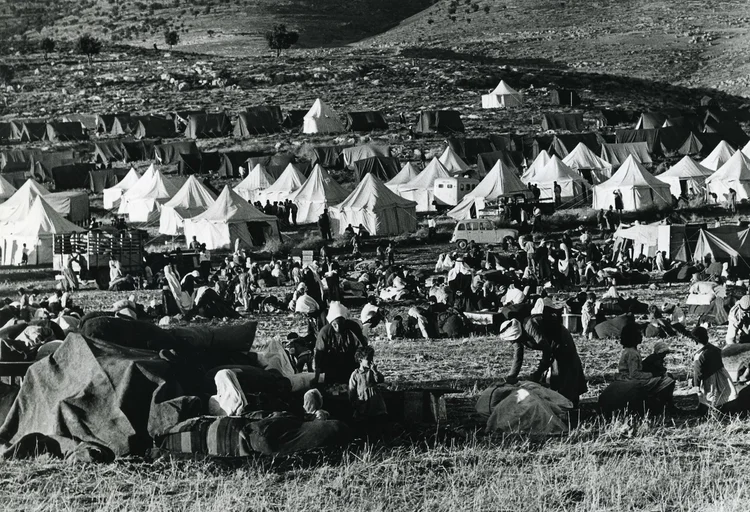
Last week marked 58 years since the Naksa, Israel’s brutal conquest of the remainder of historic Palestine in 1967 and the start of the military occupation of the West Bank, the Gaza Strip, East Jerusalem, Syria’s Golan Heights, and Egypt’s Sinai Peninsula.

The UN estimates that the Six-Day War and the resulting Zionist takeover displaced approximately half a million people; of those, more than half had already been displaced by the Nakba less than twenty years earlier. If the Nakba laid the foundations for the Zionist settlement of Palestine, the Naksa systematized it, producing the structures that continue to govern daily life in historic Palestine.

To commemorate the Naksa is not just to mourn the historic loss of life and land, but to confront the ongoingness of the Israeli military occupation that severs Palestinian communities from one another and strips Palestinians of their most fundamental rights and dignity.

This year’s Naksa Day comes as Israel has escalated its military occupation in the West Bank, which has led to the largest displacement of Palestinians since the Naksa.

In commemoration of the Naksa, we share below a poem by the renowned poet Fadwa Tuqan. Written in the wake of the Naksa, it appeared in her 1969 collection The Night and the Horsemen, and eventually in her 1990 autobiography A Mountainous Journey, which was translated into English by Olive Kenny and Naomi Shihab Nye. In the diary she kept in the aftermath of the Six-Day War, Tuqan found her way out of the terror of the occupation by writing: “I feel I have been for some time living moment by moment in a drama, moved by every act in it. All of a sudden I, myself, am a poem, burning with anguish, dejected, hopeful, looking beyond the horizon!”

I Shall Not Weep

by Fadwa Tuqan, translated by Naomi Shihab Nye

(For the Poets of the Resistance, on our meeting in Haifa)


My loved ones, at the gate of Jaffa,

in the chaos of rubble and thorns,

I stood and spoke to my own eyes:

Let us cry for those who’ve abandoned

their demolished homes.

The houses call for their owners,

announcing their deaths.

The heart said:

What have the troubles done to you, homes,

and where are your inhabitants –

have you received any news of them?

Here where they used to be, and dream,

and draw their plans for the morrow –

Where’s the dream and the future now?

And where have they gone?

The rubble stayed silent.

Nothing spoke but the absence.

I shall not weep

And the silence of silences . . .

strange flocks of phantom owls

hovered over the place, 

becoming the new masters.

Oh, how the heart was wrung with grief!

Dear ones!

I wiped the grey cloud of tears off my eyelids

to meet you, eyes shining with love and faith

in you, in the land, in man

What shame it would be to meet you

with trembling eyelids,

a dampened heart full of despair.

Now I am here to borrow fire from you,

to borrow from your lit lamps lighting

the blackness –

a drop of oil for my own. 

I stretch my hand to yours

and raise my brow to the sun beside you.

If you are strong as mountain stones

and fresh as the sweet flowers of our land,

how can a wound destroy me?

And how could I ever cry in front of you?

I make my pledge:

From this day forward I shall not cry!

Dear ones, our nation’s steed has transcended 

yesterday’s fall!

Beyond the river, hear the confident neigh

of the risen stallion,

listen! Shaking off the siege of darkness, 

galloping towards his anchor on the sun!

Processions of horsemen gather

to bless him,

to bid him drink from their crimson blood,

to feed him from their limbs and sinews.

They address the free stallion:

Run towards the eye of the sun!

Run, oh stallion of our people,

visible symbol and banner,

we are the army behind you,

the tide of our anger will not recede.

We shall not rest till

the shadows are dispelled.

Lamps of the dark night,
brothers in the wound,

sweet secret of yeast

and scattered seeds of wheat

that die in your giving . . .

on your road I shall walk.

In the light of your eyes

I collect yesterday’s tears

and wipe them away.

Like you, I plant my feet on the land,

my country,

and fix my eyes, like yours, 

on the road of light and sun. 
 

New York: Politics of the Image - Films of the PLO, 13-19 June

Anthology Film Archive presents Politics of the Image: Collaborations between the Palestinian Liberation Movement and the Two Germanies. This series sheds light on the little known and rarely explored cooperation in film and TV between the Palestinian Liberation Organization (PLO) and the two Germanies during the last decades of the Cold War. In the 1970s and 80s, the film groups and cultural organizations of the PLO worked closely with film institutions in the socialist German Democratic Republic (GDR) and with filmmakers from the capitalist Federal Republic of Germany (FRG). These collaborations continue to have an impact today, for example in Palestine TV and its partnership with German public television, the foundations of which the PLO established via East- and West-German joint contracts and projects during the 1980s.

As the series demonstrates, the PLO-GDR co-productions and collaborations were characterized by mutual dependency with regard to international political recognition. Moreover, the PLO had hard currencies, which the GDR desperately needed, while the GDR commanded a strong film infrastructure, which the PLO lacked. The PLO’s collaboration with West-German individuals was less formalized and therefore more flexible. The liberation organization could for instance send film crews to shoot inside the Occupied Territories, as LAND DAY (1977) illustrates, or access Western audiences through Western filmmakers and the familiarity of their film-languages. The PLO’s film delegate was based in East Berlin and, as holder of a so-called alien passport, could cross the Berlin Wall whenever he wished.

The PLO functions as a united front externally and as an umbrella organization internally. The different programs within this series reflect this structure. Each evening focuses on different aesthetic, political, and economic questions of the Palestinian-German collaboration. In Program 1, for example, the (back)stories of AWAY FROM HOME (1969) and HEYDA MOURAD, I AM NOT A DREAMER (1982) give insight into the range of GDR-PLO cooperation (which extended beyond the realm of cinema), while the films in Program 3 apply diverging methods to narrate Palestinian history using footage mainly found at the GDR’s film archive, and in doing so reflect the scope of political ideas and the politics of the image within the PLO.

Guest-programmed by Irit Neidhardt (mec film), who wrote the introduction and program descriptions. Irit Neidhardt and filmmaker Marwan Salamah will join in person for selected screenings during the opening weekend.

You can find the full schedule and reserve tickets here.


London: Language: No Broblem, 13-17 June

When speaking more than one language becomes a means of navigation, how are linguistic hierarchies shaped by power dynamics? How does embodying them reshape our understanding of frontiers and displacement? 

Moving between languages, geographies, voices, and imaginations, Language: no broblem explores the complexities of multilingualism in the face of systems of oppression. 

Following a reflexive yet surreal train journey through Belgium, the performance tracks the protagonist encounters a series of intriguing moments. Her personal story is woven together with those of her family members living under occupation. Through their voices, they reveal their relationship to Palestinian Arabic, their spoken mother tongue, in contrast with Hebrew, the official state language of where they live. The piece sheds light on one of colonialism’s often-overlooked strategies: the gradual yet deliberate displacement of native languages by those of the settler.

Marah Haj Hussein exposes the layered forms of pressure, violence, and domination a language can exert over another, revealing how languages transform and adapt under systemic control. The theatre becomes a space where conflicting realities collide, with humour, anger, love, and absurdity interwoven throughout. Language: no broblem embraces the limits of translatability, inviting us to reflect on the ongoing processes of resistance embedded in language, identity, and survival.

Find more details and reserve your tickets through the Shubbak Festival.


London: Art of the Palestinian Poster through June 14

This is the last week to catch the Art of the Palestinian Poster exhibition, on display at P21 Gallery in London. The exhibition brings together work by the first generation of artists who began Palestinian modern art – Vera Tamari, Sliman Mansour, Tayseer Barakat, and Nabil Anani – alongside well-known, contemporary artists such as Gazan Hazem Harb, Lebanese musician Khaled El Haber, and new generation Palestinian poster-maker Haneen Nazzal, among others.

Originally from charcoal, ink, and acrylics to collage, mixed media on paper, animation, and digital design, some of these beautiful poster prints speak – oftentimes poetically or even sarcastically – to the destruction of Gaza, human rights violations, and world indifference at the rising death toll among children. They also celebrate resistance, resilience, and the enduring Palestinian family.

This artwork from the group show Posters for Gaza, shown in Ramallah and Dubai by the Zawyeh Gallery, is exhibited in London for the first time at the P21 Gallery.

Find more exhibition details, including artists on exhibition and visiting hours, at the P21 Gallery website.


Book of the Week

Ahmad Almallah’s Wrong Winds faces the headwinds of American empire and genocide and refuses to look away. Poem by poem, line by line, Almallah leans into the wind and harvests a new kind of English, a poetry that wrestles with the Waste Lands in poetry and in the world. It is a language we need to learn, and soon, to awaken from this nightmare.

—Philip Metres

Ahmad Almallah’s third poetry collection considers the impossible task of being a Palestinian in the world today.

When genocide is the question, can the answer be anything but wrong? In Wrong Winds, written during the first months of Israel’s genocidal assault on Gaza, Palestinian-American poet Ahmad Almallah converses with the screams echoing throughout the West. Traversing European cities, Almallah encounters the impossibility of being a Palestinian, left alone in a world full of sympathizers and enemies.

Through a continuous unsettling of words and places, considering the broken voices of Western poetry (Eliot, Lorca, and Celan, among others), the poems in Wrong Winds discover the world again and form an impossible dialogue with the dead and dying.

Wrong Winds is out now, and available in our Bookshop (US / UK).


Media Roundup

Notes from the Field of Arabic Literature in the Time of Genocide – Huda Fakhreddine defies easy cliches about Palestinian literature as resistance and refuses the instrumentalization of Palestinian literature by the academy: “Gaza is a counterpoint in history. The end of the world as we know it. Nothing should ever be the same after this, in Arabic studies, the larger Middle Eastern studies, and the humanities at large.”

What Have I Done to Love You Twice? – A poem by Saer Wadoud on Gaza, translated by Gazan translator and writer Alaa Alqaisi: “Are you a city betrothed to war since birth, / with vanishing always stitched into your name? / Or are you the tender mother of small angels, / who bid farewell to earth / the moment they descend / from your generous, wounded womb— / and you forget, always, that you are dying?”

Israel Is A Dependent Empire – Saree, Ussama, and Karim Makdisi discuss the latest Gaza ceasefire negotiations and whether we are witnessing the beginning of the end of the global political order’s support for Israel.

“It's an order—destroy the neighborhood so Arabs can't return” – Building on a bombshell report on Israel’s systematic targeting of schools in Gaza, Sami Vanderlip and Younis Tirawi investigate one particular brigade responsible for burning down three schools in northern Gaza.

We Are the Eid al-Adha Sacrifice This Year – Hend Salama Abo Helow weighs the Eid holiday in Gaza against the famine Israel has inflicted on Gazans since the tightening of the blockade on aid on March 2.

For Palestinians, To Exist Is to Resist Israel's War of Annihilation – Writing about the carceral geographies of Zionism and the destruction of all the infrastructure of life itself in Gaza, Ammiel Alcalay shows that, for Israel, “every Palestinian, by virtue of their very existence, is considered a ‘legitimate’ target.”

In Gaza, US-Israel Aid Comes in the Form of A Concentration Camp – Alex Foley examines the mystery that shrouds the Gaza Humanitarian Foundation, one of the US-backed contractors that built the so-called aid distribution centers where Israeli soldiers fired on starving Gazans.

Labour MPs Are Revolting over Gaza – Megan Kenyon reports on a growing bipartisan shift among MPs around the UK government’s ongoing support for Israel.

The Real Reason Why Israel is Arming Gangs in Gaza – Writing about Netanyahu’s recent admission that Israel has been providing arms to anti-Hamas groups in Gaza, Ahmed Najar argues that the chaos and violence serve to justify Israel’s colonial rule over Gaza.

Abbas Pushes to Disarm Palestinians in Lebanon – Reporting on Mahmoud Abbas’ recent trip to Lebanon, Dalal Yassine asserts that the Palestinian Authority’s more vociferous opposition to Palestinian resistance groups is an attempt to rectify its withering public support in the West Bank by aligning itself more closely with Israel.

The Genocide in Gaza Isn’t Just Attacking Our Bodies, It’s Erasing Our Memories – Abdallah Aljazzar describes how friends and relatives he hadn’t seen since before the beginning of the genocide have become unrecognizable because the trauma of the past 20 months has made their memories so remote.

In Gaza Nothing’s Impossible – Selma Dabbagh reflects on the incalculability of the loss in Gaza amid the complacence and quiescence of the British political classes.

Five Poems – Five new poems by Gazan poet Hend Jouda, translated by M. Lynx Qualey: “Life happens anyway / just as death does. / It happens as we sketch our lives across the walls of time / and hang them, face after face, / farewell after farewell.”


Consider subscribing to the PalFest Bookshelf to receive a curated selection of the finest new and classic books by Palestinian writers.

Was this email forwarded to you? Sign up to receive it in your inbox.

 
 SUPPORT PALFEST 

133a Rye Lane, London SE15 4BQ, UK

Powered by Squarespace

Unsubscribe