You can now watch the two bracing conversations we convened with Ta-Nehisi Coates this past Sunday.͏‌ ͏‌ ͏‌ ͏‌ ͏‌ ͏‌ ͏‌ ͏‌ ͏‌ ͏‌ ͏‌ ͏‌ ͏‌ ͏‌ ͏‌ ͏‌ ͏‌ ͏‌ ͏‌ ͏‌ ͏‌ ͏‌ ͏‌ ͏‌ ͏‌ ͏‌ ͏‌ ͏‌ ͏‌ ͏‌ ͏‌ ͏‌ ͏‌ ͏‌ ͏‌ ͏‌ ͏‌ ͏‌ ͏‌ ͏‌ ͏‌ ͏‌ ͏‌ ͏‌ ͏‌ ͏‌ ͏‌ ͏‌ ͏‌ ͏‌ ͏‌ ͏‌ ͏‌ ͏‌ ͏‌ ͏‌ ͏‌ ͏‌ ͏‌ ͏‌ ͏‌ ͏‌ ͏‌ ͏‌ ͏‌ ͏‌ ͏‌ ͏‌ ͏‌ ͏‌ ͏‌ ͏‌ ͏‌ ͏‌ ͏‌ ͏‌ ͏‌ ͏‌ ͏‌ ͏‌ ͏‌ ͏‌ ͏‌ ͏‌ ͏‌ ͏‌ ͏‌ ͏‌ ͏‌ ͏‌ ͏‌ ͏‌ ͏‌ ͏‌ ͏‌ ͏‌ ͏‌ ͏‌ ͏‌ ͏‌ ͏‌ ͏‌ ͏‌ ͏‌ ͏‌ ͏‌ ͏‌ ͏‌ ͏‌ ͏‌ ͏‌ ͏‌ ͏‌ ͏‌ ͏‌ ͏‌ ͏‌ ͏‌ ͏‌ ͏‌ ͏‌ ͏‌ ͏‌ ͏‌ ͏‌ ͏‌ ͏‌ ͏‌ ͏‌ ͏‌ ͏‌ ͏‌ ͏‌ ͏‌ ͏‌ ͏‌ ͏‌ ͏‌ ͏‌ ͏‌ ͏‌ ͏‌ ͏‌ ͏‌ ͏‌ ͏‌ ͏‌ ͏‌ ͏‌ ͏‌ ͏‌ ͏‌ ͏‌ ͏‌ ͏‌ ͏‌ ͏‌ ͏‌ ͏‌ ͏‌ ͏‌ ͏‌ ͏‌ ͏‌ ͏‌ ͏‌ ͏‌ ͏‌ ͏‌ ͏‌ ͏‌ ͏‌ ͏‌ ͏‌ ͏‌ ͏‌ ͏‌ ͏‌ ͏‌ ͏‌ ͏‌ ͏‌ ͏‌ ͏‌ ͏‌ ͏‌ ͏‌ ͏‌ ͏‌ ͏‌ ͏‌ ͏‌ ͏‌ ͏‌ ͏‌ ͏‌ ͏‌ ͏‌ ͏‌ ͏‌ ͏‌ ͏‌ ͏‌ ͏‌ ͏‌ ͏‌ ͏‌ ͏‌ ͏‌ ͏‌ ͏‌ ͏‌ ͏‌ ͏‌ ͏‌ ͏‌ ͏‌ ͏‌ ͏‌ ͏‌ ͏‌ ͏‌ ͏‌ ͏‌ ͏‌ ͏‌ ͏‌ ͏‌ ͏‌ ͏‌ ͏‌ ͏‌ ͏‌ ͏‌ ͏‌ ͏‌ ͏‌ ͏‌ ͏‌ ͏‌ ͏‌ ͏‌ ͏‌ ͏‌ ͏‌ ͏‌ ͏‌ ͏‌ ͏‌ ͏‌ ͏‌ ͏‌ ͏‌ ͏‌ ͏‌ 

Weekly Dispatch, November 15

New Video from America and the War on Palestine

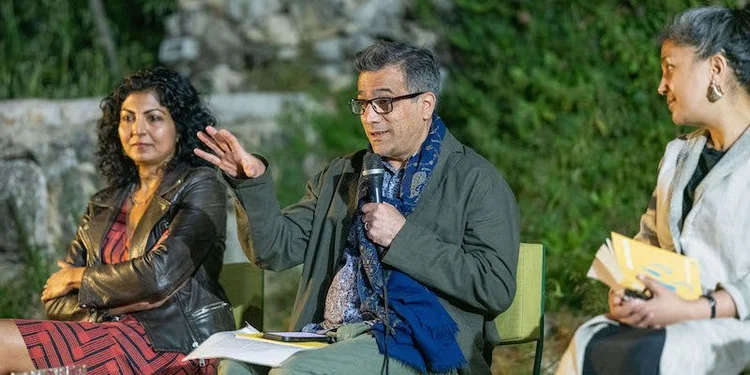
It was a full house this past Sunday for our latest event, America and the War on Palestine, at Riverside Church in New York, where we convened two bracing conversations moderated by Ta-Nehisi Coates.

The first conversation, featuring Noura Erakat and Keeanga Yamahtta-Taylor, delved into the global nature of American empire, racecraft, and the increasingly central role of the United States in the Israeli dispossession of Palestine from the Nakba to the present.

The second, featuring Rabea Eghbariah, Farah Barqawi, Sahar Qawasmi, and Nida Sinnokrot, examined the colonial fragmentation of Palestine and the creative modes of resilience through which Palestinians hold fast to culture, life, and land.

Both conversations are now available in full on our Youtube channel.


Mirza Waheed on the Solidarity Work of Boycott

The Kashmiri-British novelist Mirza Waheed, who participated in the Palestine Festival of Literature in May 2023, recently learned that the film adaptation of his novel The Collaborator is slated for exhibition at a film festival in an illegal Israeli settlement in the West Bank.

An initiating signatory to the recent letter signed by nearly 7000 writers and book workers who refuse to work with Israeli publishers complicit in apartheid and genocide, Waheed states that he cannot allow his work “to whitewash Israeli apartheid and undermine Palestinian rights.”

Describing his participation in these boycotts, Waheed writes: “Boycotts are meant to declare, in word and in deed, that one will not cooperate with systems of oppression and cruelty. They are solidarity put into practice, words of support actualised, operationalized.”

You can read the full story at Lithub, and you can hear Mirza Waheed’s harrowing firsthand account of the landscape of Israeli occupation in this video from an event we convened in London this past July.


Tarwida: A Podcast on Palestinian Arts & Culture

A new podcast called Tarwida launched last month. The podcast takes its name from a genre of lullaby long used by Palestinian women to sing encrypted messages to political prisoners.

Hosted by Afaf Shawwa Bibi, the podcast promises a series of biweekly conversations with Palestinian artists to celebrate and archive Palestinian culture and heritage and to transmit Palestinian narratives to the world. So far, the show has featured conversations with the writer Susan Abulhawa and the filmmaker Farah Nabulsi.

You can find them on Instagram and subscribe on Apple Podcasts or Spotify.


Book of the Week

Book cover for Refaat Alareer's If I Must Die

More than an expansive obituary, [this book] is a reminder and celebration of what Israel has not been able to destroy: a Palestinian voice that remains independent, defiant, and human. 

Farah Abdessamad

The renowned poet and literature professor Refaat Alareer was killed by an Israeli airstrike in Gaza City alongside his brother, sister, and nephews in December 2023. He was just forty-four years old, but had already established a worldwide reputation that was further enhanced when, in the wake of his death, the poem that gives this book its title became a global sensation. “If I Must Die” is included here, alongside Refaat’s other poetry.

Refaat wrote extensively about a range of topics: teaching Shakespeare and the way Shylock could be appreciated by young Palestinian students; the horrors of living under repeated brutal assaults in Gaza, one of which, in 2014, killed another of his brothers; and the generosity of Palestinians to each other, fighting, in the face of it all, to be the one paying at the supermarket checkout.

Such pieces, some never before published, have been curated here by one of Refaat’s closest friends and collaborators. This collection forms a fitting testament to a remarkable writer, educator, and activist, one whose voice will not be silenced by death but will continue to assert the power of learning and humanism in the face of barbarity.

This collection is out now from OR Books.


Reading Roundup

The Future of Gaza - A new poem from Gazan poet Basman Eldirawi about futures interrupted by unending explosions.

Of Unfinished Revolution: Call and Response of Palestine and Lebanon - Jennifer Mogannam writes on the entangled histories of revolutionary movements in Palestine and Lebanon, arguing that the liberation of Lebanon is coterminous with the liberation of Palestine.

Toward an Apocalypse of Letters - George Abraham, executive editor of Mizna, writes on the abiding “literature of empire” and the corporatized, neocolonial literary landscape that depoliticizes writers and artists.

Liberal Guilt and Palestine - Abdaljawad Omar argues that the genocidal assault on Gaza exposes a more fundamental malaise to American liberalism that culminated in Trump’s electoral win.

As Infested Flour Becomes a Staple, State Dept “Still Assessing” Israel’s Aid Restrictions to Gaza - Abubaker Abed reports on the unimaginable scale of starvation in Gaza as the United States fails to follow through on its pledge to suspend arms transfers to Israel if they do not allow in more humanitarian aid.

You Had to Be There - Zoë Hu examines the evolution of war reporting, to the point that the American press no longer reports from the frontlines but rather “has come to act like an informational referee—questioning, minimizing, or rationalizing what Palestinians choose to post and portray.”

The Silent Displacement in the West Bank - In this photo essay, David Lombeida follows families who have been displaced to the South Hebron Hills and Jordan Valley by Israel’s escalating violence in the West Bank.

Israel's UNRWA Ban 'Amounts to Criminalization of Humanitarian Aid,' Amnesty International Says - Asma Barakat analyzes Israel’s recently-adopted ban of UNRWA and the impotence of international legal bodies to protect its work in Gaza, the West Bank, and across the region.

Trump’s Return: Implications for the Palestinian Struggle - In this roundtable, Tariq Kenney-Shawa, Hanna Alshaikh, Abdullah Al-Arian, and Andrew Kadi anticipate what a Trump presidency will mean for the genocide in Gaza, the broader Arab world, and the Palestine solidarity movement in the United States.

Israel Must Stop Killing Journalists - In this open letter, nearly a thousand journalists and media workers “call on newsrooms to advocate for the protection and safety of our Palestinian colleagues with the same fervor and tenacity as they have done for our colleagues reporting from Russia, Ukraine, and elsewhere in the world.” If you are a journalist or media worker, you can sign on here.


Was this email forwarded to you? Sign up to receive it in your inbox.

 
 SUPPORT PALFEST 

133a Rye Lane, London SE15 4BQ, UK

Powered by Squarespace

Unsubscribe