|
Anni Kanafani on Ghassan Kanafani for the PalFest Bookshelf, We Are Not Numbers Book Launch in London, and partner events in Ramallah and Chicago ͏ ͏ ͏ ͏ ͏ ͏ ͏ ͏ ͏ ͏ ͏ ͏ ͏ ͏ ͏ ͏ ͏ ͏ ͏ ͏ ͏ ͏ ͏ ͏ ͏ ͏ ͏ ͏ ͏ ͏ ͏ ͏ ͏ ͏ ͏ ͏ ͏ ͏ ͏ ͏ ͏ ͏ ͏ ͏ ͏ ͏ ͏ ͏ ͏ ͏ ͏ ͏ ͏ ͏ ͏ ͏ ͏ ͏ ͏ ͏ ͏ ͏ ͏ ͏ ͏ ͏ ͏ ͏ ͏ ͏ ͏ ͏ ͏ ͏ ͏ ͏ ͏ ͏ ͏ ͏ ͏ ͏ ͏ ͏ ͏ ͏ ͏ ͏ ͏ ͏ ͏ ͏ ͏ ͏ ͏ ͏ ͏ ͏ ͏ ͏ ͏ ͏ ͏ ͏ ͏ ͏ ͏ ͏ ͏ ͏ ͏ ͏ ͏ ͏ ͏ ͏ ͏ ͏ ͏ ͏ ͏ ͏ ͏ ͏ ͏ ͏ ͏ ͏ ͏ ͏ ͏ ͏ ͏ ͏ ͏ ͏ ͏ ͏ ͏ ͏ ͏ ͏ ͏ ͏ ͏ ͏ ͏ ͏ ͏ ͏ ͏ ͏ ͏ ͏ ͏ ͏ ͏ ͏ ͏ ͏ ͏ ͏ ͏ ͏ ͏ ͏ ͏ ͏ ͏ ͏ ͏ ͏ ͏ ͏ ͏ ͏ ͏ ͏ ͏ ͏ ͏ ͏ ͏ ͏ ͏ ͏ ͏ ͏ ͏ ͏ ͏ ͏ ͏ ͏ ͏ ͏ ͏ ͏ ͏ ͏ ͏ ͏ ͏ ͏ ͏ ͏ ͏ ͏ ͏ ͏ ͏ ͏ ͏ ͏ ͏ ͏ ͏ ͏ ͏ ͏ ͏ ͏ ͏ ͏ ͏ ͏ ͏ ͏ ͏ ͏ ͏ ͏ ͏ ͏ ͏ ͏ ͏ ͏ ͏ ͏ ͏ ͏ ͏ ͏ ͏ ͏ ͏ ͏ ͏ ͏ ͏ ͏ ͏ ͏ ͏
Ramallah: I shall carve the sun’s words, Exhibition on View Now
|
|
Last week, the A.M. Qattan Foundation in Ramallah launched its latest exhibition and public program, I shall carve the sun’s words. The show takes its title from a verse in Tawfiq Zayyad’s 1966 poem Upon an Olive Branch, invoking the archive not as a static repository but as a dynamic and ever-evolving space. It positions the archive as both a starting point and a site of continuous renewal, reflecting the enduring Palestinian act of resistance against a century of systematic colonial violence. Featuring a diverse range of artworks—including visual installations, photography, sound pieces, and video works—the exhibition brings together the work of eighteen artists and artist duos from occupied Palestine and the diaspora. Their collective practice expands and liberates the notion of the archive, transforming it from a rigid tool to define identity into a generative space for reclaiming imagination and envisioning the future. The show also raises a crucial question: How can we move beyond slogans toward a deeper understanding of the meaning of “Free Palestine”? It invites direct engagement with political, cultural, and social realities, emphasizing that, despite the uncertainty of the present, the scarcity of possibilities, and the fragmentation of the landscape, spaces still exist to resist violence and transform silence into a language of defiance and action. I shall carve the sun’s words is on view through October 4. The exhibition is curated by Reem Shahid and features the work of Rana Batrawi and Shareef Sarhan, Emily Jacir, Salim Abu Jabal, Shaimaa Esmat, Mahmoud Al-Shaer, Rehaf Al Batniji, Ahed Izhiman, Monther Jawabreh, Samar Ozrail and Rebal Dirieh, Izz Al-Jabari, Ruba Alfarawneh, Hanna Qubty, Ahmed Alaqra, Basma al-Sharif, Rula Halawani, Noor Abed, Ghassan Naddaf, and Ola Zaitoun. You can find more information about the exhibition at the A.M. Qattan Foundation website.
|
London: We Are Not Numbers Book Launch, May 6
|
|
We still have tickets available for our event launching the highly-anticipated new anthology We Are Not Numbers, which gathers the writing of many young and emerging Gazan writers. On May 6 at the Southbank Centre we will hear from Ahmed Alnaouq, who co-founded the group with Refaat al-Areer in 2014. Mohammed El-Kurd called the collection “a rebellion against the singular story,” Kamila Shamie wrote that “picking up his book may seem hard because of the subject matter; putting it down is even harder,” while China Miéville called its publication “a profoundly important literary event” - so do join us to welcome this urgent new collection of work. Find out more and reserve your tickets here.
|
Chicago Palestine Film Festival
|
|
The Chicago Palestine Film Festival is underway now, with screenings through April 26 and special encore screenings thru May 1 for films that are already sold out. Showcasing more than forty short and feature films over the course of its two-week run, this year’s film festival is the largest in its nearly 25-year history. Check out the full schedule and purchase your tickets here.
|
From the PalFest Bookshelf: Anni Kanafani on Ghassan Kanafani
|
|
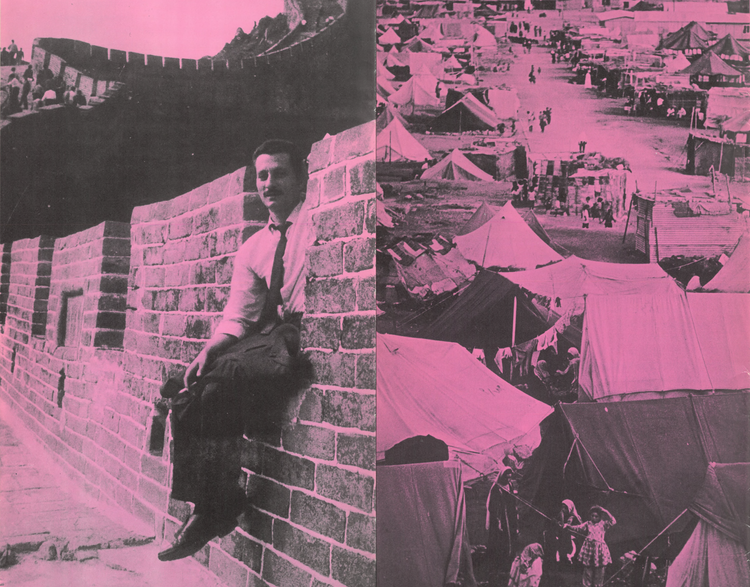
The second installment of the PalFest Bookshelf is Ghassan Kanafani’s The Revolution of 1936-1939 in Palestine, newly translated by Hazem Jamjoum. In addition to this book, Palfest Bookshelf subscribers will receive Anni Kanafani’s powerful, personal, political to her husband, originally published by the PLO in 1973. Filled with stunning images of Ghassan, his family, his art, and Palestine like those above, it has been out of print for more than fifty years—until now. You can read a brief excerpt from Anni’s tribute below. “Often we visit the graves of Ghassan and Lamees. They are buried in the shadows of the trees—the earth is as dry and red as the soil in Palestine from which their people have been expelled. For his struggle to give the Palestinian people the possibility of returning to their homes in Palestine he had to pay with his life. The people loved him; he expressed their hopes and dreams; he proved to them that life can be different from the misery of the refugee camps. “The tens of thousands who followed Ghassan to his grave in the biggest popular demonstration since the death of President Nasser, were workers and farmers, intellectuals, refugees from the camps, members of the different groups of the Palestinian resistance movement, representatives of most political parties and of public life. They are the same ones who flocked in hundreds to our home on the outskirts of Beirut in the days following the assassination. Workers, intellectuals, well-known artists, and political parties from all over the world expressed their sympathy with the liberation movement and with his family; at the same time they promised to carry on the struggle to which Ghassan devoted his life.
|

|
“I sometimes spend the morning in the small garden which was Ghassan’s pride. I remember how Hussein, the father of Lamees, arrived happy that Saturday evening to tell his daughter that she had been accepted at the medical faculty of Amman to start after the summer holiday. when he arrived his daughter was dead. Now when Lamees’ parents talk about their daughter and Ghassan, their eyes glow and their voices are strong. |
|
|
|
“It is important to them that others know about Lamees and Ghassan, about their lives, about the hope to which the Palestinian people cling, scattered as they are all over the Arab world. “Ghassan’s literary activities started in fact with a small book to Lamees. All her life she was his muse; that Saturday, seventeen years later, they were killed by the same bomb. When, after the funeral, I tried to comfort Hussein, he said: ‘She has always loved Ghassan—her death together with him was her gift to him.’ Nearly every year Ghassan sent a book to Lamees, written for her alone. They were written by hand and illustrated with his own drawings. “Even though Ghassan had many political opponents he had no personal enemies. On the contrary, he was liked and respected even by those with whom he differed. His opponents would often meet with him; they followed him to the graveside and I met them in our home when they came to express their sympathy. “The assassins of Ghassan hoped to encourage defeatism among the Palestinian refugees and a split in the resistance movement. They achieved the opposite. The people understood Ghassan’s greatness—they loved him and showed their love by closing ranks.” Visit the PalFest Bookshelf to learn more and subscribe.
|
This is not the Gaza you know. Instead, Almoghayer invites to stroll its vibrant streets, savor its seaside sunsets, and share in its unyielding spirit of humanity and defiance. —Ahmed Shihab-Eldin
Israel’s brutal assault on Gaza has plunged more than two million Palestinians into a ceaseless cycle of violence and deprivation. Despite the outrage that aggression has fanned, two opposing tropes about those who inhabit the Strip endure. For the minority backing Israel’s actions, the Palestinians of Gaza are often seen as little more than terrorists. For many on the other side, they are perpetual victims, powerless and tragic. Each characterization dehumanizes Gaza’s people. In On the Pleasures of Living in Gaza: Remembering A Way of Life Now Destroyed, Mohammed Omer Almoghayer, born and raised in southern Gaza, presents a necessary corrective. What the news reports have rarely shown are the ways in which, prior to Israel’s onslaught, the people of Gaza rose above their hardship to enjoy the simple pleasures of human existence. While in no way diminishing the horrors hurled at the Strip since October 7, or the prior suffering of those forced to live in what was effectively an open prison, Mohammed Omer Almoghayer here tells that story. On the Pleasures of Living in Gaza takes the reader on a tour of a most misunderstood and hidden territory, allowing us to discover the community spirit, the enduring family ties, the festivals and pastimes, and the creativity and resourcefulness of people, who, in lives now tragically lost, refused to surrender to hopelessness, snatching moments of joy in the most difficult of circumstances. More than ever, it is vital that we recognize the humanity of people referred to by Israel’s defense minister as “animals,” and by news organizations around the world by as bald numbers of nameless dead. With the sensitivity and insight available to a native Gazan, Mohammed Omer Almoghayer’s magnificent book parts the smoke and dust to show us the richness of a way of life Israel has now destroyed. On the Pleasures of Living in Gaza officially publishes in just a couple of weeks. Preorder your copy at our Bookshop (US / UK).
|
Media RoundupWhen War Ends, What Remains? Art, Memory, and the Weight of Loss – Badar Salem examines the themes of horror, landscape, trauma, exile, and shame in Palestinian artists’ responses to the past eighteen months of genocide. On Palestine, Prisons and British Vs. American Racism – Ash Sarkar interviews Ta-Nehisi Coates on his new book The Message, discussing the commonalities between Black life in the United States and Palestinian life under Israeli occupation. An Ode to Rafah, as Israel Orders the City to Evacuate Once Again – Taqwa Ahmed Al-Wawi, who evacuated to Rafah in December 2023, writes on the eve of the city’s ethnic cleansing about the “paradox” of the city as a resilient home to Gaza’s countless displaced people. The Voice I Left Behind – An excerpt of epistolary fiction by Sondos Sabra, forthcoming in the book Voices of Resistance: “Even the dictionaries of language have shifted, their meanings altered. The dreams I used to weave at night have turned into migrating birds that no longer know their way back.” Starvation and Solitary Confinement: 14 Months in Israeli Prison – Abdullah Younis profiles the journalist Ahmad Shaqoura, who was detained by Israel in December 2023 and only recently released, about the harrowing treatment he faced in Israel’s torture prisons and the inability of his family to recognize him upon his release. Deported From Europe, Murdered by Israel – Zoe Holman profiles two brothers from Gaza who fled to Europe as refugees as teenagers, only to be deported back to Gaza shortly before October 2023 and killed by Israel, attesting to the deadly entanglement of European anti-Palestinian and anti-refugee policies. 'War on Women's Health' as Israel's Genocide Rages On in Gaza – Haya Ahmed interviews women in Gaza whose treatable conditions and ailments have become almost entirely debilitating, and even lethal, owing to the genocide and the ongoing Israeli blockade on necessary medical supplies. Hamas Launches Unprecedented Legal Case in Britain, Demanding the Government Remove its Terror Designation – Jeremy Scahill reports on a landmark legal challenge against its proscription by the UK government, arguing that the legal definition of terrorism “also covers all groups and organisations around the world that use violence to achieve political objectives, including the Israeli armed forces, the Ukrainian Army and indeed the British armed forces.” From Ala Hlehel's 'Seven Letters to Umm Kulthum' – An excerpt from a novel written by Ala Hlehel and translated by Peter Theroux which follows a Palestinian family in Galilee at the start of the First Intifada. I Never Chose – A new poem by Alaa Mahdi Kudaih: “I never chose / a fate etched in the stones of Al-Shati / or a history written in bullets / bombs and blockades.”
|
|
Consider subscribing to the PalFest Bookshelf to receive a curated selection of the finest new and classic books by Palestinian writers. Was this email forwarded to you? Sign up to receive it in your inbox.
|
|
|
|