|
Palestine Film Platform, Edward Said, London Palestine Film Festival, and more͏ ͏ ͏ ͏ ͏ ͏ ͏ ͏ ͏ ͏ ͏ ͏ ͏ ͏ ͏ ͏ ͏ ͏ ͏ ͏ ͏ ͏ ͏ ͏ ͏ ͏ ͏ ͏ ͏ ͏ ͏ ͏ ͏ ͏ ͏ ͏ ͏ ͏ ͏ ͏ ͏ ͏ ͏ ͏ ͏ ͏ ͏ ͏ ͏ ͏ ͏ ͏ ͏ ͏ ͏ ͏ ͏ ͏ ͏ ͏ ͏ ͏ ͏ ͏ ͏ ͏ ͏ ͏ ͏ ͏ ͏ ͏ ͏ ͏ ͏ ͏ ͏ ͏ ͏ ͏ ͏ ͏ ͏ ͏ ͏ ͏ ͏ ͏ ͏ ͏ ͏ ͏ ͏ ͏ ͏ ͏ ͏ ͏ ͏ ͏ ͏ ͏ ͏ ͏ ͏ ͏ ͏ ͏ ͏ ͏ ͏ ͏ ͏ ͏ ͏ ͏ ͏ ͏ ͏ ͏ ͏ ͏ ͏ ͏ ͏ ͏ ͏ ͏ ͏ ͏ ͏ ͏ ͏ ͏ ͏ ͏ ͏ ͏ ͏ ͏ ͏ ͏ ͏ ͏ ͏ ͏ ͏ ͏ ͏ ͏ ͏ ͏ ͏ ͏ ͏ ͏ ͏ ͏ ͏ ͏ ͏ ͏ ͏ ͏ ͏ ͏ ͏ ͏ ͏ ͏ ͏ ͏ ͏ ͏ ͏ ͏ ͏ ͏ ͏ ͏ ͏ ͏ ͏ ͏ ͏ ͏ ͏ ͏ ͏ ͏ ͏ ͏ ͏ ͏ ͏ ͏ ͏ ͏ ͏ ͏ ͏ ͏ ͏ ͏ ͏ ͏ ͏ ͏ ͏ ͏ ͏ ͏ ͏ ͏ ͏ ͏ ͏ ͏ ͏ ͏ ͏ ͏ ͏ ͏ ͏ ͏ ͏ ͏ ͏ ͏ ͏ ͏ ͏ ͏ ͏ ͏ ͏ ͏ ͏ ͏ ͏ ͏ ͏ ͏ ͏ ͏ ͏ ͏ ͏ ͏ ͏ ͏ ͏ ͏ ͏
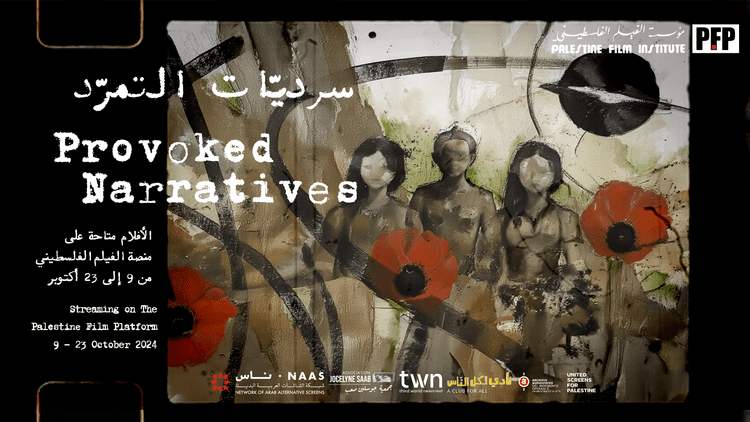
Stream Provoked Narratives on Palestine Film Platform
|
|
The Palestine Film Platform, a project of the Palestine Film Institute, has curated a selection of Palestinian films under the title of Provoked Narratives available to stream until 23 October 2024. While the programme ends tonight, it will be available upon request until the end of 2024 for collectives, student groups, solidarity encampments, festivals and cinemas to screen and engage with the collection, and, wherever possible, to raise funds to support our people in Palestine and in Lebanon. Provoked Narratives presents films made from 1967 to 1984 in varying contexts and using different grammars of resistance, all live and resonant to this day. The programme reflects on the shifting gazes on the Palestinian struggle - from the humanitarian lens, to cinemas in solidarity and to the works of Palestinian filmmakers who devised new visual grammars in grief and in defiance. The films ponder questions of generational trauma and resistance, as well as the long history of solidarity between Palestine and Lebanon.
|
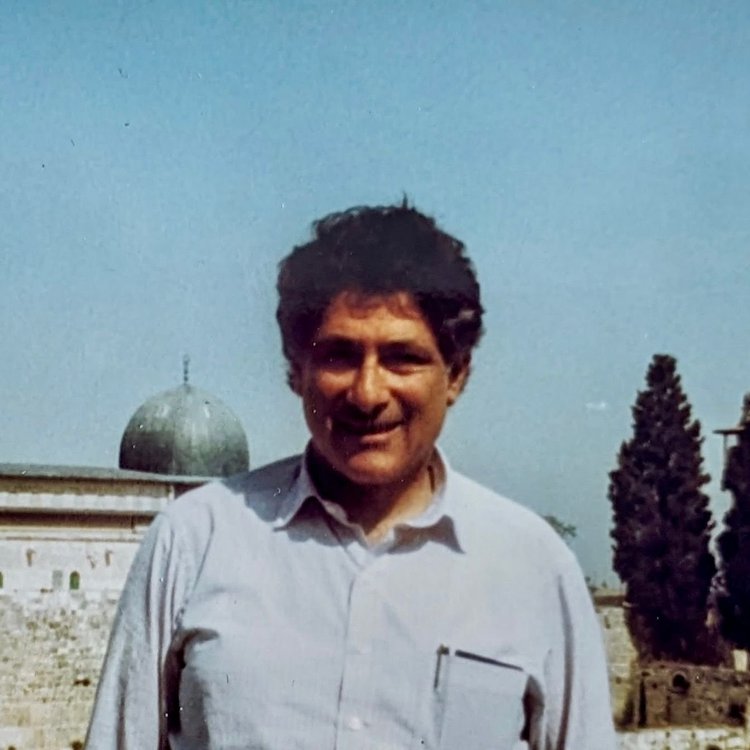
Upcoming Event: Edward Said’s THE QUESTION OF PALESTINE, Nov. 20
|
|
We still have tickets available for our truly landmark event celebrating the republication of Edward Said’s The Question of Palestine at Southbank Centre in London on November 20. Eight of today’s most incisive writers and thinkers on the question of Palestine - Saree Makdisi, Wadie Said, Tamim Barghouti, Budour Hassan, Jehad Abusalim, Avi Shlaim, Ahdaf Soueif, Jacqueline Rose and Max Porter - consider the legacy of Edward Said’s work, and what The Question of Palestine means today. This urgent, unique event is not to be missed.
|
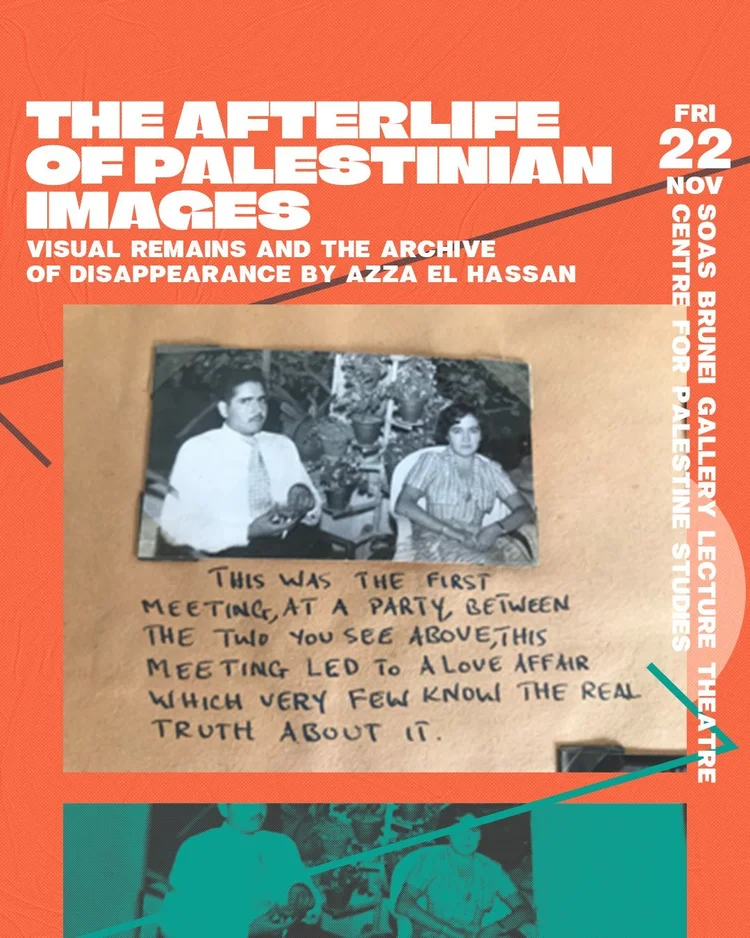
LPFF 2024: Azza El Hassan Book Launch
|
|
The London Palestine Film Festival is fast approaching. In addition to their stellar line-up from 15-29 November, they are co-sponsoring the launch of Azza El Hassan’s new book, The Afterlife of Palestinian Images, at SOAS on 22 November at 7pm. The Afterlife of Palestinian Images is a groundbreaking study of how colonial violence alters and changes visual objects - which in turn affects how a society and culture relates to its own images. Based on the practice-based creative methodology of Palestinian filmmaker and researcher Azza El Hassan, the book explores the re-use and re-appropriation of photos, film and media equipment that have survived looting and destruction, objects which become a constant reminder of what was and what has been lost. As a scholar and an artist, El Hassan reconciles a problematic past and present in the search for a new visual experience emerging out of the ruins, finding ways to move forward after destruction. Tickets are free, with a suggested donation of at least £3 to support the ongoing programming of London Palestine Film Festival.
|
Ta-Nehisi Coates in conversation with Dena Takruri in Oakland
|
|
We are hosting a community conversation with renowned author and journalist Ta-Nehisi Coates, as he discusses his new book The Message, and his travels in Senegal, South Carolina, and occupied Palestine, which he described as a “Holy Land of barbed wire, settlers, and outrageous guns.” In his new book, Coates beautifully and thoughtfully weaves a narrative that ties the current dispossession and demonization of the Palestinian people as a clear echo of colonial projects of the past, in the United States and beyond. Yet even as he slowly discovers the truth of Zionism as “a poorly wrought fairytale and an enormous con,” he does so with humanity and grace, never losing sight of the ways that, as in Liberia, a people subjected to unimaginable white imperialist violence eventually turned to those very same systems of subjugation for their own colonial projects. Ta-Nehisi Coates will be in discussion with Dena Takruri, award-winning Al-Jazeera journalist and co-author of They Called Me a Lioness: A Palestinian Girl's Fight for Freedom. Due to extraordinary demand, all tickets and waitlist slots were claimed almost immediately. Please stay tuned for upcoming events, including more with Ta-Nehisi Coates, in the near future.
|
A book of prophecy. A book of reckoning. A book of gut-wrenching monstrosities and of profound tenderness. In this study of grief and love, state violence and wild self-delusions, Azem fearlessly looks into the void and calls out both its causes, its costs, and its lasting effects. Preti Taneja
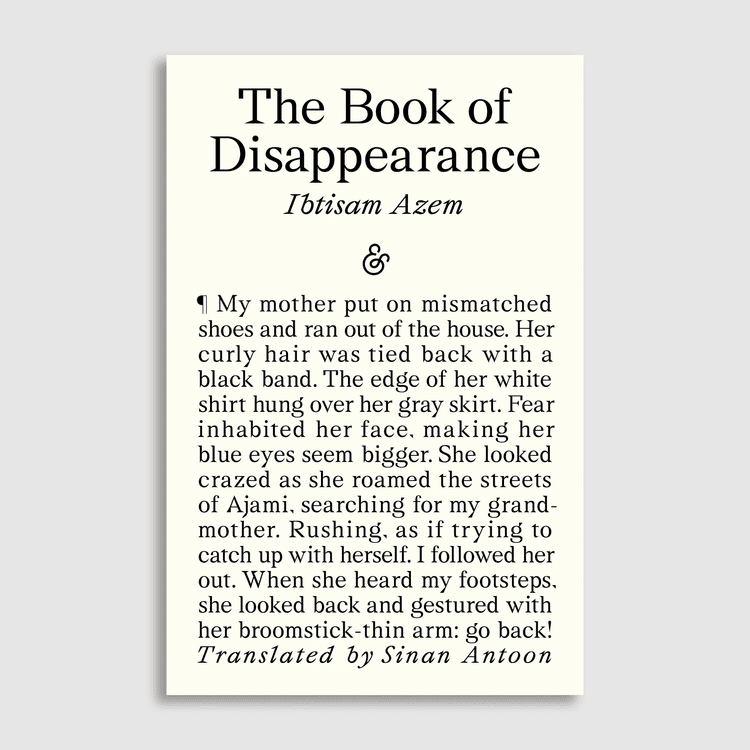
What if all the Palestinians in Israel simply disappeared one day? What would happen next? How would Israelis react? These unsettling questions are posed in Ibtisam Azem’s powerfully imaginative novel. Set in contemporary Tel Aviv forty eight hours after Israelis discover all their Palestinian neighbors have vanished, the story unfolds through alternating narrators, Alaa, a young Palestinian man who converses with his dead grandmother in the journal he left behind when he disappeared, and his Jewish neighbor, Ariel, a journalist struggling to understand the traumatic event. Through these perspectives, the novel stages a confrontation between two memories. Ariel is a liberal Zionist who is critical of the military occupation of the West Bank and Gaza, but nevertheless believes in Israel’s project and its national myth. Alaa is haunted by his grandmother’s memories of being displaced from Jaffa and becoming a refugee in her homeland. Ariel’s search for clues to the secret of the collective disappearance and his reaction to it intimately reveal the fissures at the heart of the Palestinian question.
The Book of Disappearance grapples with both the memory of loss and the loss of memory for the Palestinians. Presenting a narrative that is often marginalized, Sinan Antoon’s translation of the critically acclaimed Arabic novel invites English readers into the complex lives of Palestinians living in Israel. You can read the first two chapters here. First published in English by Syracuse University Press in the US in 2014, the book was republished by And Other Stories in the UK in August 2024.
|
Reading RoundupSomaia Abu Nada Remembers Her Slain Sister, Heba Abu Nada, Palestinian Poet and Novelist - On the one-year anniversary of Heba Abu Nada’s martyrdom, her sister Somaia shares a moving eulogy: “I still find myself waiting for you, Heba, to show up again, holding another bouquet for me, ready to share a new story spun from your wild imagination.” My Mother Won’t See Me Graduate - In this letter from Gaza, Shahad Ali mourns the fact that her mother, who had always been her greatest supporter, was martyred by Israel as she neared the completion of her degree in English. A Lost Future for the Middle East - Ussama Makdisi traces how ethnoreligious nationalism emerged in the Middle East as a product of European colonial pressures, occluding the possibility of meaningful ethnoreligious pluralism in the wake of the collapse of the Ottoman Empire. Killing the Words of Gaza: Why Israel Targets Palestinian Writers & Teachers - Samar Saeed suggests that Palestinian writers and teachers manage to break the Israeli occupation and military siege, which is why so many of them have been targeted for killing. Living with Ghosts: Notes from Lebanon - Nadia Bou Ali theorizes how the sheer scale of mass death in Gaza that the world has witnessed over the past year has altered our psychic relationship to mortality and death itself. "Our Job Is to Flatten Gaza. No One Will Stop Us." - After meticulously documenting the daily social media usage of one Israeli battalion in Gaza, Younis Tirawi and Sami Vanderlip offer a deep-dive into their actions, showing that “the mission is nothing less than a systematic, concerted, and deliberate effort to erase the intellectual, cultural, and social future of the Palestinian people.” Bulldozer Politics - Léopold Lambert offers an extensive history of the bulldozer as a technology of Zionist warmaking, tracking the spatial and genocidal logics at play in the strategies Israel uses to ruin, demolish, and destroy Palestinian homes. Surprise Unto Death: The Legend of Sinwar - In this obituary of Yahya Sinwar, Mohamed Hamama charts his intellectual and political formation in Israeli prisons, and his resulting, lifelong commitment to armed resistance. “The Israeli Army Martyred My Father”: What Gaza’s Journalists Have Endured - Ruwaida Kamal Amer shares accounts from three Gazan journalists — Anas Jamal Al-Sharif, Nour Swerki, and Osama Al-Kahlout — who have been reporting tirelessly over the past year, even as death, debilitation, hunger, and illness have affected their own lives. Where I Write Now - A new poem from Gazan poet Maryam Al Khateeb, translated by Wiam El-Tamami: “And now I’m in a city where everything is real and does not need my pen to transform it / And now I’m afraid to sleep next to the window with pens under my head.”
|
|
|
|